A Simple Skincare Routine for Acne: 4-Step Guide for 2026
To successfully establish a skincare routine for acne, you need a consistent, 4-step framework for both morning and night that focuses on cleansing, treating, and protecting your skin. This guide is built on a clinically-observed approach using proven ingredients like Salicylic Acid and retinoids to manage breakouts and reduce inflammation. This method is highly effective for most individuals with oily or combination skin, with noticeable improvements often seen within 8 to 12 weeks of consistent application. Let’s gather the essential products and build the routine that will finally give you control over your skin.
The Quick Guide: Acne Skincare Routine Overview
Before we dive into the specific actions, let’s get a clear overview. This entire process is designed to be simple, sustainable, and effective. You don’t need a dozen products; you need the right products used in the right order.
Routine At-a-Glance
- Total Time Commitment: Approx. 5-10 minutes in the morning; 10-15 minutes in the evening.
- Difficulty Level: Beginner-friendly.
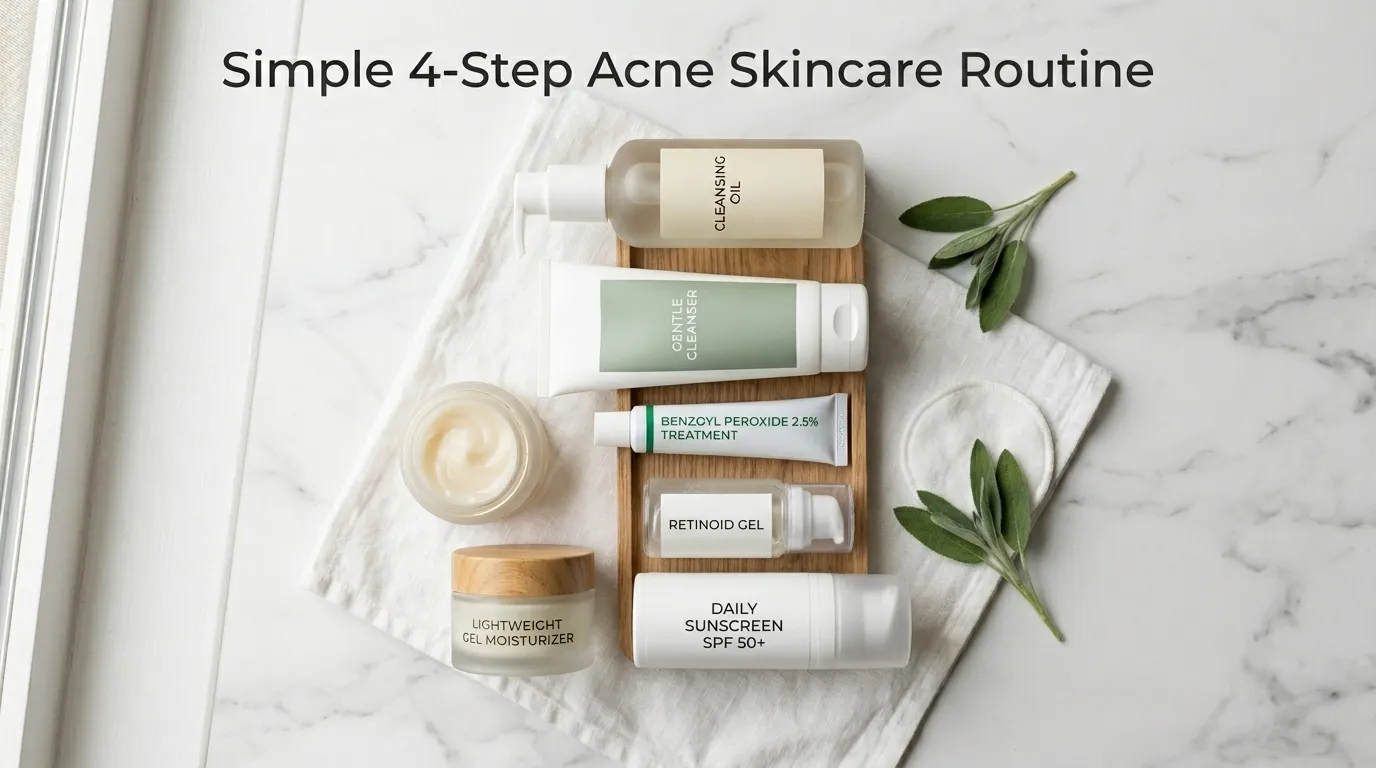
- Core Products Needed: Gentle Cleanser, Acne Treatment, Non-Comedogenic Moisturizer, Broad-Spectrum Sunscreen.
- Primary Goal: Reduce active breakouts, prevent new ones from forming, and fade post-acne marks.
What You Need: Essential Products for Your Routine
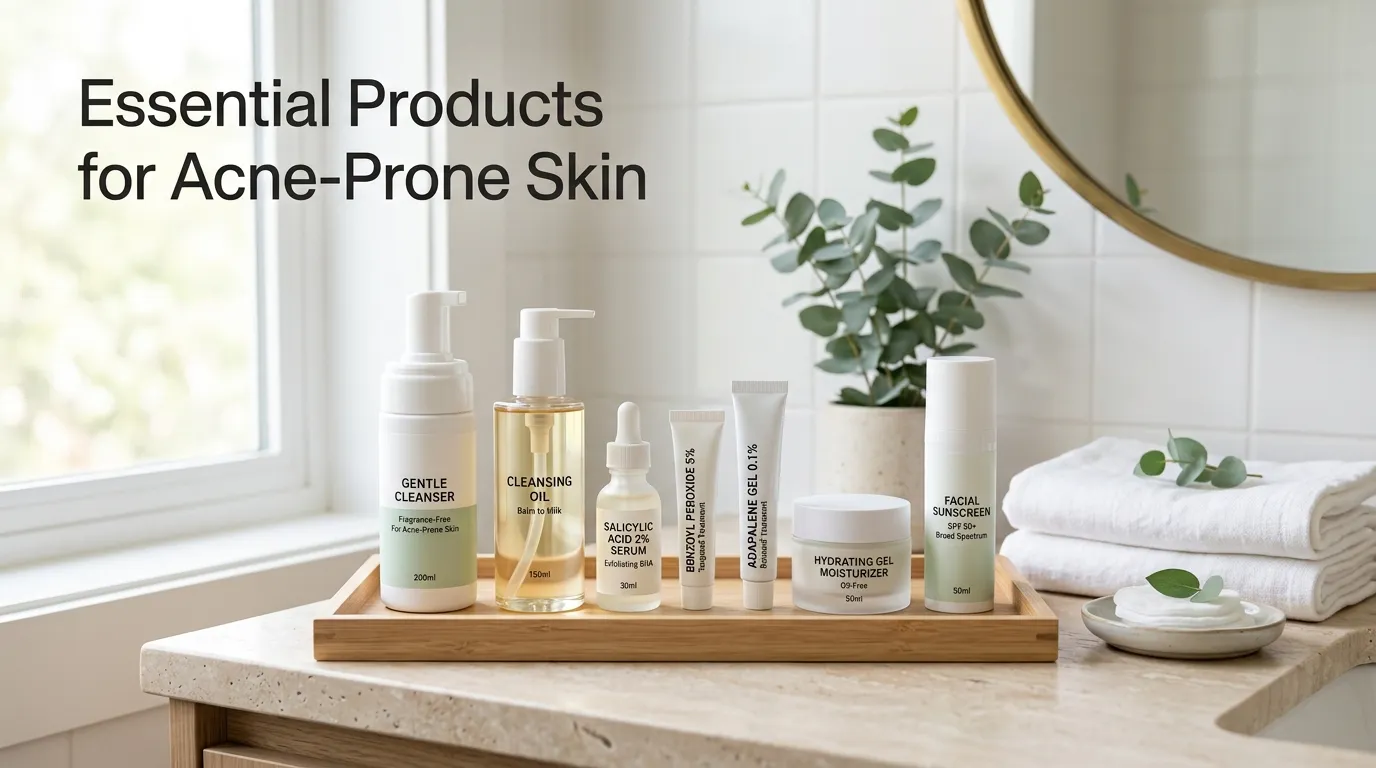
Gather your toolkit. Having these items ready will make your routine seamless. Focus on formulas designed for acne-prone skin that won’t clog your pores.
- A Gentle Cleanser: Look for a pH-balanced, sulfate-free formula. Ingredients like Salicylic Acid (a BHA) are excellent for keeping pores clear.
- An AM Acne Treatment (Recommended): A leave-on product with Benzoyl Peroxide (start with 2.5% to 5%) or a Salicylic Acid serum.
- A PM Acne Treatment: An over-the-counter retinoid, such as Adapalene 0.1% gel, is a powerhouse for cell turnover and preventing clogged pores.
- A Lightweight Moisturizer: This is non-negotiable. It MUST be labeled “non-comedogenic,” meaning it has been tested and shown not to clog pores. Gel or light lotion textures are ideal.
- A Broad-Spectrum Sunscreen: Choose a minimum of SPF 30. This protects against both UVA and UVB rays and is critical for preventing acne scars from darkening.
- An Oil-Based Cleanser (For Evening): A cleansing oil or balm is needed for the first step of your evening double cleanse to dissolve sunscreen and makeup.
The 4-Step Morning Skincare Routine for Acne
Your morning goal is straightforward: control oil production, provide gentle treatment, and create a protective shield against the sun, which can significantly worsen acne marks. Follow these four steps precisely every morning between 7 AM – 9 AM.
Step 1 Cleanse Your Face with a Gentle Formula
Action: Wet your face with lukewarm water—never hot, as it can strip the skin. Dispense a dime-sized amount of your gentle cleanser onto your fingertips and massage it over your face in light, circular motions for a full 60 seconds.
Explanation: Massaging for 60 seconds allows the active ingredients in the cleanser (like Salicylic Acid) enough time to work effectively, breaking down oil and debris in your pores.
Result: After rinsing thoroughly and gently patting your face dry with a clean towel, your skin should feel clean and refreshed, but not tight or “squeaky.”
Step 2 Apply a Targeted Acne Treatment
Action: On completely dry skin, apply a pea-sized amount of your morning acne treatment (e.g., Benzoyl Peroxide cream). Spread a thin, even layer across the entire face or just on the areas prone to breakouts.
Explanation: Applying treatment to the whole area prevents new pimples from forming, rather than just treating existing ones. Allow it to fully absorb for 1-2 minutes before proceeding.
Result: The product should be fully absorbed with no visible residue. You are now ready to hydrate.
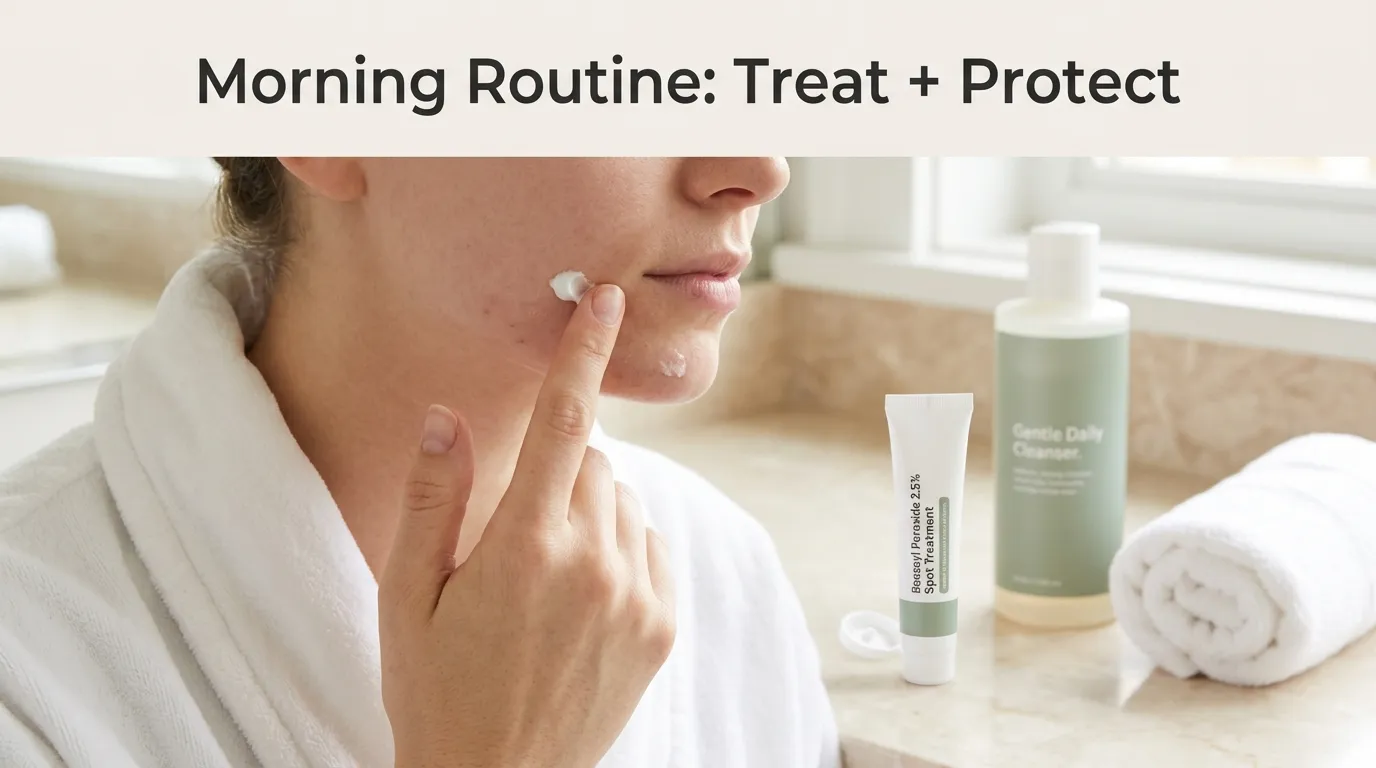
Step 3 Moisturize with a Non-Comedogenic Product
Action: Apply a nickel-sized amount of your oil-free, non-comedogenic moisturizer to your face and neck.
Explanation: This is a crucial step. Acne treatments can be drying, and dry skin often compensates by producing even more oil. Moisturizer hydrates the skin and supports its natural barrier, preventing this cycle.
Result: Your skin should feel hydrated, comfortable, and plump, not greasy or heavy.
Step 4 Protect with Broad-Spectrum Sunscreen
Action: Dispense sunscreen along the full length of your index and middle fingers. Apply this amount generously to your face, neck, and ears as the final step in your morning routine.
Explanation: This “two-finger rule” ensures you’re applying enough sunscreen for the labeled SPF protection. Sun exposure darkens red or brown marks left by old pimples (post-inflammatory hyperpigmentation) and can make skin more sensitive. This step is the single most important thing you can do to improve your skin’s overall appearance.
Result: Your skin is now fully protected. If you are spending significant time outdoors, remember to reapply every 2 hours.
Risks to avoid
The 4-Step Evening Skincare Routine for Acne
Your evening routine is focused on deep cleaning and repair. This is when you’ll use your most powerful treatment products to accelerate skin cell turnover and clear out congestion while you sleep.
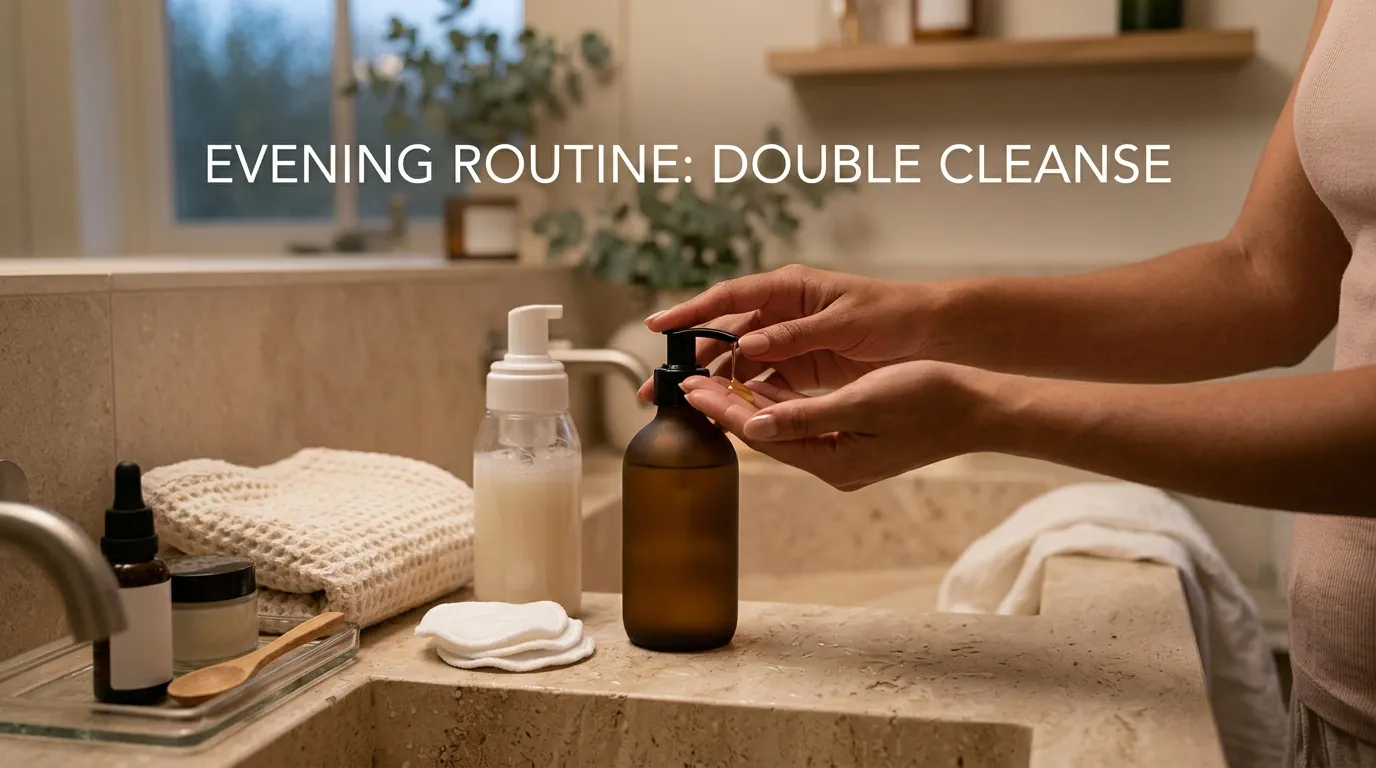
Step 1 Double-Cleanse to Remove All Impurities
Action: Begin with your oil-based cleanser. On a dry face, massage it for 60 seconds to dissolve sunscreen, makeup, and sebum. Then, add a little water to emulsify, rinse, and follow up with your gentle, water-based cleanser for another 60 seconds.
Explanation: The first cleanse removes oil-based impurities. The second cleanse removes any remaining residue and cleans the skin itself. This two-step process ensures your pores are perfectly prepped for treatment.
Result: Your skin is exceptionally clean and ready for the next step, without feeling stripped.
Step 2 Apply a Retinoid or Exfoliating Treatment
Action: On completely dry skin, apply a pea-sized amount of your PM treatment (like Adapalene gel). Gently spread it over your entire face, avoiding the delicate skin around your eyes, the corners of your nose, and your mouth.
Safety Warning: Start Slow
Result: The product should absorb quickly. Wait about 5-10 minutes before moving on to allow it to begin working without being diluted.
Step 3 Hydrate and Repair with a Moisturizer
Action: Apply your non-comedogenic moisturizer to lock in hydration and support your skin’s barrier.
Explanation: This step helps to buffer any potential irritation from your retinoid treatment and provides essential hydration for the overnight repair process. Look for ingredients like Niacinamide, Hyaluronic Acid, or Ceramides.
Result: Your skin feels soothed, moisturized, and ready for rest.
Step 4 (Optional) Use a Spot Treatment on Active Pimples
Action: If you have an active, inflamed pimple, apply a tiny dab of a spot treatment (like Benzoyl Peroxide) or place a hydrocolloid pimple patch directly on top of it.
Explanation: This targets a specific blemish to help reduce its size and redness more quickly. This should always be the very last step in your routine.
Result: The blemish is targeted for intensive treatment overnight.
Common Mistakes in an Acne Routine (and How to Fix Them)
Even with the best intentions, it’s easy to make a misstep. Based on clinical observation, these are the most common issues that arise. Here’s how to identify and correct them quickly.
| Problem (The Symptom) | Likely Cause & Solution |
|---|---|
| Skin is red, flaky, and irritated. | Cause: Over-exfoliation or using too many active ingredients. Solution: Stop all treatments (retinoids, acids) for 5-7 days. Focus only on gentle cleansing, moisturizing, and sunscreen. Reintroduce one active at a time, starting at a lower frequency. |
| Skin feels tight and “squeaky clean.” | Cause: Your cleanser is too harsh and is stripping your skin’s protective barrier. Solution: Immediately switch to a milder, pH-balanced, sulfate-free cleanser. |
| “I’m breaking out more than ever!” | Cause: This could be “purging” (good) or a bad reaction (bad). Solution: Purging occurs where you normally break out and clears faster. A bad reaction involves breakouts in new areas or itching/rashes. If it’s a reaction, stop the new product immediately. If it’s purging, push through for a few weeks. |
Expert Tips for Maximum Results
- Introduce one new product at a time. Use it for at least 4 weeks before adding anything else. This is the only way to know what’s working and what’s causing irritation.
- Always patch-test new products. Apply a small amount to a discreet area (like behind your ear) and wait 24-48 hours to check for a reaction before applying it to your entire face.
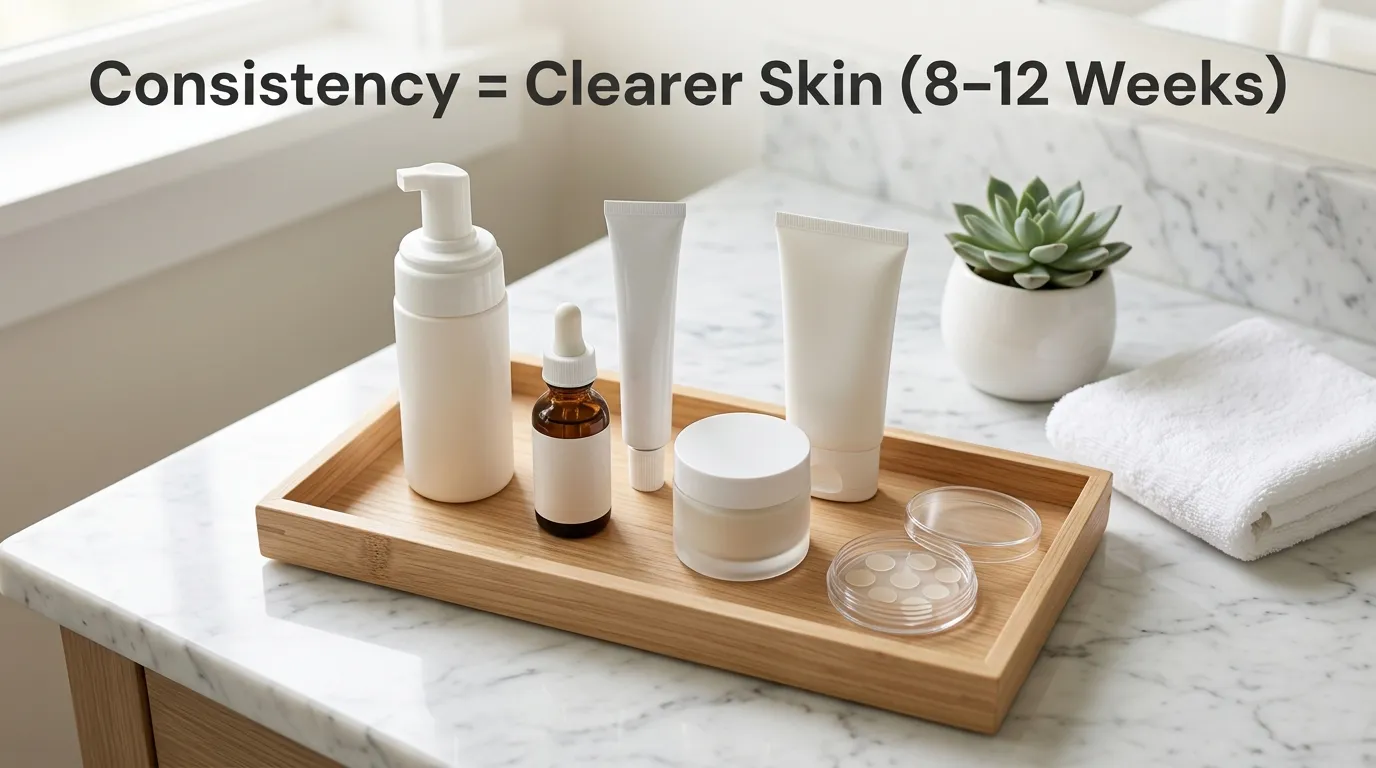
- Consistency is non-negotiable. You will not see results overnight. You must stick with your routine for at least 8-12 weeks to properly evaluate its effectiveness on your skin. Patience is part of the treatment.
Frequently asked questions about a skincare routine for acne
Here are answers to some of the most common questions I hear from clients when they are starting a new routine for acne-prone skin.
How long does it take for an acne routine to work?
You may see minor improvements in a few weeks, but for significant, lasting results, you must be consistent for at least 8-12 weeks. Skin cell turnover takes time, and the routine is designed to work over several of these cycles.
Can I skip moisturizer if I have very oily skin?
No, this is one of the biggest myths in skincare. Oily skin can still be dehydrated. When your skin lacks water, it often produces more oil to compensate. A lightweight, oil-free, non-comedogenic moisturizer will hydrate your skin and can help regulate oil production over time.
What are the best ingredients to look for in acne products?
The “gold standard” ingredients with the most scientific backing are: Salicylic Acid (BHA) for exfoliating inside the pores, Benzoyl Peroxide for killing acne-causing bacteria, and Retinoids (like Adapalene) for increasing skin cell turnover and preventing clogged pores.
Do I really need to wear sunscreen if I’m indoors all day?
Yes. UVA rays, which contribute to aging and the darkening of acne marks, can penetrate standard glass windows. If you sit near a window at home or in the office, you are getting sun exposure. It is best practice to wear sunscreen daily, regardless of your plans.