How to Build a Skincare Routine for Beginners: 4 Simple Steps (2026)
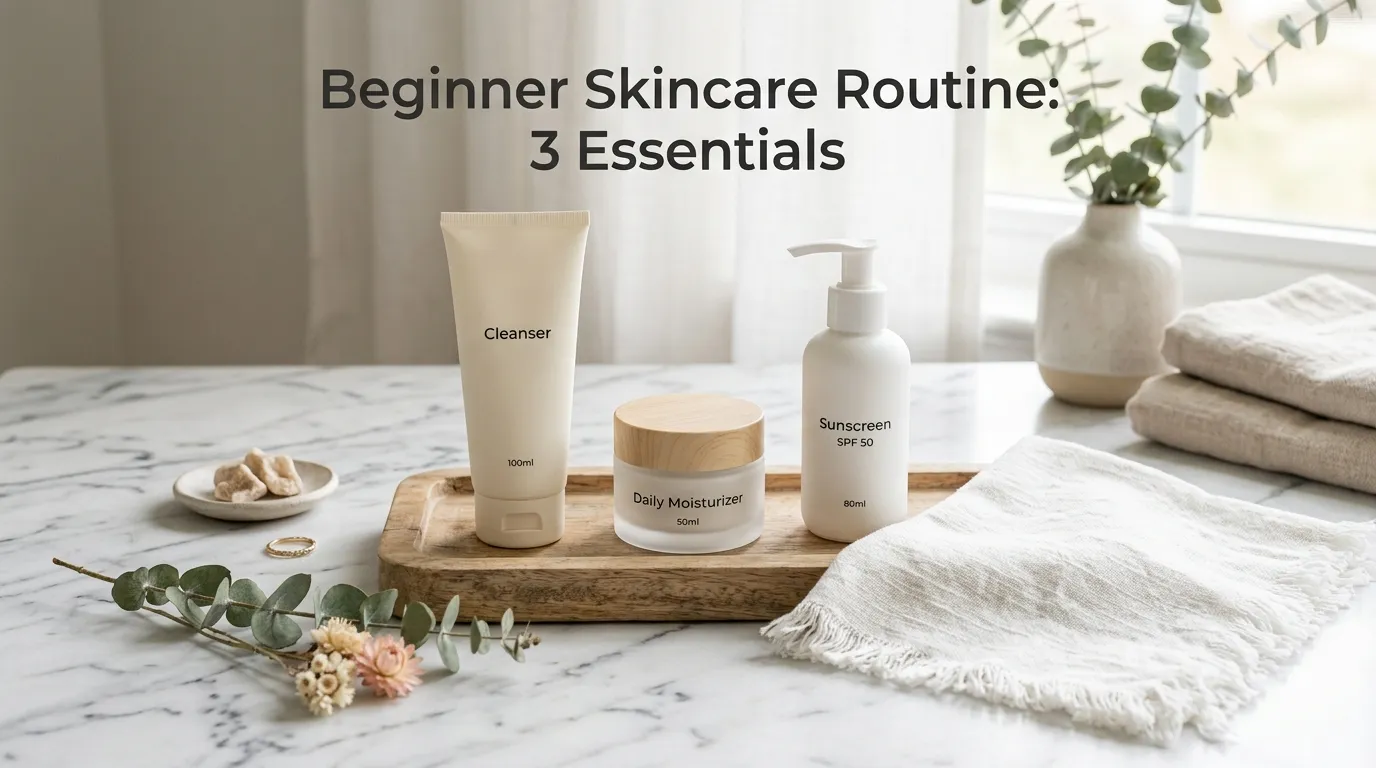
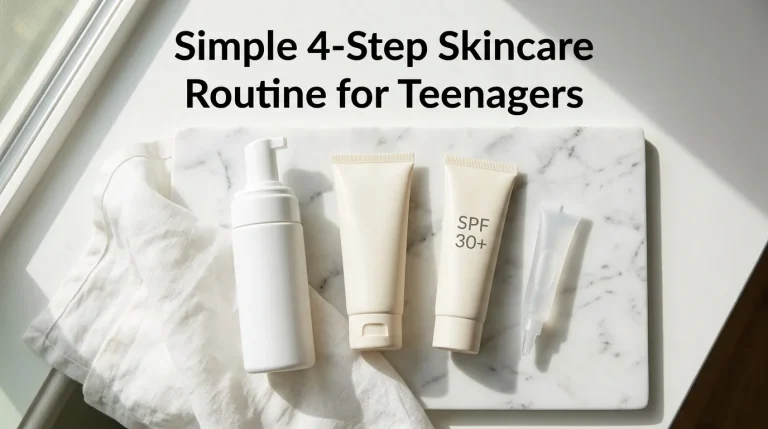
Hey there, I get it. Stepping into the world of skincare feels like trying to learn a new language, with a thousand different products all screaming for your attention. I’ve spent over 20 years helping people cut through that noise, and I promise you this: a great skincare routine for beginners isn’t about having more products, it’s about having the *right* three products used the *right* way. This guide is built on a simple, 4-step framework that takes less than 10 minutes a day. Forget the confusion. Let’s prepare the essentials and build a routine that actually delivers healthy, glowing skin.
What You Need Before You Start (The Essentials)
To ensure your new routine is a success from day one, we need to do a quick pre-flight check. Getting these things in order first is non-negotiable and will save you from wasting money and irritating your skin. Think of it as gathering your ingredients before you start cooking.
- Time Required: Approximately 5-10 minutes in the morning and 5-10 minutes in the evening.
- Difficulty: Beginner.
- Essential Tools & Products:
- A Gentle Cleanser (matched to your skin type)
- A Moisturizer (matched to your skin type)
- A Broad-Spectrum Sunscreen (SPF 30 or higher)
- Prerequisite Knowledge: You MUST know your skin type. We’ll cover this in the very first step.
The 4-Step Skincare Routine for Beginners
Now we get to the action. This daily plan is the foundation of good skin health. It’s designed to be simple, effective, and easy to maintain. Follow these four steps consistently, and you’ll be building a powerful habit for life. Let’s begin with the most crucial step of all.
Step 1 Determine Your Skin Type
Action: Identify your unique skin profile using the “Bare-Face” method. Skipping this step is like navigating without a map—you’ll end up in the wrong place. Every product choice you make from here on depends on this outcome.
Explanation:
- Wash your face with a basic, gentle cleanser.
- Gently pat your skin dry with a clean towel. Do not apply any serums, moisturizers, or other products.
- Wait for 30-60 minutes.
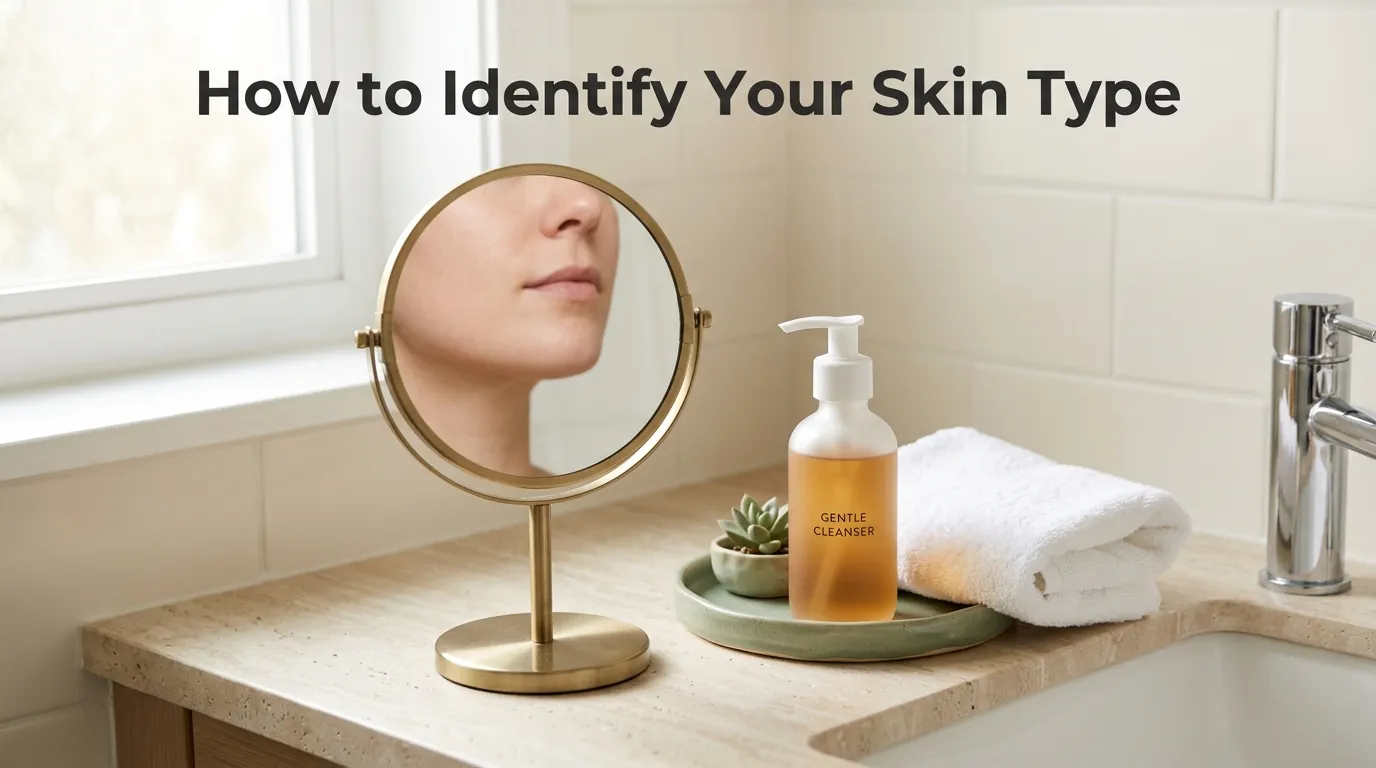
- Go to a mirror and closely observe how your skin looks and feels.
Result/Checkpoint: You’ve successfully identified your skin type if you observe one of the following:
- Dry: Your skin feels tight, pulled, or you may even see some flaky patches.
- Oily: Your face appears shiny or greasy all over, particularly on your forehead, nose, and chin (the T-zone).
- Combination: You notice oil in the T-zone, but your cheeks feel normal or even dry.
- Sensitive: Your skin is often red, feels itchy, or stings after product use.
- Normal: Your skin feels comfortable, balanced, and is neither greasy nor tight.
Step 2 Cleanse Your Face (AM & PM)
Action: Wash your face every morning and every evening with a gentle cleanser suited for the skin type you just identified. The goal is to remove impurities without stripping your skin’s natural protective oils.
Explanation:
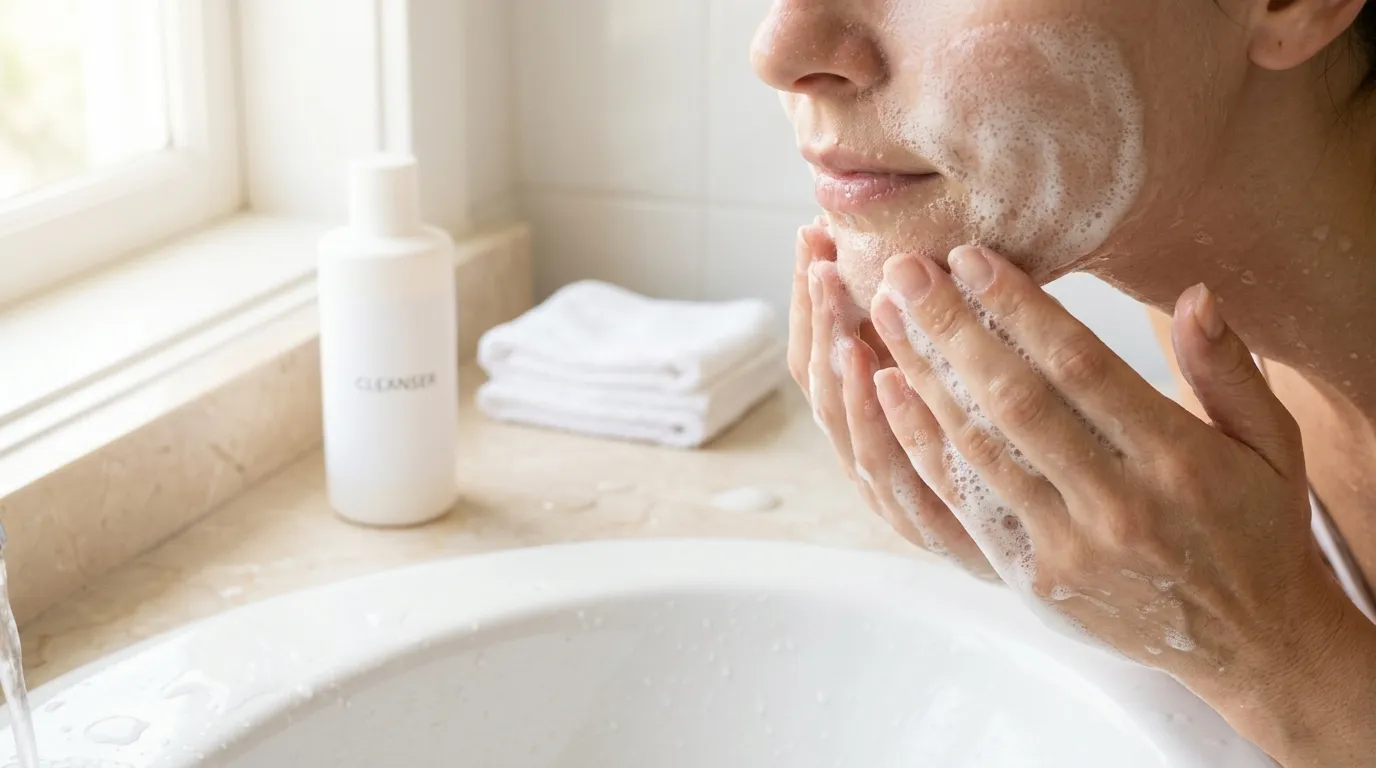
- Start by wetting your face with lukewarm water. Avoid hot water, as it can be drying.
- Squeeze a dime-sized amount of cleanser onto your clean fingertips.
- Gently massage the cleanser onto your face using circular motions for about 30-60 seconds. Cover all areas.
- Rinse your face thoroughly with lukewarm water until no cleanser residue remains.
- Pat your face dry with a soft, clean towel. Never rub, as this can cause irritation.
Result/Checkpoint: Your skin should feel clean, soft, and refreshed. If it feels tight, “squeaky,” or dry, your cleanser is likely too harsh for your skin type.
Expert Tip: Your Daily Routine Summary
| Routine | Step-by-Step Action |
|---|---|
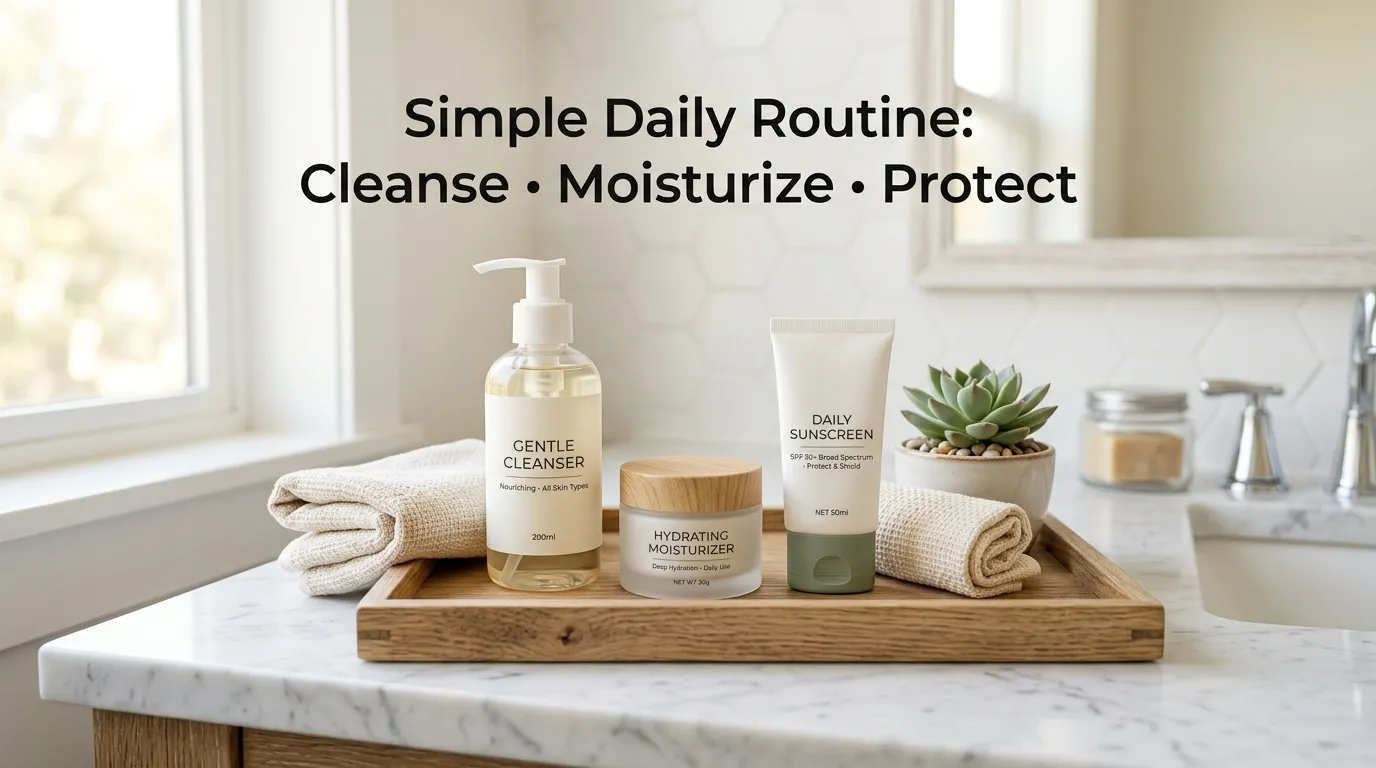
| Morning (AM) | 1. Cleanse → 2. Moisturize → 3. Sunscreen |
| Evening (PM) | 1. Cleanse → 2. Moisturize |
Step 3 Moisturize Your Skin (AM & PM)
Action: Apply a moisturizer to hydrate your skin and support its natural barrier. This is vital for all skin types, including oily skin, to prevent it from overproducing oil.
Explanation:
- While your skin is still slightly damp after cleansing, take a pea-sized amount of moisturizer. Applying to damp skin helps lock in hydration more effectively.
- Gently dot the moisturizer on your cheeks, forehead, chin, and nose.
- Spread it evenly across your face in gentle, upward strokes until it’s fully absorbed.
Result/Checkpoint: Your skin should feel soft, supple, and hydrated. It should not feel greasy, heavy, or sticky. If it does, your moisturizer may be too rich for your skin type.
Step 4 Protect with Sunscreen (AM Only)
Action: Apply a broad-spectrum sunscreen with at least SPF 30 as the final step of your morning routine, every single day.
Explanation:
- After your moisturizer has had a minute to absorb, apply your sunscreen. This should always be the last skincare product you put on.
- Use the “Two-Finger Rule” for the correct amount: squeeze a line of sunscreen down the length of your index and middle fingers.
- Apply this amount generously and evenly over your entire face, neck, and ears.
Result/Checkpoint: You’ve successfully applied sunscreen. There’s no immediate visible result, but this is the single most effective long-term action you can take for your skin’s health and appearance.
A Non-Negotiable Rule
Common Mistakes to Avoid (Troubleshooting)
Even with a simple routine, it’s easy to run into a few bumps. Based on my clinical observations, these are the most common issues beginners face. Here’s how to fix them quickly before they derail your progress.
- Problem: “My skin feels tight and dry after washing.”
Solution: Your cleanser is too harsh and is stripping your skin’s natural moisture barrier. Immediately switch to a milder, more hydrating formula, such as a cream or milky cleanser labeled “gentle” or “for sensitive skin.” - Problem: “I started getting new pimples.”
Solution: This could be an adverse reaction or “purging.” Stop using all new products. Wait for your skin to calm down, then reintroduce them ONE at a time, with a two-week waiting period between each product. This will help you pinpoint the exact culprit. Always patch-test new products on your inner arm for 24 hours first. - Problem: “My face feels greasy after applying my products.”
Solution: The product texture is too heavy for your skin. If you have oily or combination skin, look for products with labels like “oil-free,” “non-comedogenic,” or “gel-cream.” Lighter, water-based formulas will absorb better without leaving a greasy film.
My Top 3 Rules for Lasting Results
- Introduce One Product at a Time. I can’t stress this enough. Never start a new cleanser, moisturizer, and sunscreen all on the same day. Use the cleanser for two weeks alone, then add the moisturizer for two weeks, then the sunscreen. This is the only way to know if a product is irritating your skin.
- Consistency Is More Important Than Price. A simple, consistent routine with affordable drugstore products will always outperform an expensive, inconsistent one. Don’t skip days. The magic is in the repetition.
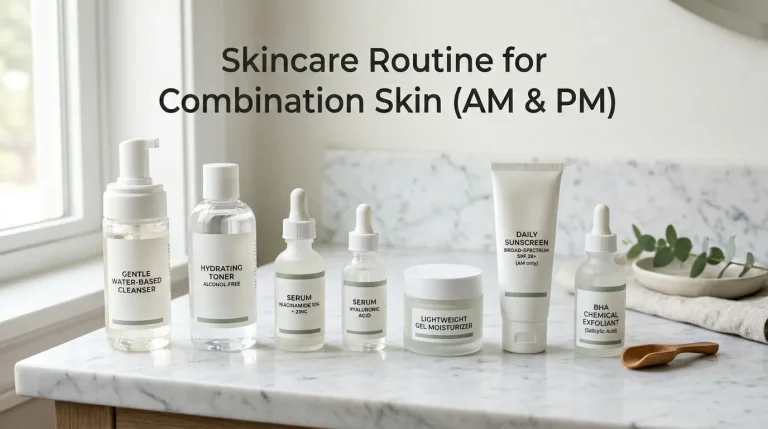
- “Less is More.” As a beginner, your goal is to support your skin’s natural functions. Stick to this core three-product routine for at least 3-6 months before even *thinking* about adding serums, toners, or exfoliants. Master the basics first.
Frequently asked questions about a skincare routine for beginners
I know you probably still have some questions. That’s perfectly normal! Here are quick answers to the most common ones I hear from people just starting out with a skincare routine for beginners.
How long does it take to see results from a new skincare routine?
Patience is key. Your skin’s natural cell turnover cycle is about 28-40 days. While you might feel better hydration immediately, you should look for noticeable improvements in skin texture and clarity after 4-6 weeks of consistent, twice-daily use.
Do I really need a toner, serum, or eye cream as a beginner?
No, you do not. The goal for a beginner is to establish a solid, consistent foundation. Master the core three steps (Cleanse, Moisturize, Protect) for several months. Once that’s a habit, you can consider adding a serum to target a *specific* concern, like dark spots or fine lines.
Can I use my body lotion on my face?
I would strongly advise against it. Body lotions are typically formulated to be much thicker, often contain fragrances, and may have occlusive ingredients that can clog the more delicate pores on your face, potentially leading to breakouts and congestion.
Do I need to wear sunscreen if my makeup has SPF?
Yes, you absolutely do. To get the level of protection stated on the bottle (e.g., SPF 15), you would need to apply a thick, cake-like layer of foundation—far more than anyone actually wears. Always use a dedicated, broad-spectrum sunscreen as your final skincare step before makeup.