How to Build a Skincare Routine for Oily Skin: A 4-Step Guide (2026)
I get it. The constant shine, the enlarged pores, the surprise breakouts—managing oily skin can feel like a full-time job. After years of fighting the grease, I’ve learned that the secret isn’t to strip the skin, but to balance it. To finally build an effective skincare routine for oily skin, you need a simple, consistent framework that controls oil without causing irritation. This guide provides a 4-step morning and evening process using key ingredients like Salicylic Acid and Niacinamide to give you a clear, matte complexion. This method is specifically designed for beginners and has a high success rate for reducing shine within the first two weeks. Let’s gather your essentials and begin.
What You’ll Need: The Essential Toolkit for Oily Skin
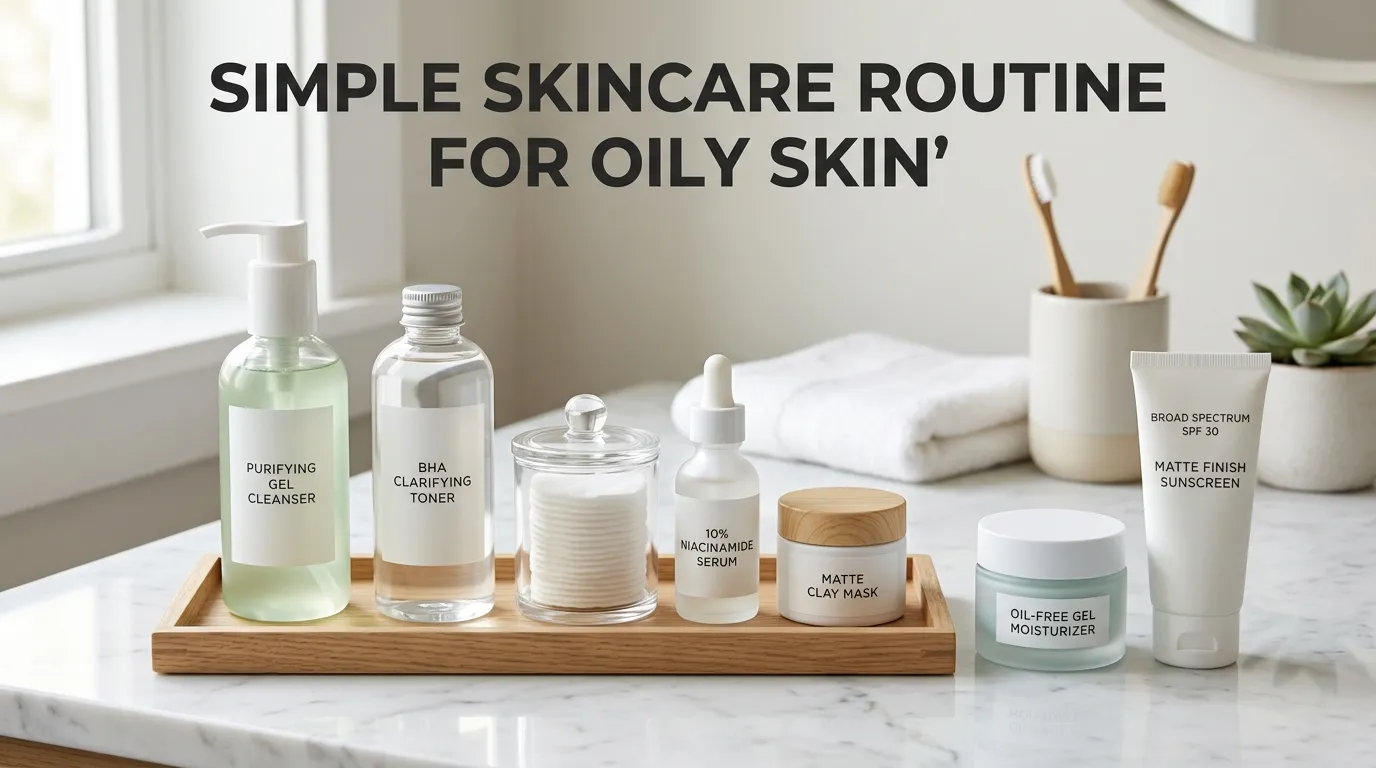
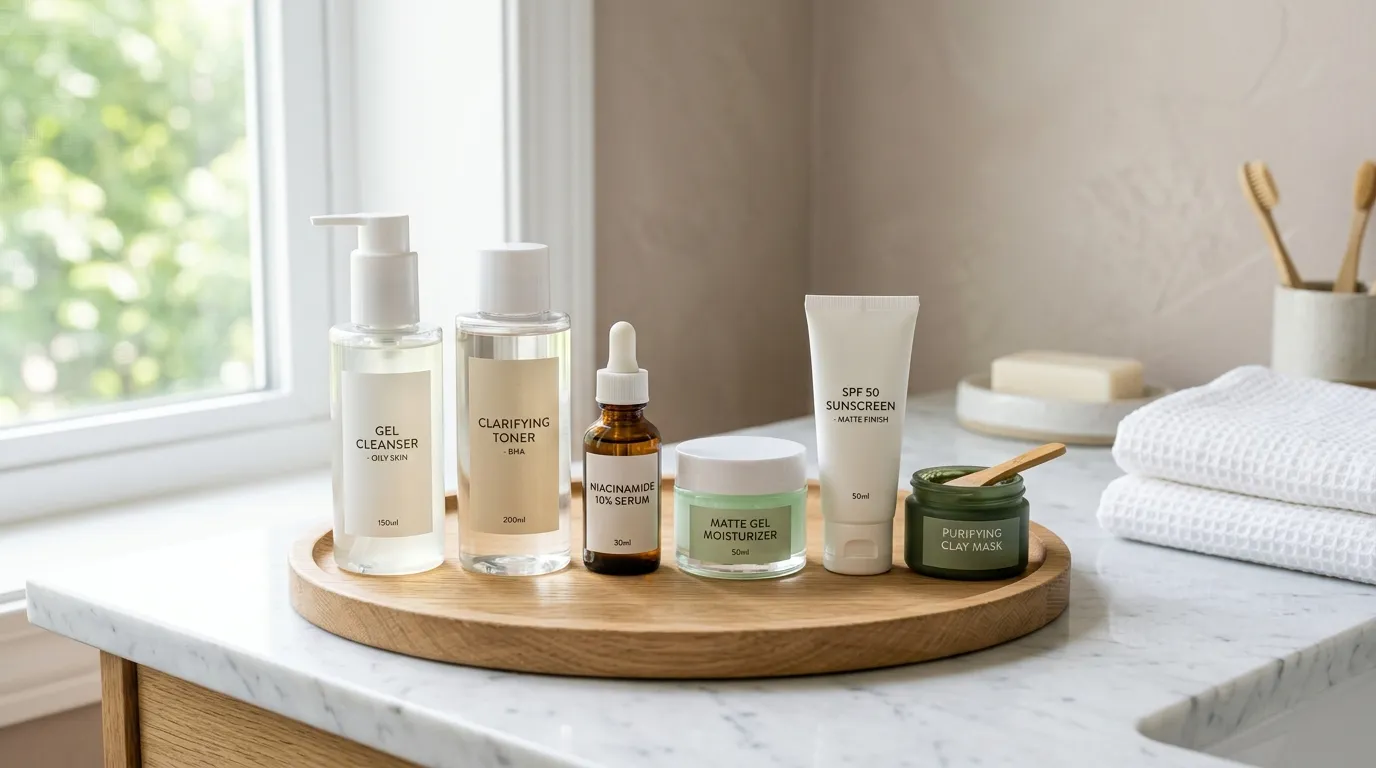
To ensure your routine is smooth and effective from day one, make sure you have the right types of products on hand. Look for labels like “oil-free,” “non-comedogenic,” and “for oily/acne-prone skin.”
- Total Time: Approximately 5-10 minutes for the morning routine and 10-15 minutes for the evening routine.
- Difficulty: Beginner-friendly.
- Core Four (Must-Haves):
- Gentle Cleanser: A foaming or gel-based formula. Key ingredients to look for are Salicylic Acid or Benzoyl Peroxide.
- Exfoliating Toner: An alcohol-free toner containing BHA (like Salicylic Acid) or AHA (like Glycolic Acid).
- Lightweight Moisturizer: A gel, gel-cream, or light lotion texture. Look for Hyaluronic Acid, Niacinamide, or Glycerin.
- Broad-Spectrum Sunscreen: SPF 30 or higher with a matte or natural finish.
- Optional Add-ons (For Enhanced Results):
- Oil-based Cleanser or Cleansing Balm: Essential for the evening double cleanse.
- Targeted Serum: A serum with Niacinamide (for oil control) or Salicylic Acid (for breakouts).
- Clay Mask: A Bentonite or Kaolin clay mask for use 1-2 times per week.
The 4-Step Morning (AM) Skincare Routine: For Oil Control & Protection
Your morning routine has two primary goals: to remove the excess oil built up overnight and to protect your skin from environmental damage throughout the day. Follow these four steps precisely every morning for a shine-free, protected complexion.
Step 1 Cleanse with a Gentle Foaming Cleanser
Action: Wet your face with lukewarm water. Squeeze a pea-sized amount of your gel or foaming cleanser onto your fingertips and gently massage it onto your face in circular motions for a full 60 seconds.
Explanation: This initial step is crucial for removing excess sebum and impurities that have accumulated while you slept. The 60-second rule ensures the active ingredients in the cleanser have enough time to work effectively without stripping your skin’s natural moisture barrier.
Result Check: After rinsing thoroughly and patting dry with a clean towel, your skin should feel clean and refreshed, not tight or “squeaky.”
Risks to avoid
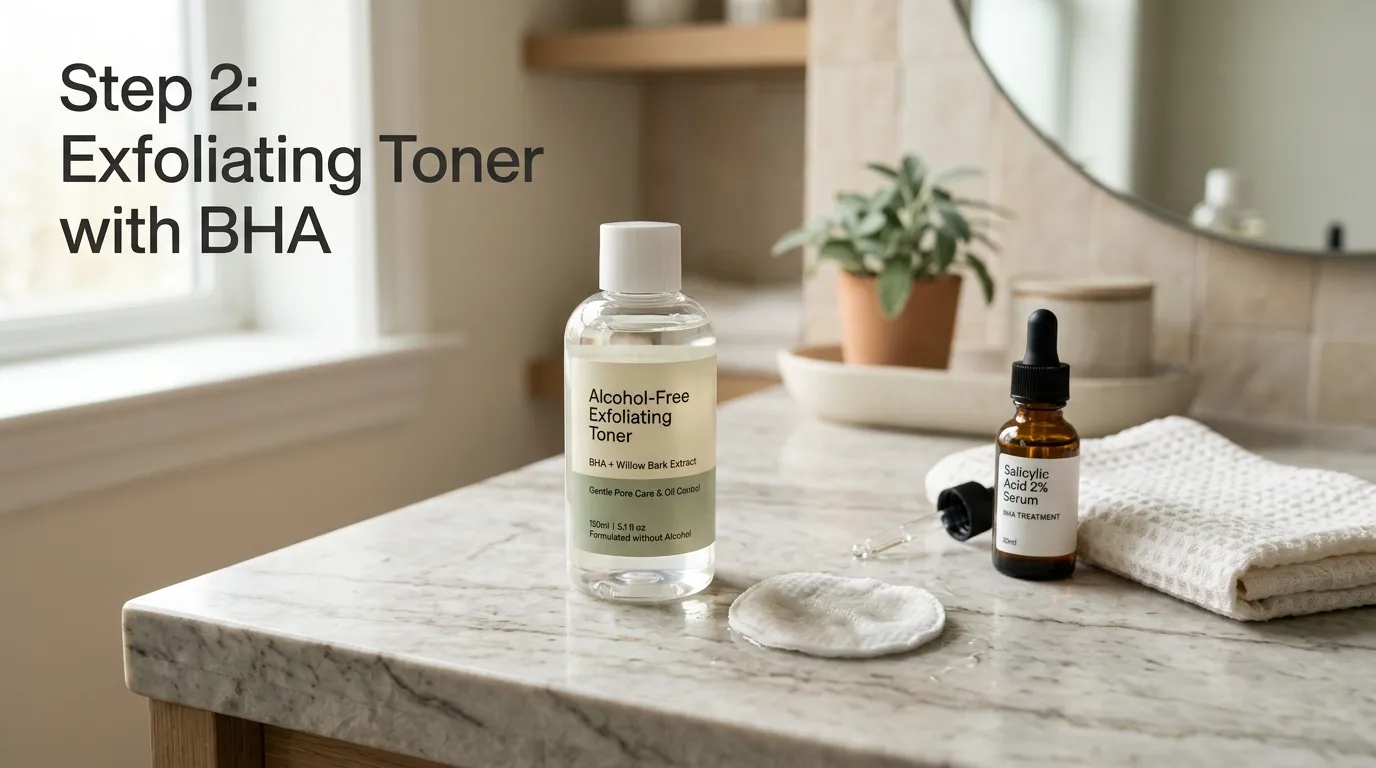
Step 2 Apply an Alcohol-Free, Exfoliating Toner
Action: Pour a small amount of BHA toner onto a cotton pad. Gently swipe the pad across your entire face and neck, avoiding the delicate eye and lip areas.
Explanation: A toner with Salicylic Acid (BHA) is oil-soluble, meaning it can penetrate deep inside your pores to dissolve the mixture of dead skin cells and sebum that leads to blackheads and pimples. This also helps to balance your skin’s pH level after cleansing.
Result Check: Your skin should not feel sticky or dry after application. The toner should absorb quickly, leaving your skin prepped for the next step.
Step 3 Hydrate with a Lightweight, Oil-Free Moisturizer
Action: Apply a dime-sized amount of a gel or lightweight lotion moisturizer onto your face and neck. Gently pat it into the skin until fully absorbed.
Explanation: This is the most skipped, yet most critical, step for oily skin. When your skin is dehydrated, it produces more oil to compensate. A lightweight moisturizer provides the necessary hydration, signaling to your sebaceous glands that they can slow down oil production.
Result Check: Your skin should feel plump, hydrated, and soft, with no greasy or heavy residue.
Step 4 Protect with a Broad-Spectrum SPF 30+ Sunscreen
Action: As the final step, apply a generous amount of an oil-free, non-comedogenic sunscreen. Use the “two-finger” rule: squeeze a line of sunscreen along the length of your index and middle fingers, and apply that amount to your face and neck.
Explanation: Sunscreen is non-negotiable. It protects your skin from UV damage, which can worsen acne and lead to post-inflammatory hyperpigmentation (the dark spots left after a pimple heals). Modern formulas for oily skin are lightweight and can even help control shine.
Result Check: The sunscreen should blend into your skin without leaving a heavy, greasy white cast. Your skin should have a natural or matte finish.
The 4-Step Evening (PM) Skincare Routine: For Deep Cleansing & Repair
Your evening routine is designed to thoroughly remove the day’s grime, including sunscreen and makeup, and to deliver potent, repairing ingredients while your skin is in its natural recovery mode overnight.
Step 1 Double Cleanse to Dissolve Impurities
Action:
- First Cleanse (Oil-Based): Apply a cleansing oil or balm to dry skin. Massage for 60 seconds to break down sunscreen, makeup, and surface oil. Add a splash of water to emulsify (it will turn milky), then rinse completely.
- Second Cleanse (Water-Based): Follow up immediately with your regular gel or foaming cleanser, just as you did in the morning routine. Massage for 60 seconds, then rinse.
Explanation: Oil dissolves oil. The first cleanse effectively melts away all oil-based impurities that a water-based cleanser alone can’t tackle. The second cleanse then washes away any remaining residue, leaving your skin perfectly clean and ready for treatment products.
Result Check: Your skin should feel exceptionally clean and soft, with no trace of makeup or sunscreen.

Step 2 Apply Targeted Treatment Serums
Action: Apply 2-3 drops of your chosen serum (e.g., a serum with 10% Niacinamide to control oil and minimize pores, or a Salicylic Acid treatment for breakouts). Gently pat the serum into your skin until absorbed.
Explanation: Nighttime is the optimal time for skin repair. Active ingredients in serums can work uninterrupted by UV rays and environmental stressors, delivering maximum benefits.
Result Check: The serum should absorb fully without feeling tacky. Your skin is now prepped for the final hydration step.
Step 3 Moisturize to Lock in Hydration
Action: Apply the same lightweight, oil-free moisturizer you used in the morning.
Explanation: This final layer of moisturizer seals in the active ingredients from your serum and provides essential hydration to support your skin’s overnight recovery and repair cycle, preventing nighttime water loss.
Result Check: Your skin feels comfortable, hydrated, and ready for bed—not heavy or occluded.
Step 4 Use a Clay Mask (1-2 Times Per Week)
Action: On the 1-2 nights per week you choose to do this, perform it after cleansing and before your other steps. Apply a thin, even layer of a Kaolin or Bentonite clay mask to clean, dry skin. Leave it on for 10-15 minutes, or until it’s tacky but not fully dry. Rinse thoroughly with lukewarm water.
Explanation: Clay masks are excellent for absorbing excess oil, pulling impurities from the pores, and providing a temporary pore-minimizing effect. This is a great “reset” for your skin.
Result Check: After rinsing, your pores should appear smaller and your skin should feel smoother and look more matte.
Expert Pro-Tips for Maximum Results
- Introduce One Product at a Time: When adding a new product to your routine, give it a 2-week trial period before introducing anything else. This helps you easily identify if a specific product is causing irritation or breakouts.
- Consistency Over Complexity: A simple, 4-step routine you perform consistently every single day is far more effective than a complicated 10-step routine you only manage to do once a week. Don’t overdo it.
- Look Beyond Skincare: Your lifestyle plays a huge role. Clinical observations show a strong link between high-glycemic diets, stress, and increased sebum production. Prioritize a balanced diet, adequate sleep (7-8 hours), and stress management techniques.
- Hands Off: Avoid touching your face or picking at blemishes. Your hands transfer bacteria, which can worsen breakouts and lead to scarring.
Common Mistakes & How to Fix Them (Troubleshooting)
If you’re not seeing the results you want, you might be making one of these common mistakes. Here’s how to get back on track.
| Problem | Solution |
|---|---|
| “My skin feels tight and ‘squeaky clean’ after washing.” Cause: Your cleanser is too harsh and is stripping your skin barrier. |
Switch to a pH-balanced, sulfate-free cleanser. Ensure you are only washing for 60 seconds, no more. The goal is balanced, not stripped. |
| “I’m still very shiny by noon.” Cause: Your moisturizer may not be hydrating enough, or you’re using products that are secretly drying your skin out. |
Ensure your moisturizer contains a humectant like Hyaluronic Acid. Use oil-blotting papers midday instead of layering on more powder, which can clog pores. |
| “I started breaking out *more* after starting this routine.” Cause: This could be “skin purging” from new actives (like BHA) or a specific product is clogging your pores. |
If you’ve introduced BHA or retinoids, purging is common and can last 4-6 weeks. Be patient. If you suspect another new product, stop using it for 2 weeks to see if the breakout subsides. |
Frequently asked questions about skincare routine for oily skin
Here are answers to some of the most common questions I get from clients about building the perfect skincare routine for oily skin.
How often should I exfoliate oily skin?
Start with a chemical exfoliant (like the BHA toner in this routine) 2-3 times per week in the evening. As your skin adapts, you may be able to increase this to daily use, but listen to your skin. Avoid harsh physical scrubs with large, jagged particles (like crushed shells), as these can create micro-tears in the skin and worsen inflammation.
Can I use a facial oil if my skin is oily?
Yes, but you must choose the right one. Certain non-comedogenic oils can actually help balance your skin. Look for oils high in linoleic acid, such as rosehip or grapeseed oil. A more modern and stable option is Squalane, which mimics the skin’s natural sebum and can help regulate oil production. Use just 2-3 drops as the very last step in your evening routine.
How long will it take to see results from this routine?
From a consistency standpoint, you should notice less surface shine within the first 1-2 weeks. However, for more significant improvements in pore appearance and a reduction in breakouts, you must give the routine a consistent 6-8 weeks. This is the average time it takes for a full skin cell turnover cycle, allowing you to see the true effects of the products.