How to Build a Skincare Routine: A Step-by-Step Guide (2026)
Hey there! I’ll never forget the first time I walked into a beauty store, feeling completely overwhelmed by the walls of cleansers, serums, and creams. I spent years just guessing, mixing and matching products with no real plan. It wasn’t until I understood the why behind the order that I finally started seeing the clear, healthy skin I’d always wanted. I’m here to save you that time and frustration.
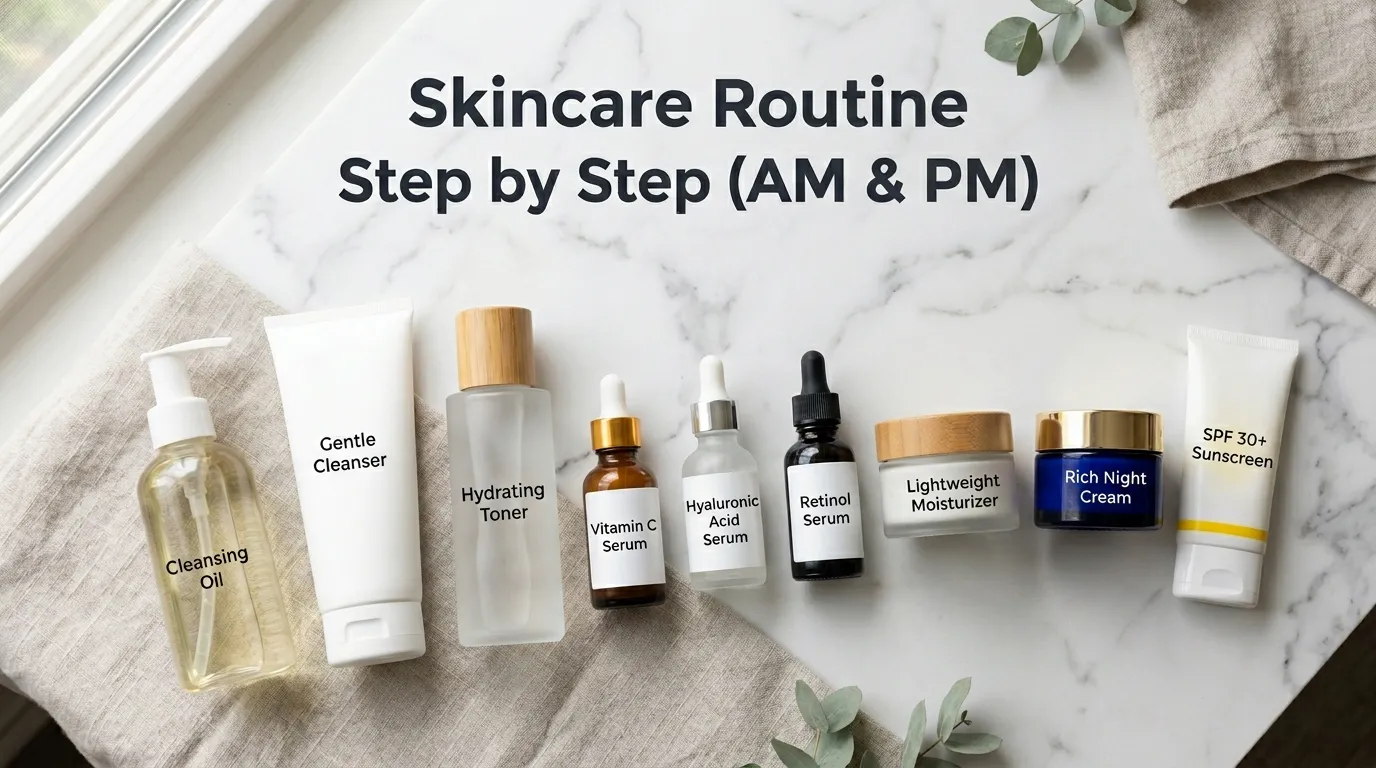
To build an effective skincare routine step by step, you must apply products in the correct sequence, from thinnest to thickest, to ensure maximum absorption and efficacy. This guide provides a simple, actionable framework for both morning (AM) and evening (PM) routines, focusing on the core principles of protecting your skin during the day and repairing it at night. This process is designed for beginners and takes less than 15 minutes per day. Let’s gather your products and build a routine that delivers real results.
What You Need Before You Start
For your skincare routine to be successful, a quick pre-flight check is essential. Having the right products for your specific skin type is the most critical factor. Here’s what you need to have ready.
- Time Commitment: 5-10 minutes for the morning routine, 10-15 minutes for the evening routine.
- Difficulty: Beginner.
- Essential Products: A gentle cleanser, a moisturizer, and a broad-spectrum sunscreen with at least SPF 30.
- Prerequisite: You must identify your skin type. Applying products for oily skin to dry skin can cause irritation, and vice-versa.
| Skin Type | How to Identify |
|---|---|
| Oily | Skin looks shiny and feels greasy, especially in the T-zone (forehead, nose, chin). Pores are visibly enlarged. |
| Dry | Skin feels tight, looks dull, and may have flaky patches. Pores are nearly invisible. |
| Combination | A mix of oily (usually the T-zone) and dry (usually the cheeks) skin. |
| Sensitive | Skin easily reacts to products, resulting in redness, itching, or stinging. |

The 5-Step Morning (AM) Skincare Routine: Protect & Preserve
The entire purpose of your morning routine is to prepare your skin for the day ahead. This means protecting it from sun exposure, pollution, and other environmental stressors. Let’s begin with the first essential step.
Step 1: Cleanse Your Face
Action: Wet your face with lukewarm water. Apply a nickel-sized amount of a gentle cleanser to your fingertips and massage it onto your face in circular motions for a full 60 seconds. Rinse thoroughly and gently pat your skin dry with a clean towel.
Explanation: This removes any oil, sweat, and dead skin cells that have built up overnight. It creates a clean canvas, allowing the products you apply next to penetrate the skin effectively.
Result: Your skin should feel clean and refreshed, but not tight or “squeaky.” If it feels stripped, your cleanser is too harsh.
Step 2: Apply a Toner (Optional)
Action: Pour a small amount of toner onto a cotton pad and gently swipe it across your face and neck. Alternatively, you can pour it into your palms and press it directly into your skin.
Explanation: A good toner balances your skin’s pH, removes any final traces of impurities, and provides a light layer of hydration, prepping it for your serum.
Result: The toner should absorb quickly, leaving your skin feeling damp and ready for the next step. It should never sting or cause redness.
Step 3: Treat with an Antioxidant Serum
Action: Dispense 3-4 drops of an antioxidant serum, like Vitamin C, onto your fingertips. Gently press and pat the serum into your skin on your face and neck. Avoid rubbing.
Explanation: Antioxidants are your skin’s personal bodyguards. They neutralize free radicals from UV rays and pollution, which are a primary cause of premature aging and skin damage.
Result: A well-formulated serum will absorb within 30-60 seconds without leaving a sticky or greasy film.
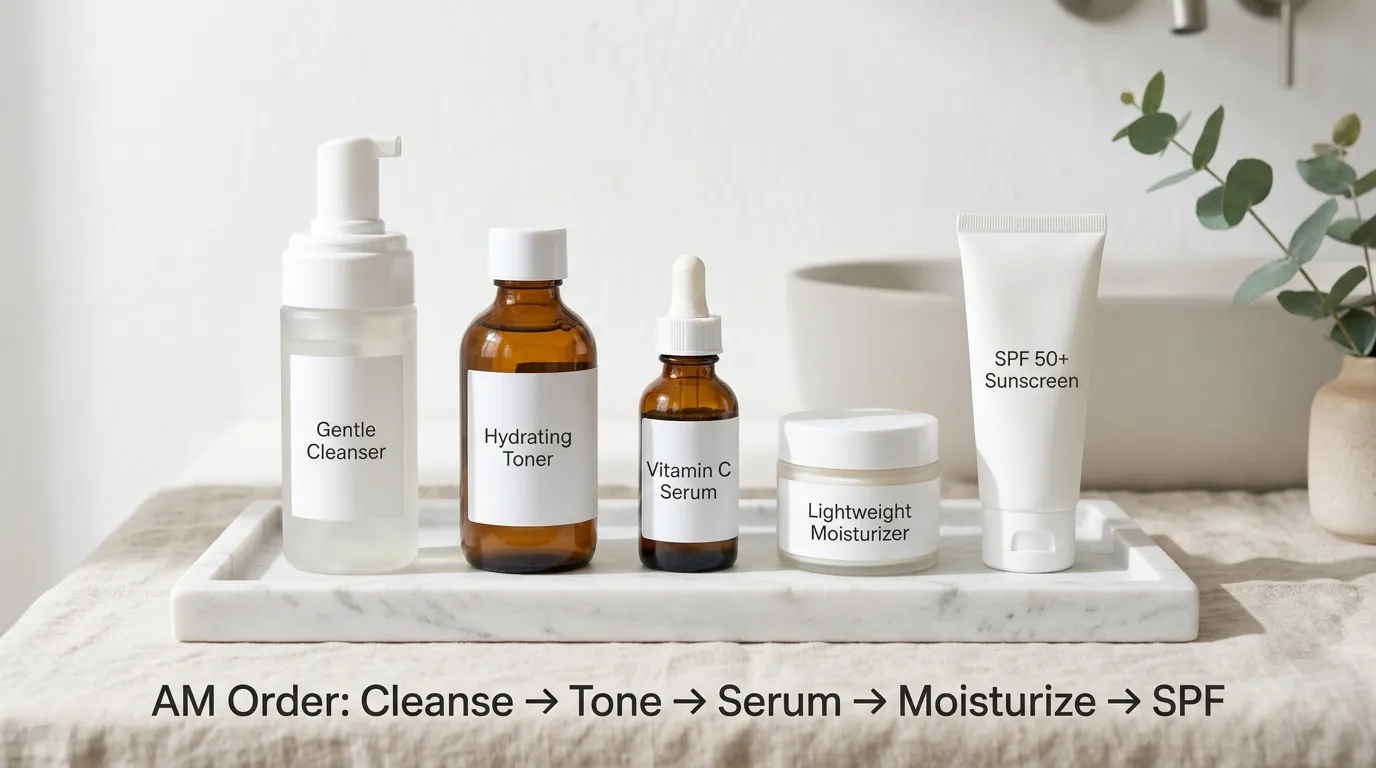
Step 4: Moisturize to Hydrate
Action: Take a pea-sized amount of moisturizer. Warm it between your fingers, then gently apply it to your face and neck using upward strokes.
Explanation: Moisturizer does two critical jobs: it hydrates your skin by adding moisture, and it creates a protective barrier to lock in your serum and prevent water loss throughout the day.
Result: Your skin should feel soft, supple, and hydrated. If you have oily skin, a lightweight gel or lotion is best. For dry skin, opt for a thicker cream.
Critical Step: Do Not Skip Sunscreen
Step 5: Protect with Sunscreen
Action: Apply a generous amount of broad-spectrum sunscreen with SPF 30 or higher. The “two-finger rule” is a great guideline: squeeze sunscreen along the length of your index and middle fingers, and apply that amount to your face and neck.
Explanation: This is the final and most crucial step. It shields your skin from UVA rays (which cause aging) and UVB rays (which cause burning). You must apply it after your moisturizer has absorbed.
Result: A modern sunscreen should blend into your skin without a heavy white cast. Allow it to set for at least 15 minutes before applying makeup.
The 5-Step Evening (PM) Skincare Routine: Repair & Regenerate
Your nighttime routine is all about cleansing the day away and giving your skin the tools it needs to repair itself while you sleep. This is when you’ll use more targeted treatments. Let’s dive into the process.
Step 1: Double Cleanse to Remove Impurities
Action:
- First Cleanse (Oil-Based): On dry skin, massage a cleansing oil or balm all over your face for 60 seconds. This will dissolve makeup, sunscreen, and excess sebum. Add a little water to emulsify it into a milky texture, then rinse completely.
- Second Cleanse (Water-Based): Follow up with your regular gentle cleanser, just as you did in the morning, to wash the skin itself.
Explanation: A single cleanse is often not enough to break down the resilient, oil-based products we wear all day. Double cleansing ensures your skin is truly clean and your pores are clear.
Result: Your skin will feel exceptionally clean and free of any residue from the day, but still balanced and not stripped.
Warning: Danger of Over-Exfoliation
Step 2: Exfoliate to Renew Skin (2-3 Times a Week Only)
Action: On the nights you exfoliate, after cleansing, apply a chemical exfoliant (such as a toner with AHA or BHA) with a cotton pad. Wait a few minutes before proceeding.
Explanation: Exfoliants work by dissolving the “glue” that holds dead skin cells to the surface. This process helps to unclog pores, smooth texture, and brighten your complexion.
Result: Over time, you’ll notice smoother, more radiant skin. Immediately after use, your skin should not feel raw or irritated.
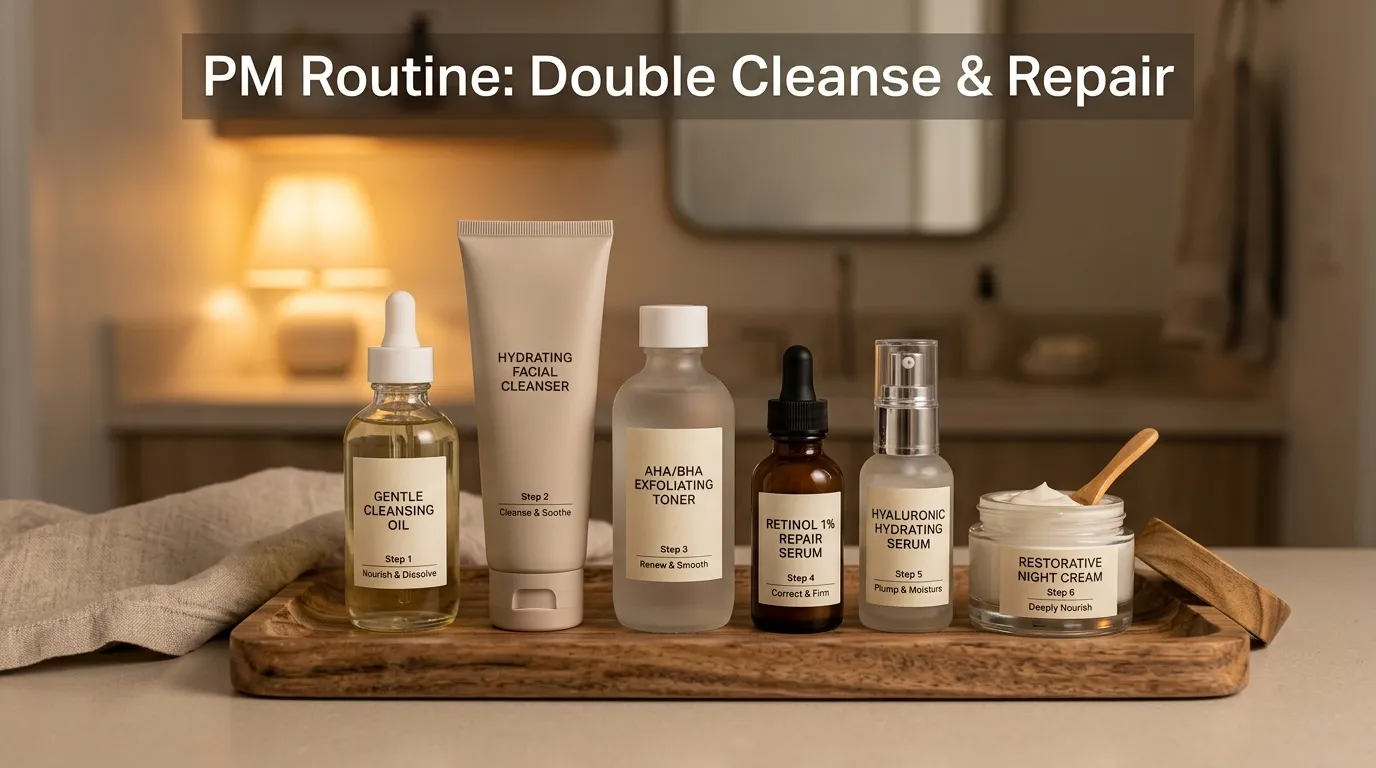
Step 3: Apply a Toner
Action: Apply your toner just as you would in the morning. On exfoliation nights, you can use a simple hydrating toner to soothe the skin.
Explanation: This step adds a layer of hydration and preps the skin to absorb the powerful treatment serum that comes next.
Result: Your skin feels calm, hydrated, and prepped.
Step 4: Treat with a Targeted Serum
Action: Apply a few drops of a treatment serum to address your specific skin concerns. Common options include Retinol (for anti-aging), Hyaluronic Acid (for hydration), or Niacinamide (for pores and redness).
Explanation: Nighttime is when your skin is in peak repair mode. Applying potent, active ingredients during this window maximizes their effectiveness.
Result: The serum should absorb fully. If you’re new to Retinol, start with a low concentration (0.25%-0.3%) just 1-2 times a week to build tolerance.
Step 5: Moisturize with a Night Cream
Action: Apply a night cream, which is typically richer than a day cream. This is also when you would gently tap on a separate eye cream, if you use one.
Explanation: A night cream creates a rich, occlusive barrier. This locks in your treatment serum and prevents moisture from evaporating while you sleep, allowing your skin to fully benefit from the regenerative process.
Result: You’ll wake up with skin that feels plump, hydrated, and soft.
Common Mistakes and How to Fix Them
Even with the right steps, you might run into a few issues. Here’s how to troubleshoot the most common problems in a skincare routine.
- Problem: Product “Pilling” (rolling up into little balls).
Cause: You’re either applying too much product, layering too quickly, or using incompatible formulas (like a silicone-based product over a water-based one).
Fix: Use smaller amounts of each product and wait at least 30-60 seconds between layers to allow for absorption. - Problem: Skin feels tight and “squeaky clean” after washing.
Cause: Your cleanser is too harsh and is stripping your skin’s protective lipid barrier.
Fix: Immediately switch to a pH-balanced, sulfate-free, gentle cleanser. Clean skin should feel comfortable, not tight. - Problem: You’re breaking out after starting a new routine.
Cause: This could be “purging” (a temporary flare-up caused by active ingredients like exfoliants or retinol) or a genuine negative reaction.
Fix: Purging typically occurs where you usually get pimples and clears up within 4-6 weeks. A breakout from a reaction can happen anywhere. If breakouts persist beyond 6 weeks, stop using the newest product you introduced.
Expert Corner: The Golden Rule
Expert Tips for Maximum Results
Ready to take your routine to the next level? These professional tips can significantly boost your results.
- The 60-Second Rule: When cleansing, spend a full 60 seconds gently massaging the cleanser into your skin. This simple change allows the ingredients to work more effectively and ensures you’re thoroughly cleaning your pores.
- Patch Test Everything: Before applying a new product to your entire face, test it on a small, discreet area (like behind your ear) for at least 24-48 hours. This helps you identify potential allergic reactions before they become a full-blown problem.
- Apply to Damp Skin: Apply products like hyaluronic acid serums and moisturizers to slightly damp skin. This helps to trap and lock in more moisture, boosting hydration levels significantly.
Frequently Asked Questions about the skincare routine step by step
Here are answers to some of the most common questions I get about building a skincare routine.
How long does it take to see results from a new skincare routine?
While you might feel immediate effects like hydration, visible changes to skin texture and tone typically take time. According to clinical observations, you should give a new routine at least 4-8 weeks of consistent use to see meaningful results, as this is the approximate length of a full skin cell turnover cycle.
Do I really need to do a routine every single day?
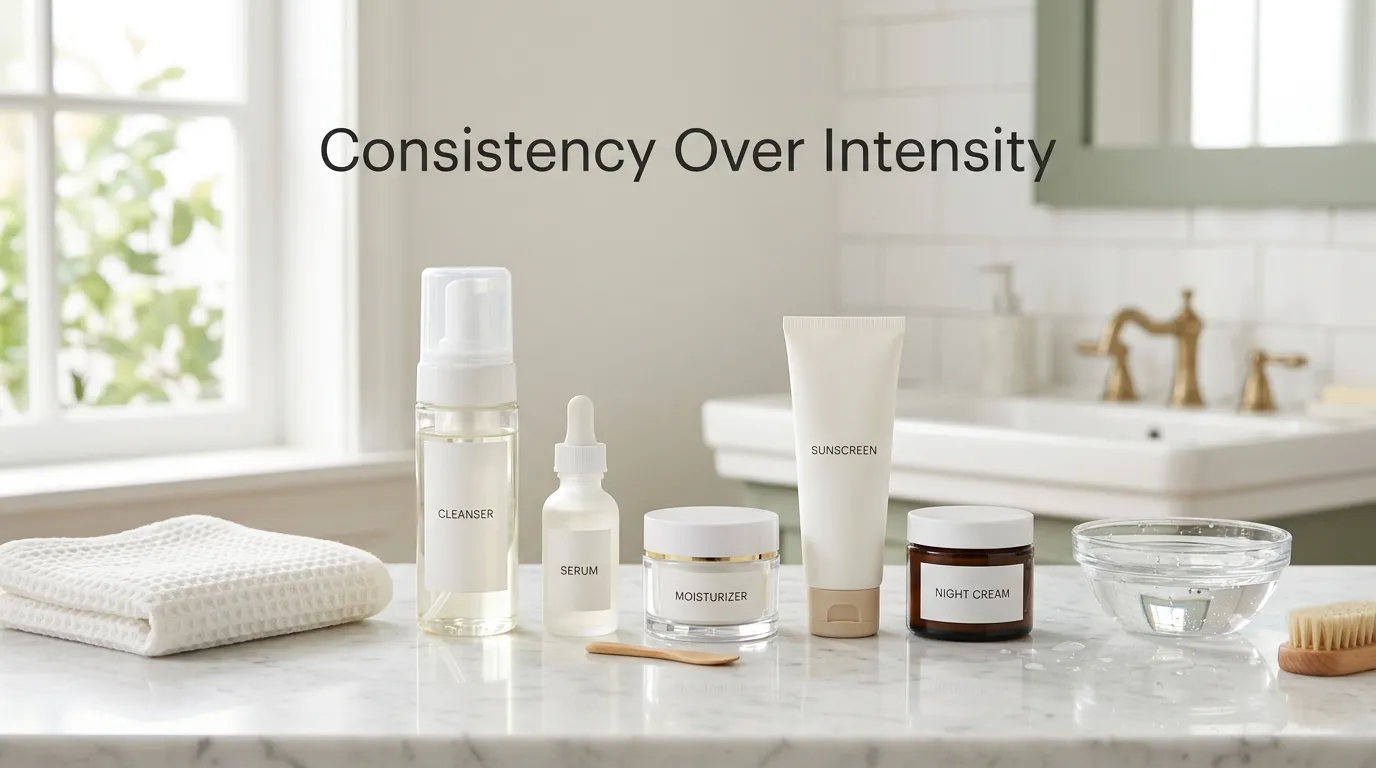
Yes. Consistency is the most crucial factor for success. Think of it like exercising or eating healthy; the benefits come from sustained effort. At a minimum, cleansing, moisturizing, and especially applying sunscreen are daily non-negotiables for skin health.
In what order do I apply products from thinnest to thickest?
That is the correct and most effective rule of thumb. The proper sequence is based on product consistency: apply your most watery products first (like toners and essences), followed by more viscous serums, then lotions or creams, and finally oils. This ensures that the thinner products can penetrate the skin without being blocked by heavier ones.
Can I skip the morning cleanse?
This depends on your skin type. For those with very dry or sensitive skin, a simple rinse with lukewarm water in the morning may be sufficient. However, for oily and acne-prone skin types, a gentle cleanse in the morning is highly recommended to remove excess sebum and bacteria that have accumulated overnight.