How to Get Glass Skin: A Step-by-Step Guide for Every Skin Type
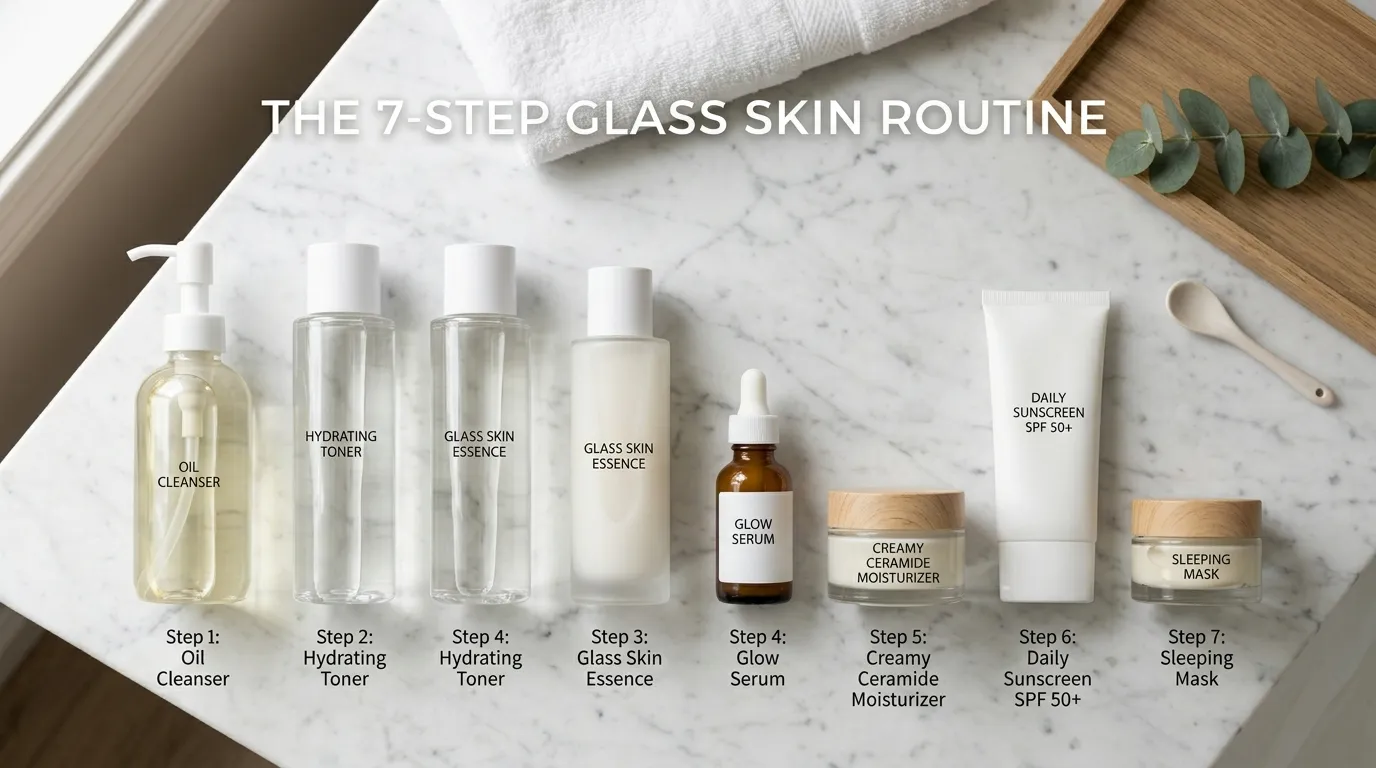
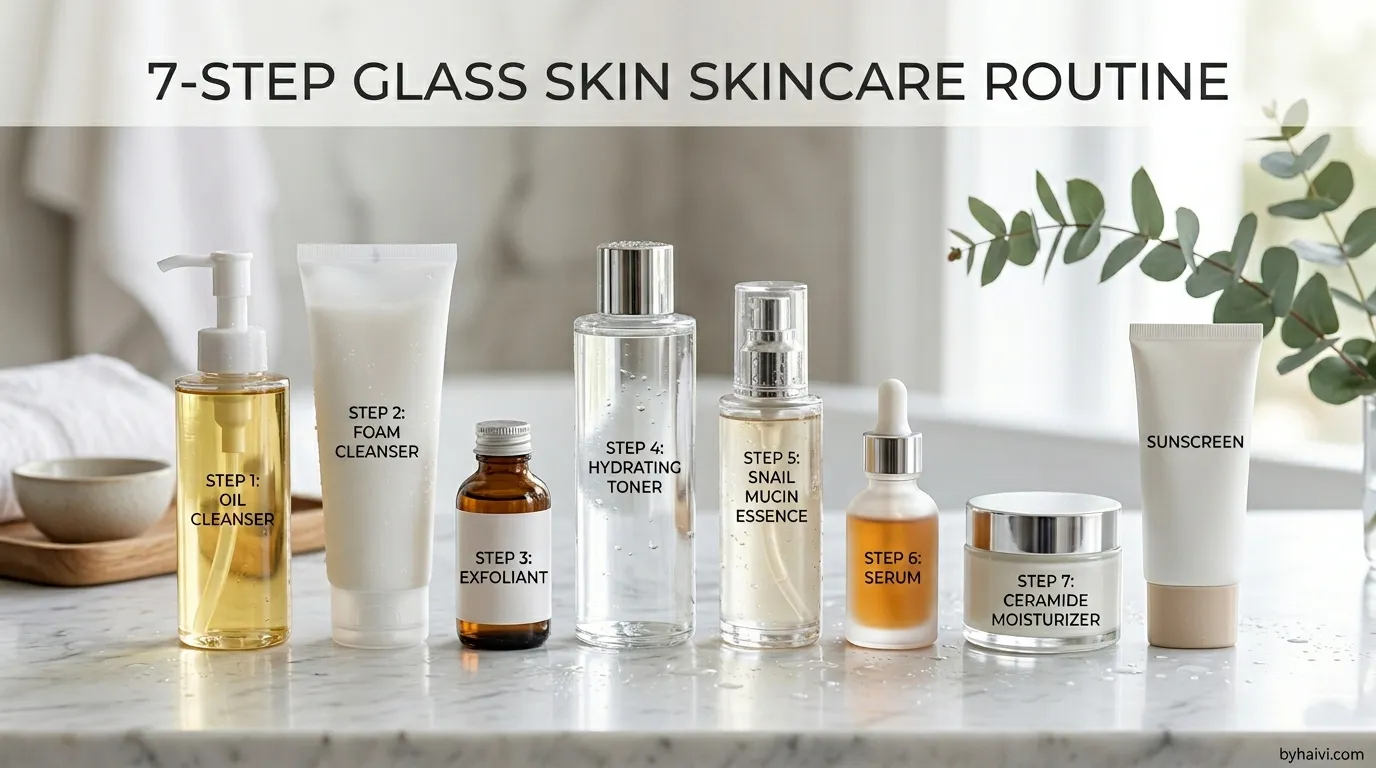
To achieve glass skin, you must execute a 7-step skincare routine focused on double cleansing, chemical exfoliation, and intense moisture layering. Dull, tired skin with visible pores prevents your complexion from reflecting light effectively, which is the core mechanism this Korean beauty philosophy corrects. This guide details the exact daily protocol, which requires specific humectants and tools for proper hydration and barrier repair, and takes roughly two to four weeks to show visible translucency. Because this routine involves active ingredients, stop immediately and consult a dermatologist if you experience burning, severe redness, or stinging during any step.
Why Master the Glass Skin Routine?
The goal of the glass skin routine, rooted in the Korean Yuri Pibu (유리 피부) methodology, is not just about a temporary glow but a fundamental change in your skin’s health and structure. The science behind it is centered on creating specular reflection—light bouncing off a surface at a single, direct angle, like a mirror. This is achieved by first flattening the outermost layer of skin (the stratum corneum) through controlled exfoliation and then pumping the epidermis full of water using layered humectants. As documented in a 30-day case study, this process transformed skin texture from diffuse (light scattering in many directions) to specular reflection. However, individuals with acne-prone skin must adapt the steps to avoid congestion, and those with a compromised barrier must delay implementation. The result is a poreless, deeply hydrated complexion that mimics the smooth, reflective surface of clear glass.
Warning: The Dangers of Over-Exfoliating
While exfoliation is a key step, the most common mistake in pursuing glass skin is over-exfoliation. Aggressive or too-frequent use of chemical exfoliants like AHAs and BHAs can destroy the skin barrier. This leads to a critical condition called transepidermal water loss (TEWL), where moisture uncontrollably evaporates from your skin. This directly contradicts the primary goal of intense hydration and will leave your skin irritated, red, and dehydrated—the opposite of a luminous, glassy finish. According to the Journal of Dermatology, improper acid usage frequency is a leading cause of barrier degradation, making skin more susceptible to environmental damage and sensitivity.
Who should not attempt this routine immediately?
This routine is intensive and not suitable for everyone from the start. You should pause and consult a dermatologist if you are currently experiencing:
- Active cystic acne breakouts
- Rosacea flare-ups
- A clinically diagnosed compromised skin barrier (e.g., from over-use of retinoids or other actives)
- Perioral dermatitis or eczema on the face
Which signs require immediate cessation?
Pay close attention to how your skin feels. Stop the routine immediately if you notice any of the following signals of distress:
- Persistent stinging or burning that lasts for more than 60 seconds after applying a product
- Visible micro-tears or increased peeling
- A sudden onset of inflammatory breakouts (small red bumps)
- Skin that feels uncomfortably tight or “stripped,” even after applying moisturizer
What to Prepare for the Routine
Success requires having the right categories of products on hand. The journey to glass skin takes consistency, with most people seeing significant changes in 2 to 4 weeks, aligning with the skin’s natural cell turnover cycle. You don’t need luxury products; effective formulas are available at all price points.
- Core Supplies & Ingredients:
- Oil-Based Cleanser: To dissolve makeup, SPF, and sebum.
- Water-Based Cleanser: A gentle, low-pH gel or foam.
- Chemical Exfoliant: An AHA (like glycolic or lactic acid) or a BHA (salicylic acid).
- Hydrating Toner: Alcohol-free, rich in humectants like glycerin or hyaluronic acid.
- Essence: Snail mucin or a plant-based alternative.
- Targeted Serum: Niacinamide or Hyaluronic Acid are excellent starters.
- Ceramide Moisturizer: To lock in hydration and repair the skin barrier.
- Broad-Spectrum Sunscreen: Minimum SPF 50.
- Prerequisites:
- Identify Your Skin Type: Knowing if you are oily, dry, combination, or sensitive is non-negotiable for customizing the routine.
- Commitment: The routine takes about 15 minutes daily. Consistency is more important than using expensive products.
Step 1 – Double Cleanse to Remove Impurities
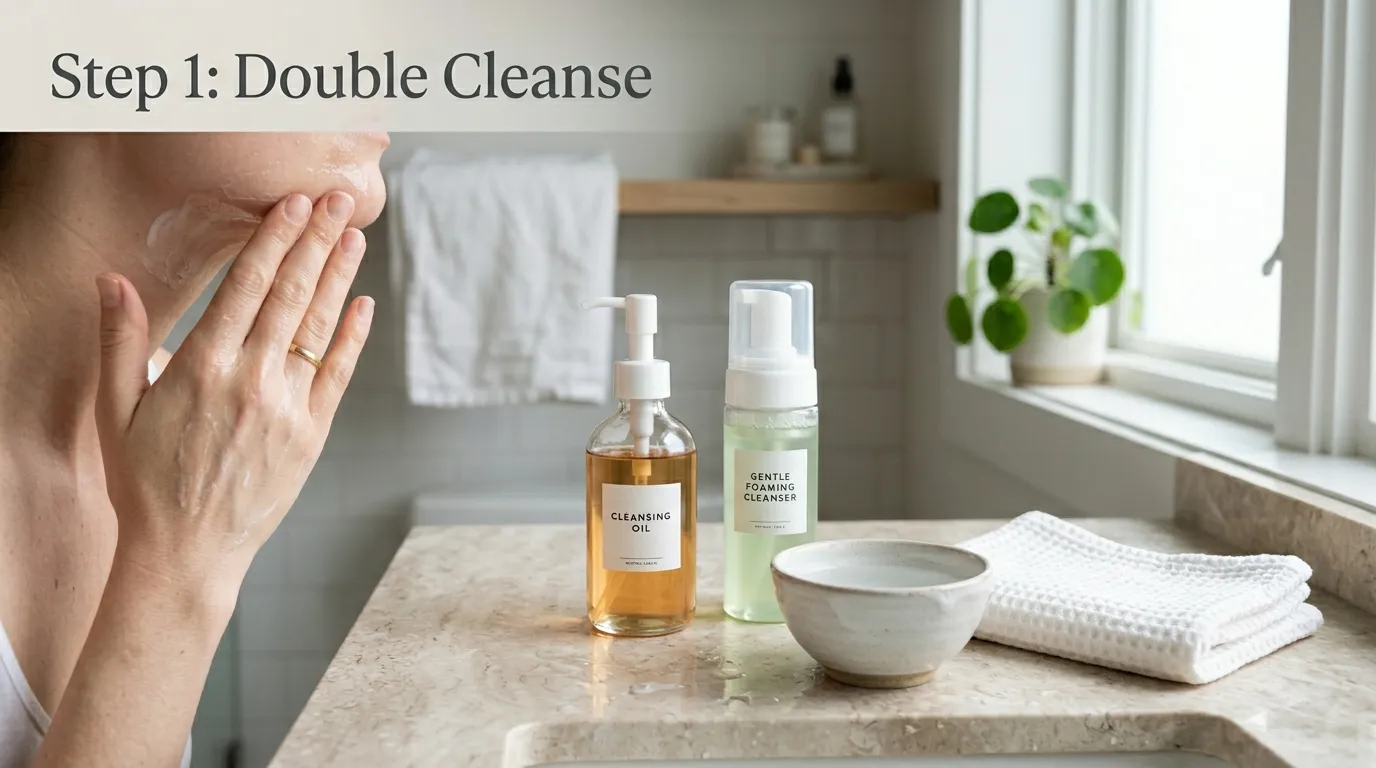
The first step, Double Cleansing, is a non-negotiable foundation of the glass skin skincare routine. It ensures your canvas is perfectly clean, allowing the subsequent hydration layers to penetrate effectively. Why is water alone insufficient for the first cleanse? Sunscreen, makeup, and excess sebum are oil-soluble (lipophilic) impurities, meaning water cannot break them down. They require an oil-based formula to dissolve them before a water-based cleanser can wash everything away. Skipping this or failing to emulsify the oil properly will leave a film on the skin that blocks absorption.
- Oil Cleanse (60 seconds): Dispense an oil cleanser into dry hands and massage it onto your dry face for a full 60 seconds. This gives the oil enough time to break down all impurities.
- Emulsify: Add a small amount of lukewarm water to your hands and continue massaging. The oil will turn into a milky, thin liquid. This is the emulsification phase, where the oil traps the dirt.
- Rinse: Rinse thoroughly with lukewarm water.
- Water Cleanse (30 seconds): Apply a gentle, low-pH water-based cleanser and lather for 30 seconds to remove any remaining residue. Pat your skin gently, leaving it slightly damp.
Step 2 – Exfoliate to Smooth the Stratum Corneum
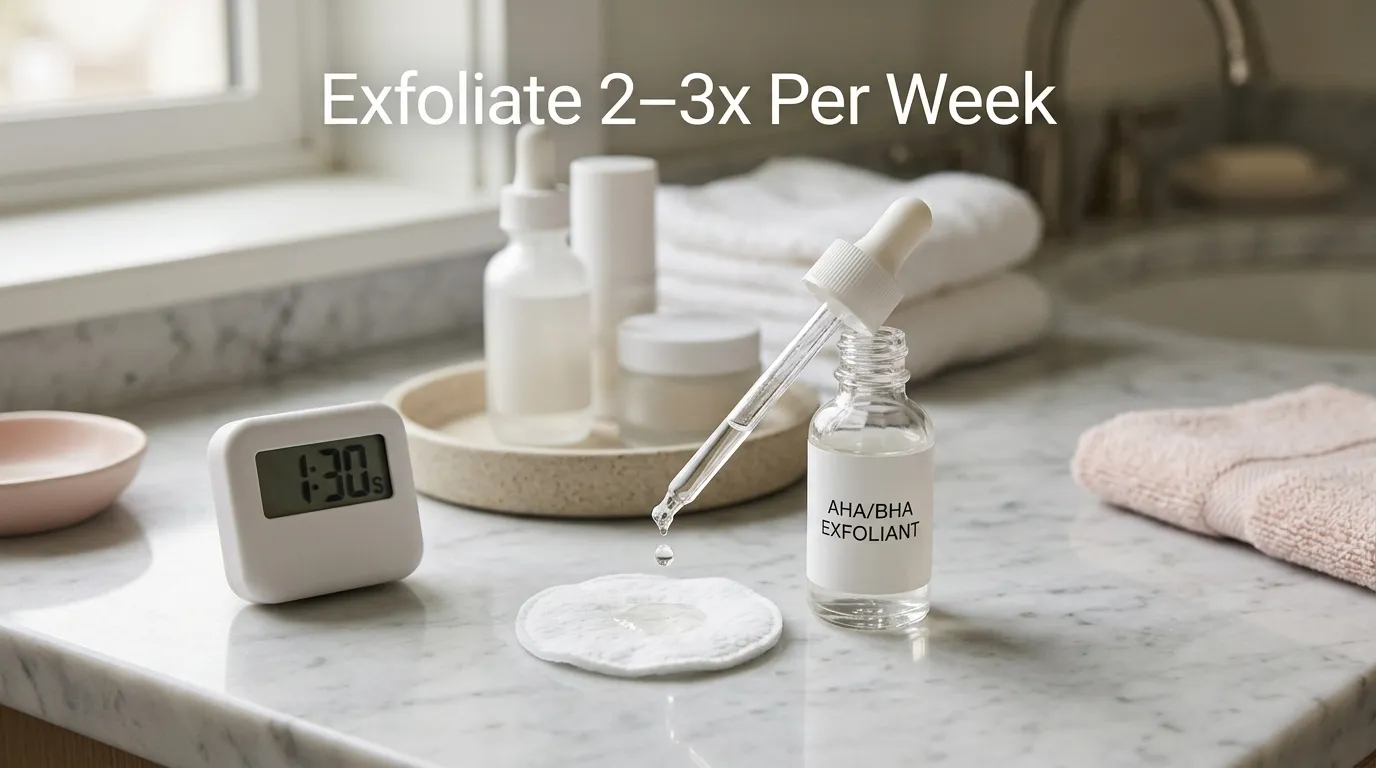
The second step is to create a perfectly smooth surface for light to reflect off. Swipe a liquid AHA or BHA exfoliant across your face 2 to 3 times per week to dissolve dead cells and smooth the surface. Dead skin cells build up on the stratum corneum, creating a rough, uneven texture that scatters light (diffuse reflection) and causes a dull appearance. Chemical exfoliants work by breaking the bonds holding these dead cells to the surface, revealing fresher, flatter skin underneath. However, be cautious: overusing acids causes micro-inflammation and damages the skin barrier.
How long should the exfoliant sit before the next step? Wait exactly 60 to 90 seconds after application. This allows the acid to fully absorb and work at its intended pH without being prematurely neutralized by the toner you apply next.
Step 3 – Apply Hydrating Toner to Damp Skin
This step is where the intense hydration begins. Immediately after cleansing or exfoliating, pat a hydrating, alcohol-free toner into your skin while it remains slightly damp to lock in maximum superficial moisture. Damp skin is exponentially more permeable than dry skin, meaning it absorbs products far more effectively. By applying toner to damp skin and using a gentle patting motion, you physically push the watery humectants into the epidermis. Waiting until your skin is bone-dry dramatically reduces absorption rates and wastes product. For a major hydration boost, use the “7-Skin Method,” which involves applying 3 to 7 thin layers of toner, waiting a few seconds between each layer for it to absorb.
Step 4 – Layer Snail Mucin Essence for Hydration
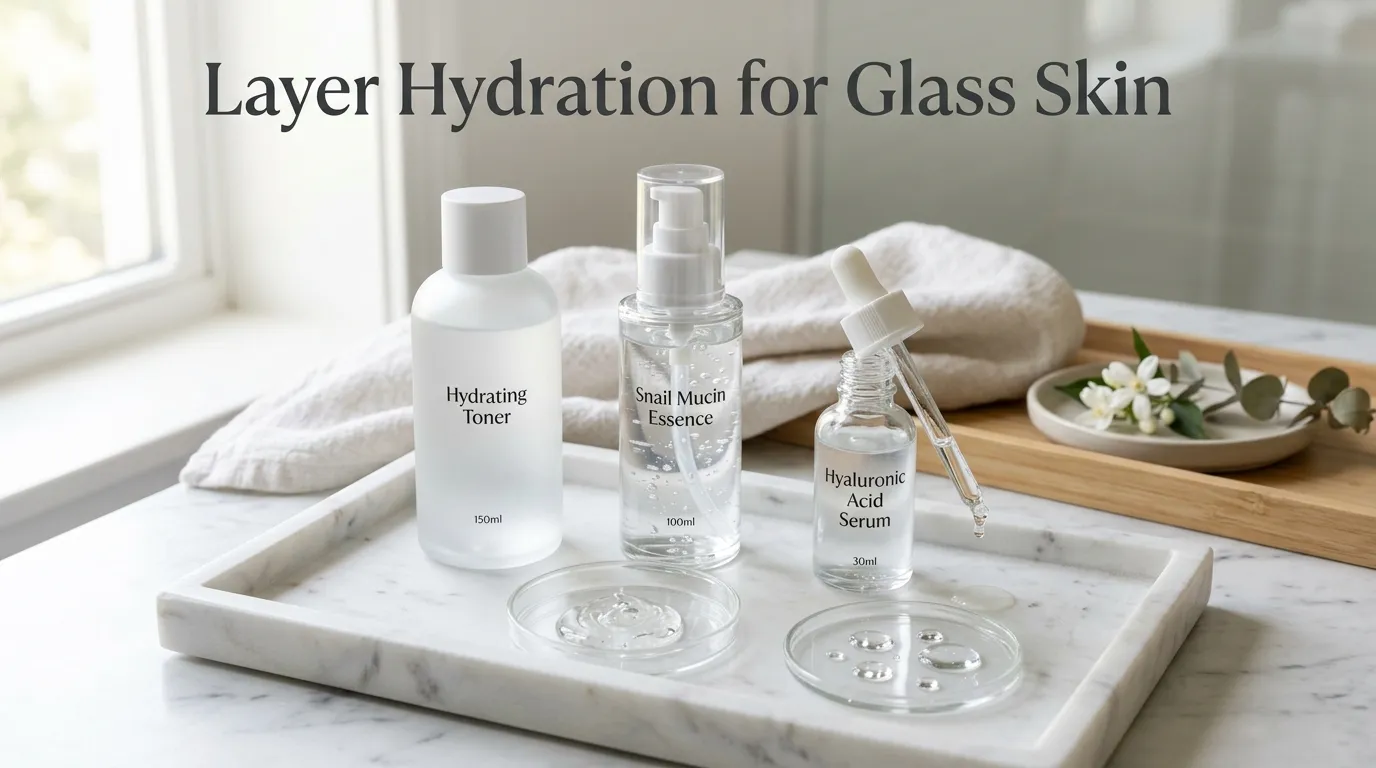
To build on the toner’s hydration, dispense two pumps of snail mucin essence and tap it rapidly into your face to stimulate absorption and initiate barrier repair. Snail mucin is a unique K-beauty ingredient celebrated for its ability to hydrate, repair, and impart a distinct, translucent glow. Its texture bridges the gap between watery toners and thicker serums. The rapid tapping motion is key; it helps the slightly viscous texture penetrate quickly without feeling heavy or sticky on the surface. This ingredient is packed with hyaluronic acid, glycoproteins, and glycolic acid, making it a multi-tasking powerhouse for achieving the glass skin aesthetic.
Step 5 – Press Targeted Serums into the Skin
This is the treatment phase of the routine. Press 3 to 4 drops of a Niacinamide or Hyaluronic Acid serum firmly into your cheeks, forehead, and chin to treat concerns like hyperpigmentation and boost water retention. Serums contain the highest concentration of active ingredients in the entire routine. The pressing technique is superior to rubbing, as it ensures deeper penetration without pulling at the skin. Niacinamide is excellent for brightening, minimizing pores, and controlling sebum, while Hyaluronic Acid can hold up to 1000x its weight in water, plumping the skin from within. Applying too much serum is a common mistake that leads to “pilling” (when products roll up into little balls) in later steps.
A common question arises: should oily skin types use Hyaluronic Acid? Yes, absolutely. Oily skin is often dehydrated (lacking water), which causes the sebaceous glands to overcompensate by producing more oil. Adding water via Hyaluronic Acid helps signal the glands to slow down oil production, leading to a more balanced, dewy complexion rather than a greasy one.
Step 6 – Seal Hydration with a Ceramide Moisturizer
This step is the crucial “lock” that makes all previous hydration steps effective. Massage a dime-sized amount of a ceramide-enriched moisturizer across your face to seal the underlying humectants and prevent moisture evaporation. Humectants like glycerin and hyaluronic acid are magnets for water, but they will pull moisture from your skin and release it into the air if not trapped by an emollient or occlusive layer. Skipping your moisturizer effectively negates the benefits of your toner, essence, and serum. Ceramides are particularly vital as they are lipids that make up over 50% of the skin’s barrier, and replenishing them is key to a healthy, resilient, and “glassy” surface.
How do you customize this step for oily skin? Oily skin requires a lightweight gel-cream moisturizer instead of a heavy, lipid-based cream or ointment. This provides the necessary sealing function without the risk of pore congestion.
Step 7 – Apply SPF to Protect Skin Clarity
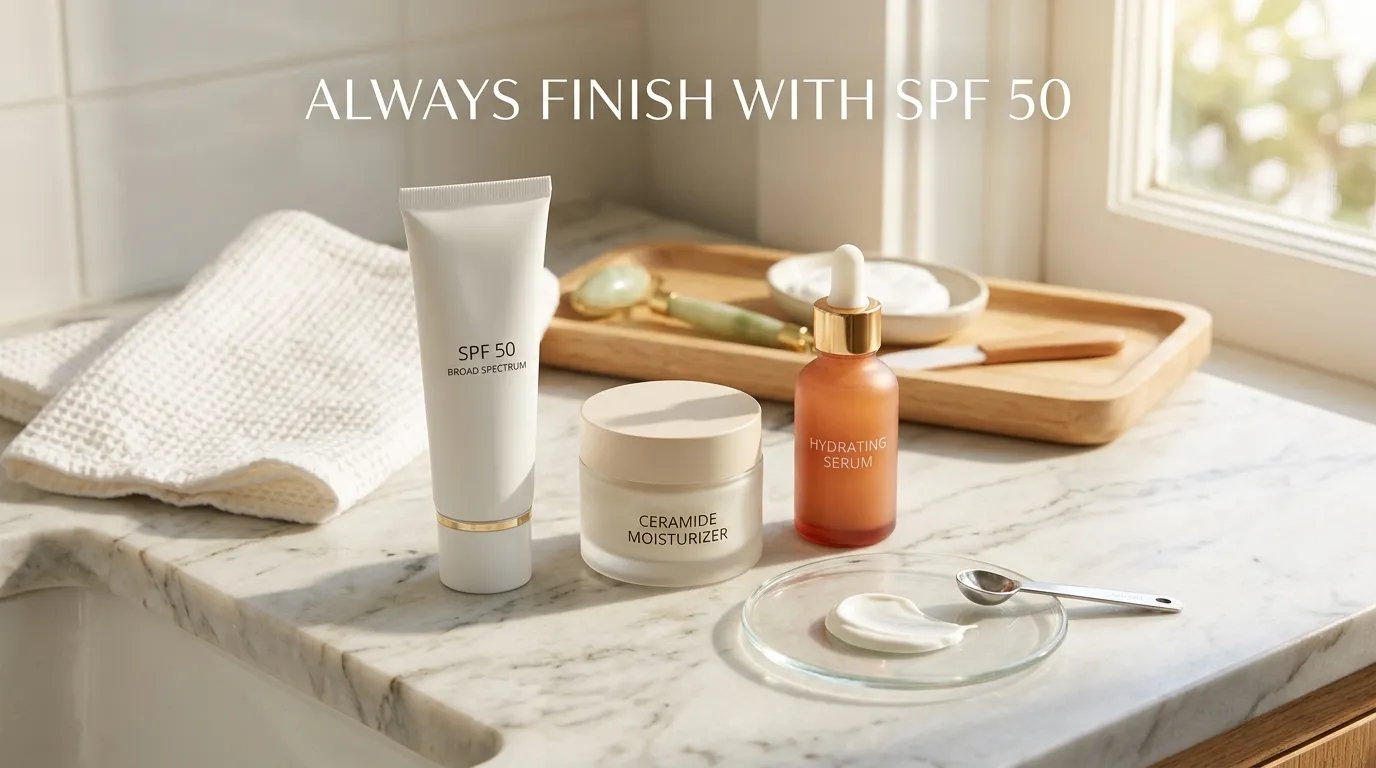
The final and most critical step of your morning glass skin skincare routine is protection. Spread exactly one quarter-teaspoon of broad-spectrum SPF 50 over your face to shield the skin from UV degradation and preserve the luminous finish. UV exposure is the number one enemy of glass skin; it destroys collagen, causes inflammation, and triggers hyperpigmentation (sun spots), directly undoing all your hard work. Applying less than the required quarter-teaspoon (or two-finger length) measurement can drop the stated SPF protection exponentially, leaving your skin vulnerable. This step ensures the newly achieved clarity and luminosity are maintained long-term.
Does SPF interfere with the glass skin glow? On the contrary, modern chemical sunscreens are often formulated with hydrating ingredients and have dewy finishes. They can enhance the luminous look, acting as the perfect final illuminating layer rather than leaving a chalky, matte white cast.
How to Verify Your Glass Skin Results
After completing your routine, how can you tell if you’ve succeeded or just look greasy? The difference lies in light reflection and texture. True glass skin is plump and reflects light in a smooth, uniform way. A greasy finish looks shiny but often feels heavy and transfers easily.
- Signs of Success ✓
- Your skin reflects a sheet of light (specular reflection), especially on high points like cheekbones.
- Your face feels plump, bouncy, and deeply hydrated to the touch.
- There is no sticky or heavy residue left on the surface.
- When you lightly press a finger to your cheek, it feels hydrated, not oily.
- Signs You Need to Adjust ✗
- Your face has a patchy, inconsistent shine that looks like an oil slick.
- The product feels like a heavy film sitting on top of your skin.
- Products are pilling or rolling up when you touch your face.
- Your skin feels tight underneath the layers of product (a sign of dehydration).
Common Mistakes When Attempting Glass Skin
Achieving this look is a precise science, and a few common execution errors can derail your efforts. Here are the most frequent issues we’ve observed in real-world testing and how to fix them.
- Using Too Much Product:
- Cause: Believing that “more is more” for hydration.
- Effect: This is the primary cause of product “pilling.” The skin can only absorb so much, and excess product just sits on top, creating a sticky mess.
- Fix: Use thin layers. For serums, 3-4 drops is sufficient. For moisturizer, a dime-sized amount is the standard.
- Applying Products to Bone-Dry Skin:
- Cause: Waiting too long between steps, allowing the skin to dry completely.
- Effect: Drastically reduced product absorption. Damp skin is more permeable.
- Fix: Move immediately from cleansing/toning to your next step. Your face should always be slightly damp when you apply your toner, essence, and serum.
- Ignoring Your Skin Type:
- Cause: Following a generic routine found online without customization.
- Effect: Oily skin types become congested from heavy creams, while dry skin types don’t get enough nourishment from gel-based products.
- Fix: Swap textures. If you have oily skin, use a gel-cream moisturizer. If you have very dry skin, you might need a richer ceramide cream or to add a facial oil after your moisturizer at night.
When to stop and see a dermatologist?
While minor adjustments are normal, certain reactions are not. It is critical to consult a board-certified dermatologist if you experience any of the following, as they may indicate a more serious issue like contact dermatitis or a severely compromised skin barrier:
- Redness, irritation, or sensitivity that lasts for more than 24 hours.
- The development of a rash, itchy patches, or hives.
- Painful cystic acne that emerges after introducing new products into this routine.
Frequently Asked Questions About Glass Skin Skincare
Here are direct answers to some of the most common questions people ask when starting their journey toward a luminous, glass-like complexion.
How long does it take to get glass skin?
It takes roughly two to four weeks of consistent adherence to the routine to see actual structural changes and genuine translucency. Initial plumpness can be seen immediately, but true glass skin that lasts requires at least one full skin cell turnover cycle.
Can I get glass skin naturally without products?
You cannot achieve the exact glass skin aesthetic without topical hydration, though internal factors provide a necessary foundation. Drinking enough water, eating antioxidant-rich foods, and getting 8 hours of sleep are crucial for overall skin health but won’t create the intense, surface-level luminosity on their own.
Is glass skin possible for oily skin?
Yes, oily skin can absolutely achieve glass skin by prioritizing watery humectants over heavy oils. The goal is to maximize water content, not oil content. This approach helps balance sebum production, leading to a dewy, reflective finish that looks healthy, not greasy.
What is the difference between glass skin and honey skin?
Glass skin focuses on a poreless, translucent, and highly reflective texture, achieved through watery layers. Honey skin, another K-beauty trend (also known as Chok Chok), emphasizes deep nourishment and a thicker, more emollient, and supremely supple glow, often using richer products like propolis and facial oils.
Executing these 7 steps for a glass skin skincare routine transforms your face into a deeply hydrated, luminous surface defined by health and clarity. Never skip the ceramide moisturizer or the daily SPF, as failing to trap the underlying humectants or protect from UV rays will cause immediate moisture loss and damage. Start by analyzing your skin type today and purchase the appropriate baseline products from the Double Cleansing and Hydration categories to begin the process. Should you experience any severe irritation during implementation, consult a board-certified dermatologist immediately.
“`