How to Build a Skincare Routine for Sensitive Skin: 5 Steps (2026)
I remember the days of trial-and-error skincare – buying a “holy grail” product only to wake up with a red, angry face. It’s frustrating. To finally get a calm, hydrated complexion, you don’t need more products; you need the right skincare routine for sensitive skin. This guide gives you a simple, step-by-step process focused on strengthening your skin’s barrier with gentle, effective ingredients. This routine is designed for anyone whose skin easily reacts, ensuring you can build a safe foundation for healthy skin. Let’s gather your simple toolkit and begin.
Forget complicated 10-step routines. For sensitive skin, less is more. This guide will walk you through a morning and evening routine designed to calm, hydrate, and protect your skin barrier. No guesswork, just clear actions and predictable results.
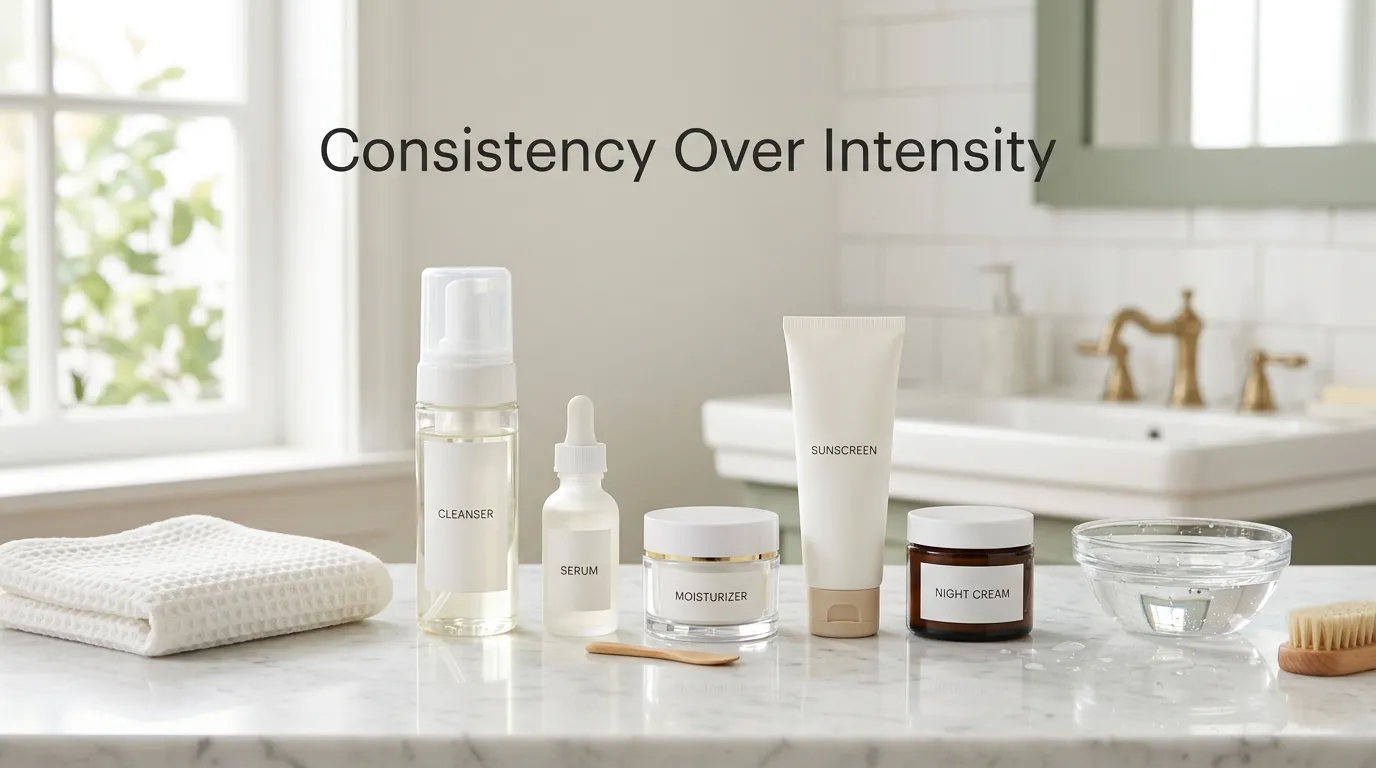
What You’ll Need Before You Start
To ensure your routine is smooth and effective from day one, gather these essentials. Think of this as your sensitive skin survival kit.
- Total Time: Approximately 5-10 minutes for your morning routine; 5-10 minutes for your evening routine.
- Difficulty: Beginner.
- Products Needed:
- A gentle, hydrating cleanser (milky, creamy, or non-foaming gel).
- An alcohol-free, soothing toner.
- A calming serum (with ingredients like Niacinamide, Centella Asiatica, or Panthenol).
- A simple, fragrance-free moisturizer (with Ceramides or Squalane).
- A mineral-based sunscreen (SPF 30+ with Zinc Oxide or Titanium Dioxide).
- A soft, clean towel for patting your face dry.
The 5-Step Morning Skincare Routine for Sensitive Skin
Your morning goal is simple: cleanse, hydrate, and protect. This routine prepares your skin to face the day’s environmental stressors without irritation. Let’s begin with the first and most crucial step.
Step 1Cleanse with a Gentle, Hydrating Cleanser
Action: Wet your face with lukewarm water—never hot, as it can strip your skin’s natural oils. Squeeze a dime-sized amount of your creamy or gel cleanser onto your fingertips.
Explanation: Gently massage the cleanser onto your face in slow, circular motions for about 45 to 60 seconds. This lifts away any oil and debris from the night without causing friction. Rinse thoroughly with lukewarm water until no residue remains. Pat your face dry with a soft towel; do not rub.
Success Check: Your skin should feel clean, soft, and comfortable. If it feels tight, “squeaky,” or looks red, your cleanser is likely too harsh.
Step 2Apply a Soothing, Alcohol-Free Toner
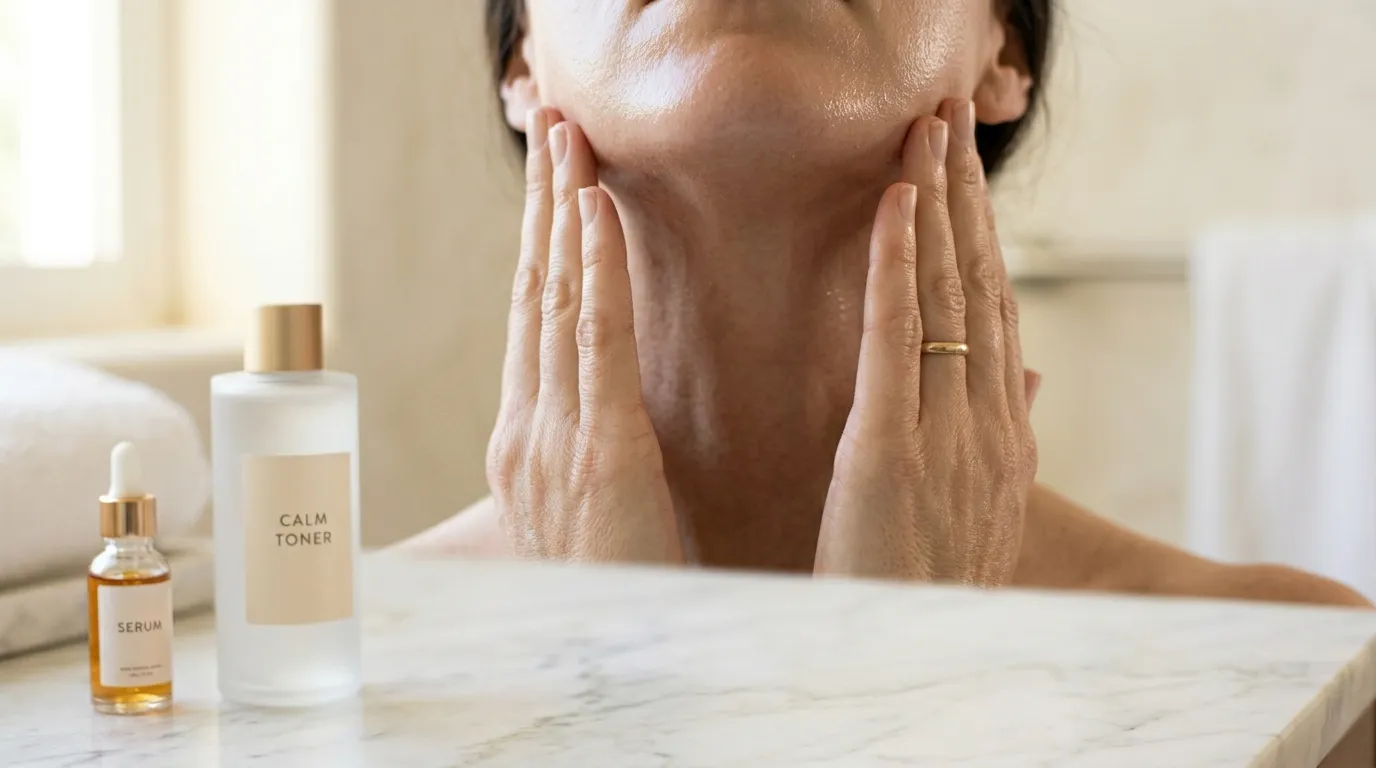
Action: While your skin is still slightly damp, pour a few drops of toner into the palm of your hand.
Explanation: Gently press your palms together and then pat the toner into the skin on your face and neck. This “pressing” motion is gentler than wiping with a cotton pad and minimizes irritation. Applying to damp skin helps lock in an extra layer of hydration.
Success Check: Your skin should feel instantly refreshed and damp, ready for the next step. It shouldn’t feel sticky or dry.
Step 3Use a Calming Serum to Target Redness
Action: Dispense 2-3 drops of your soothing serum (containing ingredients like Niacinamide or Hyaluronic Acid) onto your fingertips.
Explanation: Gently pat and press the serum evenly across your face. Focus on areas prone to redness or irritation. Let it absorb for about 30-60 seconds before moving on. Serums deliver a concentrated dose of active ingredients to calm inflammation and deeply hydrate.
Success Check: The serum should absorb cleanly into your skin without leaving a heavy or sticky film.
Step 4Moisturize to Lock in Hydration
Action: Scoop a pea-sized amount of your fragrance-free moisturizer.
Explanation: Warm the moisturizer between your fingers for a moment and then gently apply it to your face and neck using upward strokes. This step is critical for reinforcing your skin’s protective barrier, preventing water loss, and sealing in the serum.
Success Check: Your skin feels supple, hydrated, and comfortable, with a healthy (not greasy) finish.
Expert Tip
Step 5Protect with a Mineral-Based Sunscreen
Action: Measure out a generous amount of your mineral sunscreen. A good rule of thumb is the “two-finger” method—squeeze a line of sunscreen onto your index and middle fingers.
Explanation: Apply the sunscreen as the final step in your morning routine. Dab it evenly across your face, then gently pat and blend it in. Mineral sunscreens with Zinc Oxide or Titanium Dioxide sit on top of the skin to physically block UV rays, making them less likely to cause irritation than chemical sunscreens, which absorb UV rays.
Success Check: The sunscreen is fully blended without excessive pilling, and your skin is ready for the day. This is the single most important step to prevent sun-induced sensitivity and redness.
The 4-Step Evening Skincare Routine
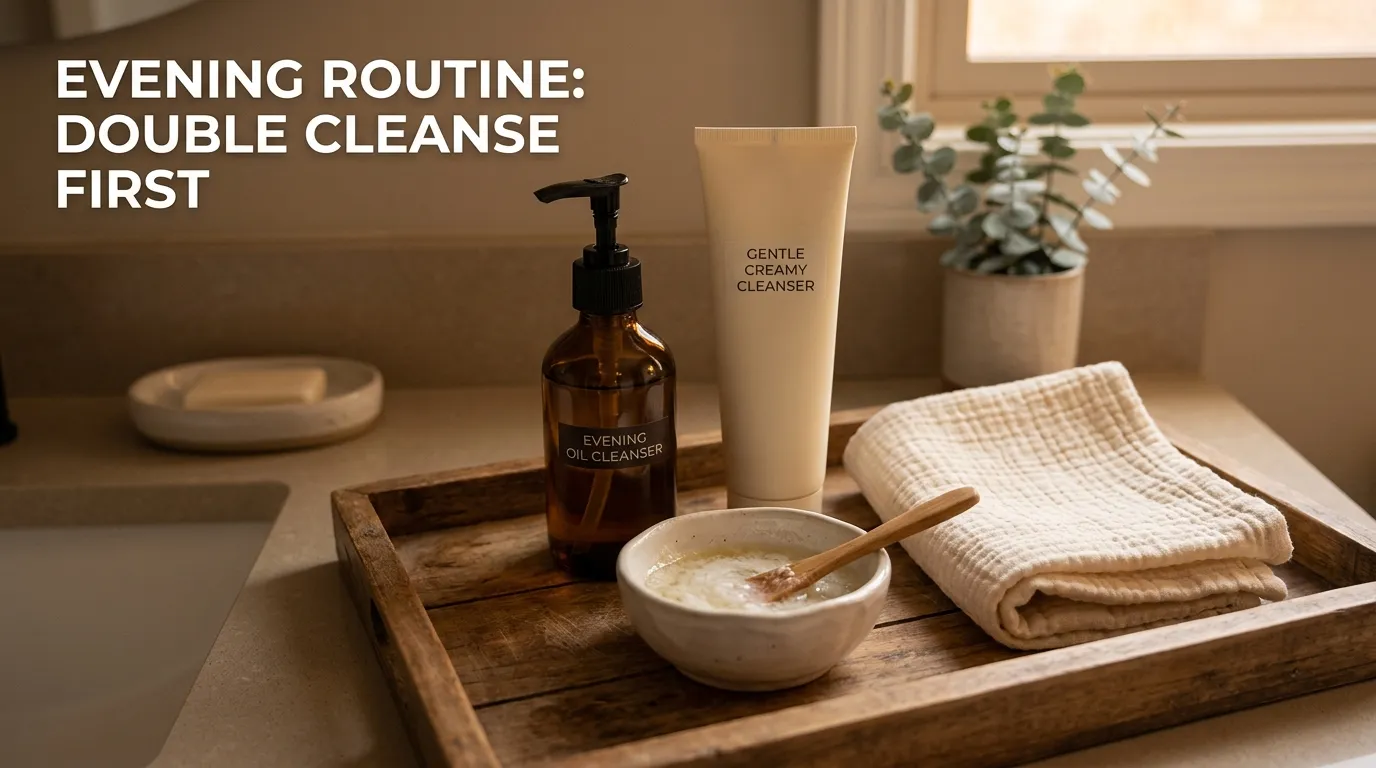
Your evening routine is focused on removing the day’s grime (makeup, pollution, sunscreen) and giving your skin the ingredients it needs to repair itself overnight. It’s similar to the morning, but with a deeper focus on cleansing.
- Step 1: Double Cleanse to Remove Impurities. Start with an oil-based cleanser or balm on dry skin to dissolve sunscreen and makeup. Massage it in, add a splash of water to emulsify, then rinse. Follow with your gentle, water-based cleanser from the morning routine to ensure your skin is perfectly clean.
- Step 2: Apply the Soothing, Alcohol-Free Toner. Use the same patting method as in the morning on damp skin to hydrate and balance pH.
- Step 3: Use the Calming Serum. Apply your soothing serum to deliver repair-focused ingredients while you sleep.
- Step 4: Moisturize with a Barrier-Repair Cream. Lock everything in with your moisturizer. You can use the same one as in the morning or opt for a slightly richer, thicker cream at night for extra nourishment.
Common Mistakes and How to Fix Them
- Problem: Skin feels tight and looks red after cleansing.
Fix: Your water is too hot, or your cleanser is too stripping. Switch to only lukewarm water and ensure your cleanser is a soap-free, milky, or cream-based formula. - Problem: A new product is stinging or causing breakouts.
Fix: Stop using it immediately. Go back to a minimal routine (cleanse, moisturize, sunscreen) until your skin calms down. Always patch-test new products first. - Problem: Skin feels dry even after moisturizing.
Fix: You’re applying products to dry skin. Make sure to apply your toner and serum to damp skin to trap more moisture before you seal it in with your cream.
Expert Tips for Maximum Results
Following the steps is great, but implementing these professional strategies will elevate your routine and safeguard your skin from future flare-ups.
The Non-Negotiable Rules
1. The Patch Test Rule: Before putting any new product on your face, apply a small amount to your inner arm or behind your ear for 3 consecutive days. If you see no redness, itching, or bumps, it is likely safe to proceed.
2. The One-at-a-Time Rule: Never introduce more than one new product at a time. Use a new product for at least 2-3 weeks before adding another. This is the only way to know what’s working and, more importantly, what’s causing a reaction.
Frequently Asked Questions about a skincare routine for sensitive skin
Here are clear answers to some of the most common questions that arise when caring for reactive skin.
How often should I exfoliate sensitive skin?
Clinical observation suggests starting with a very gentle chemical exfoliant, like a low-concentration Lactic Acid or a PHA (Polyhydroxy Acid) product, no more than once a week. Avoid all harsh physical scrubs (those with grains, shells, or beads), as they can cause micro-tears in the skin barrier. If you experience any stinging or increased redness, stop immediately.
Can I use actives like Vitamin C or Retinol?
Yes, but with extreme caution. For Vitamin C, choose a gentle, non-acidic derivative like Tetrahexyldecyl Ascorbate (THD Ascorbate) instead of pure L-Ascorbic Acid. For retinoids, start with a low-strength (0.2%) Granactive Retinoid or a plant-based alternative like Bakuchiol. Introduce it only once or twice a week at night and slowly increase frequency over several months as tolerated.
What ingredients should I absolutely avoid?
Based on dermatological consensus, the most common triggers for sensitive skin are: fragrance (parfum), denatured alcohol (listed as SD Alcohol or Alcohol Denat.), essential oils, and harsh sulfates like Sodium Lauryl Sulfate (SLS). Always check the ingredients list for these before purchasing.
How long until I see results from this routine?
You should feel an immediate reduction in tightness and discomfort within the first 1-3 days. A visible decrease in redness and an improvement in skin texture typically takes 4 to 6 weeks of consistent daily use. This is the average time it takes for your skin barrier to repair and strengthen itself.