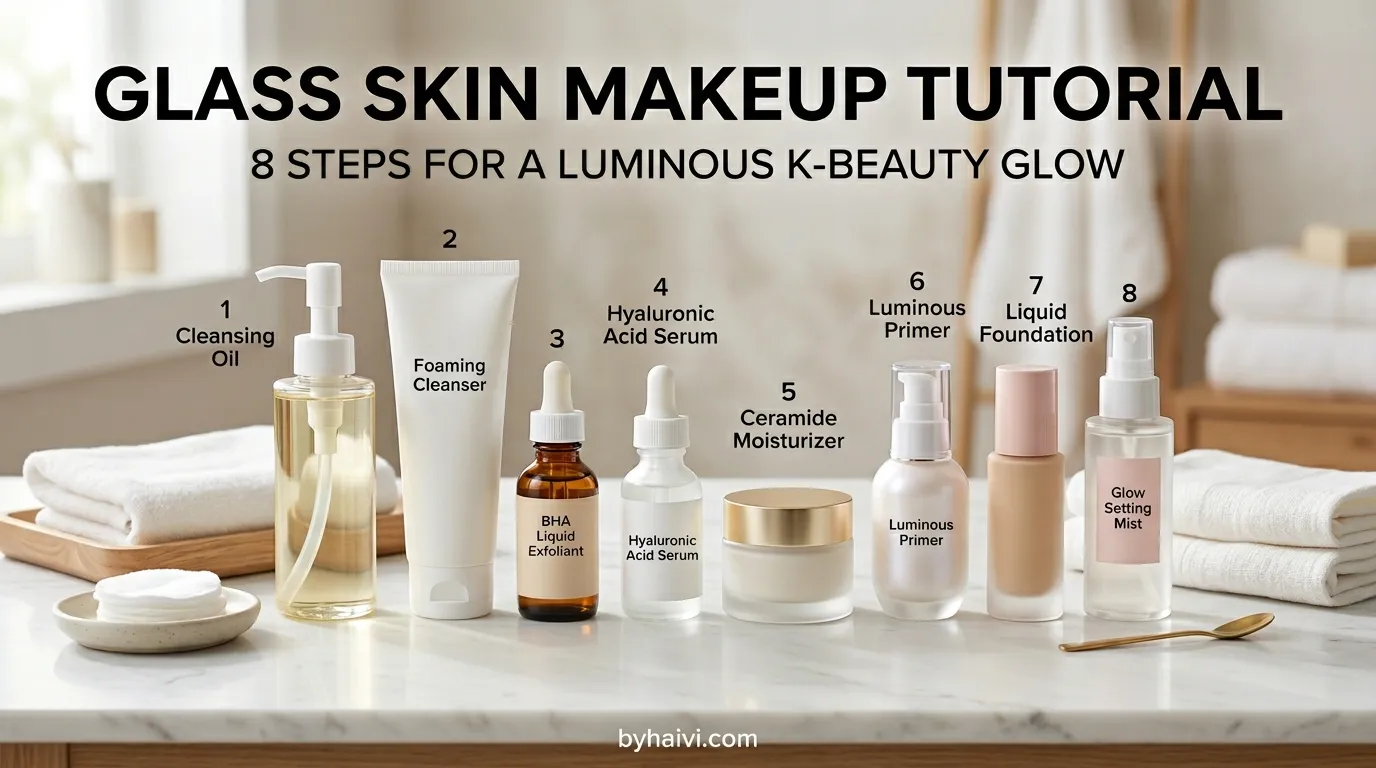
Glass Skin Makeup Tutorial: 7 Steps to a Glowing K-Beauty Look
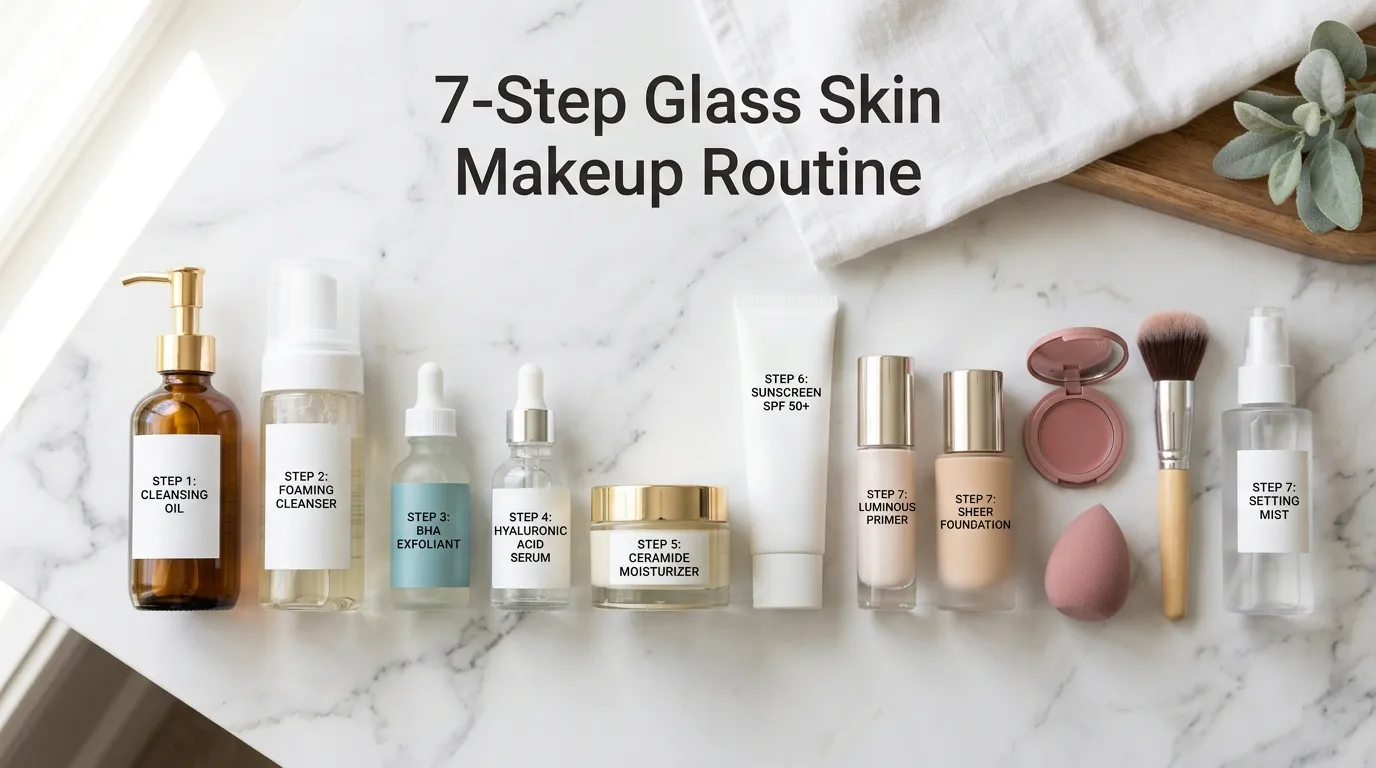
To successfully complete a glass skin makeup tutorial, you need a 7-step process that merges a multi-layer hydration routine with specific liquid foundation application techniques, typically taking about 15 minutes. This K-beauty aesthetic relies on achieving a perfectly smooth, light-reflecting surface, which is often compromised when makeup is applied over skin lacking intrinsic moisture. The process requires a careful selection of water-based products and chemical exfoliants to prepare the skin’s canvas for optimal optical translucency. Therefore, mastering the underlying skincare is the critical first step to achieving a luminous, long-lasting finish that won’t appear cakey or dull for any woman aged 18-35.
Why Does Your Skincare Routine Dictate 70% of the Glass Skin Effect?
The “glass skin” effect is fundamentally a principle of optical physics: light reflects most uniformly off a smooth, hydrated surface. When your skin barrier is plump with moisture, it creates a flawless canvas that allows liquid and cream makeup to meld seamlessly, creating a ‘lit-from-within’ glow. This is why the preparation is more critical than the makeup itself. This guide, updated for the 2025-2026 ‘Soft-Blur’ trend, focuses on repairing the skin’s moisture barrier, not just temporary surface dewiness. Professional Makeup Artists often add a drop of facial oil to foundation to boost this effect, a testament to the power of hydration. This method is ideal for those seeking a sheer, translucent finish; it is not designed for covering deep acne scars.
What Do You Need to Prepare for This Glass Skin Makeup Tutorial?
Achieving the glass skin look starts with a skincare-first approach. The right products and tools not only create the immediate effect but also support your skin’s barrier health. Before you begin, gather these essentials, focusing on water-based formulas to ensure compatibility and prevent pilling. The total estimated time for this routine is 15 minutes, assuming your face is already cleansed.
- Skincare Essentials:
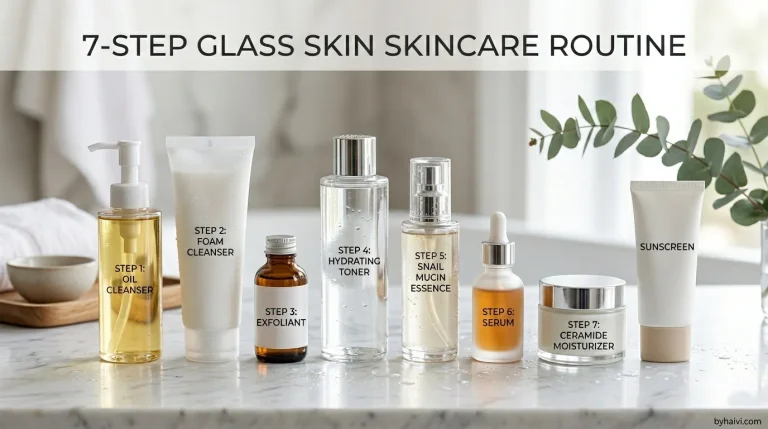
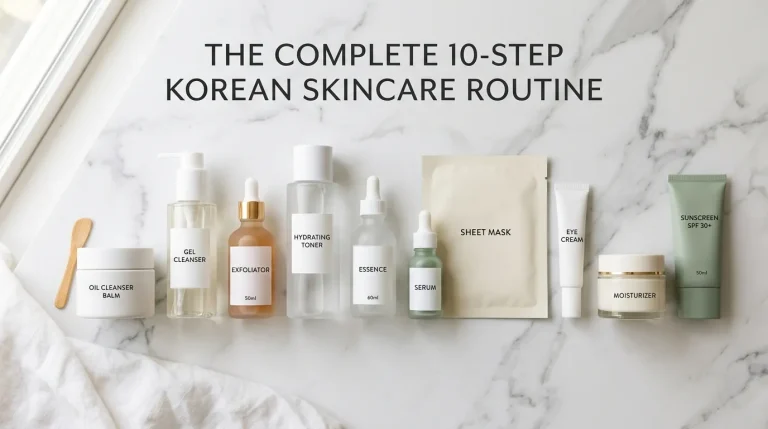
- Cleansing Oil & Foaming Cleanser (for Double Cleansing)
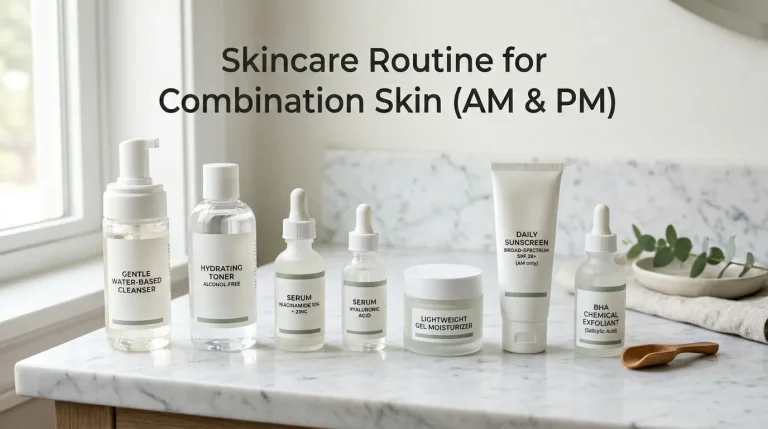
- BHA 2% Liquid Exfoliant
- Hyaluronic Acid Serum
- Ceramide-Rich Moisturizer
- Broad-Spectrum Sunscreen (for daytime)
- Makeup & Tools:
- Damp Makeup Sponge
- Luminous Primer (Liquid Highlighter)
- Sheer Foundation or Skin Tint
- Cream Blush
- Stippling Brush
- Alcohol-Free Hydrating Setting Mist
Step 1 – Double Cleanse the Surface with Oil and a Foaming Cleanser
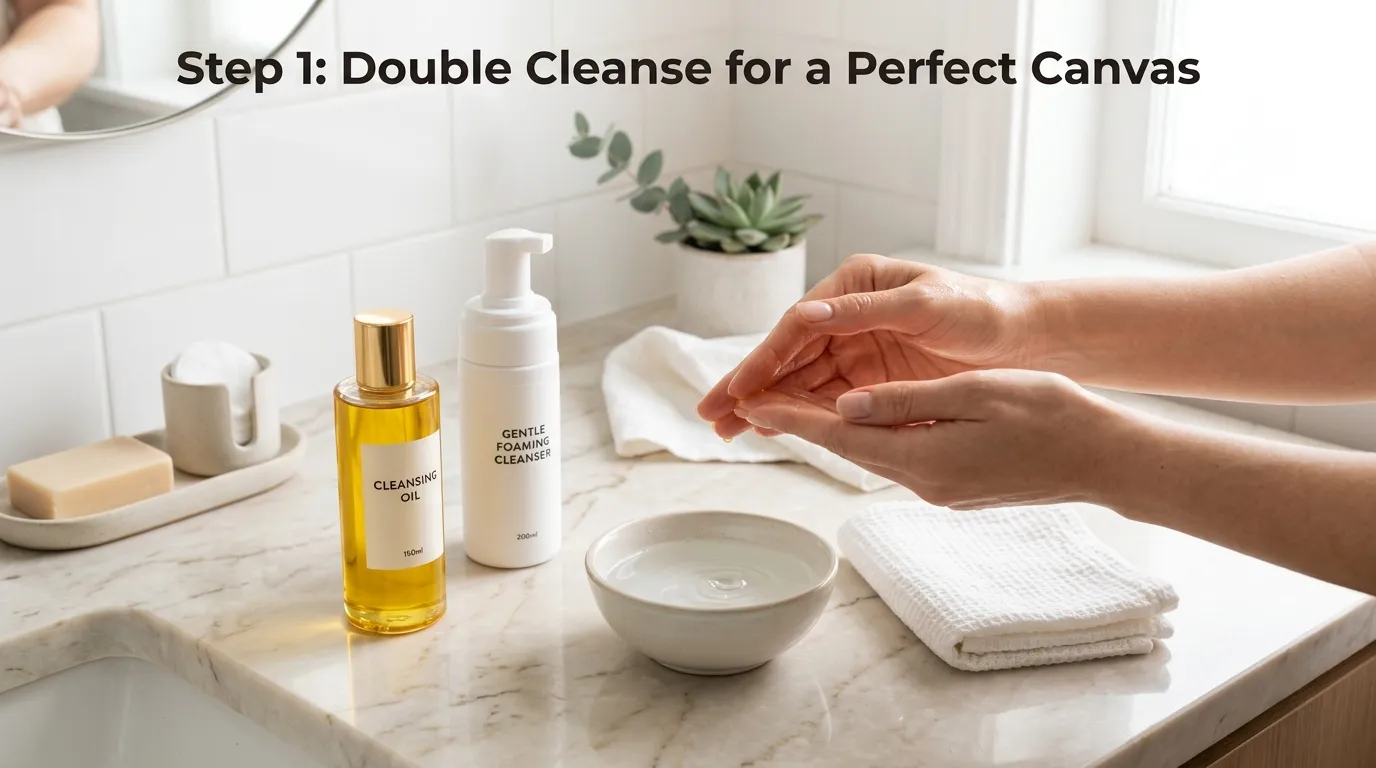
The first and most crucial step is achieving a completely clean canvas through Double Cleansing. This two-part method ensures no residue—be it makeup, sunscreen, or sebum—is left to obstruct light reflection. An immaculately clean surface is the foundation for everything that follows. Pores free of debris are the foundation for absorbing active ingredients.
First, massage a cleansing oil onto dry skin for a full 60 seconds. This duration is key to dissolving oil-based impurities. Next, add lukewarm water to emulsify the oil into a milky texture before rinsing. How does water temperature affect emulsification? Using water around 37°C (98.6°F) is most effective for dissolving lipids without stripping the skin’s natural oils, which prevents future breakouts. Follow immediately with a gentle, hydrating foaming cleanser to wash away any remaining residue. Pat your skin dry gently with a clean towel.
Step 2 – Exfoliate Dead Skin Cells to Create a Smooth Surface
With a clean base, the next goal is to refine its texture. Chemical exfoliation is non-negotiable for glass skin, as it removes the layer of dead skin cells (the stratum corneum) that cause dullness and prevent light from bouncing off evenly. This step directly addresses the rough texture that leads to a cakey makeup finish.
Dispense a BHA 2% solution onto a cotton pad and gently wipe it across your entire face, moving from the center outwards. Beta-Hydroxy Acid (BHA) is oil-soluble, allowing it to penetrate pores and smooth the skin’s surface more effectively than physical scrubs. A perfectly smooth surface enables maximum light reflection. But how long should you wait before the next step? It’s critical to allow the BHA to work for at least 2 minutes before applying any other product. This pause ensures the acid has enough time to function at its optimal pH without being neutralized by your next skincare layer.
Step 3 – Deeply Hydrate with a Multi-Layer Hyaluronic Acid Serum
Now that the skin is prepped and receptive, it’s time to flood it with hydration. This is where the “plumpness” of the glass skin look is born. Using a humectant like Hyaluronic Acid (HA) is the most effective way to draw moisture deep into the skin, creating volume from within.
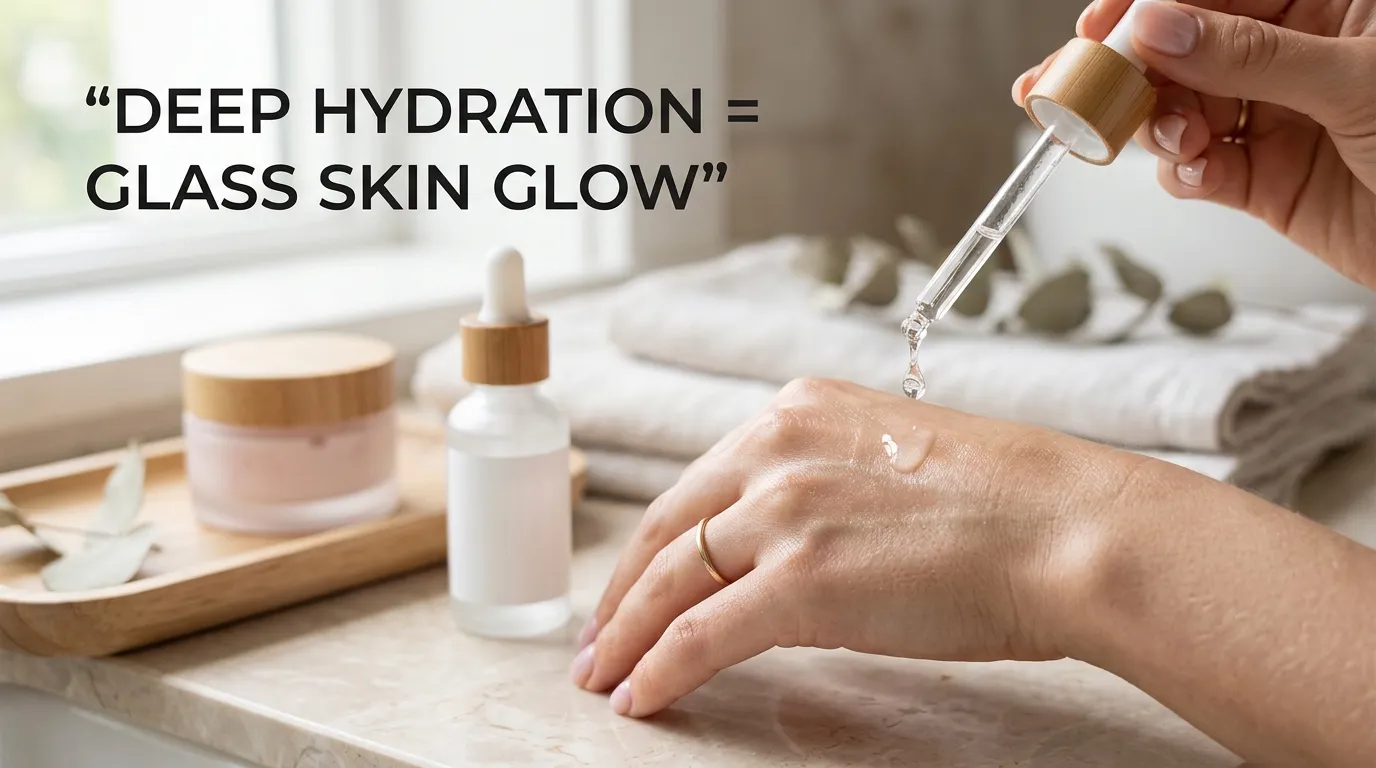
Apply 3 drops of Hyaluronic Acid serum onto your still-damp skin. Gently pat it in with your fingertips until it’s fully absorbed. An HA molecule can hold up to 1000 times its weight in water, acting like a sponge to pull moisture into your skin cells. But why is applying it to damp skin so important? Hyaluronic Acid is a moisture magnet; if applied to a dry face, it can pull moisture from the deeper layers of your skin, leading to a “reverse hydration” effect that leaves your skin feeling tighter and drier. This layer of water needs to be locked in immediately.
Step 4 – Lock in Moisture with a Ceramide-Based Moisturizer
Hydration without a seal is temporary. The moisture you’ve just infused into your skin will evaporate if not locked in with an occlusive and emollient layer. This step is vital for strengthening your skin barrier and ensuring your glow lasts all day instead of turning into a greasy mess.
Take a pearl-sized amount of a ceramide-rich moisturizer and warm it between your palms. Gently press your hands onto your face, applying the product with a firm, even pressure. This technique ensures an even layer without rubbing or disturbing the hydrating serum underneath. Ceramides are lipids that are naturally part of your skin barrier, and replenishing them helps create a resilient, smooth surface. What happens if you use too much moisturizer? Exceeding a pearl-sized amount can cause your makeup to slide and settle into fine lines, particularly around the smile lines. This lipid film creates the perfect adhesive surface for makeup.
Step 5 – Apply a Luminous Primer for a Water-Glow Effect
This is the first makeup step, designed to create an “inner glow” that appears to come from the skin itself, not from a product sitting on top of it. A liquid, luminous primer with ultra-fine pearlescent particles is the key to achieving this natural-looking radiance.
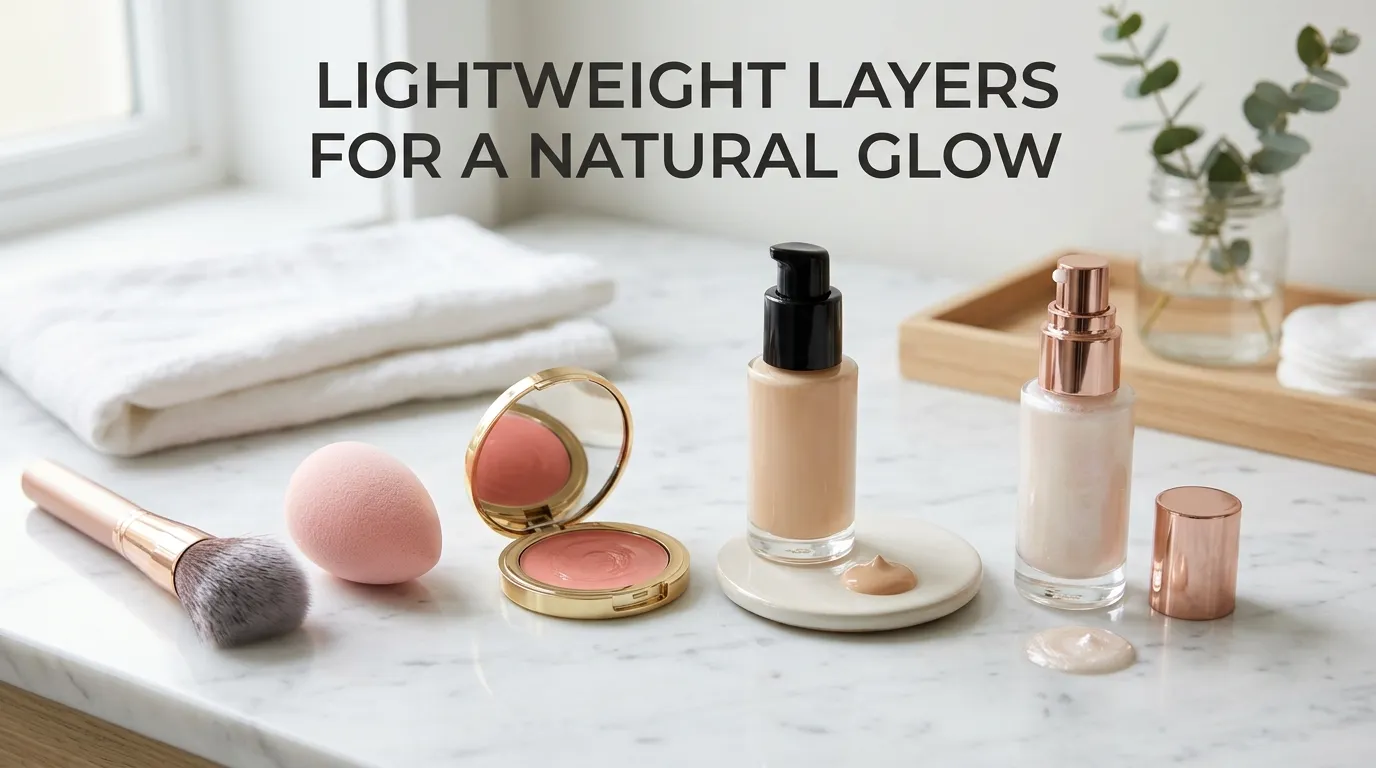
Using a damp makeup sponge, dot a water-based luminous primer onto the high points of your face: the tops of your cheekbones, the bridge of your nose, and the center of your forehead. Blend it out gently. How is a luminous primer different from a powder highlighter? A liquid primer melts into the skin, creating a seamless, non-glittery sheen, whereas powder highlighters sit on the surface and can emphasize skin texture. This optical highlight prepares the foundation for a sheer veil of coverage.
Step 6 – Blend a Liquid Foundation Using the Stippling Technique
The goal now is to even out your skin tone without masking the glow you’ve meticulously built. This requires both the right product (a sheer, liquid formula) and the right technique. The stippling method is superior for this look because it presses the product into the skin rather than dragging it across the surface.
Dispense just 1 pump of your sheer foundation or skin tint onto the back of your hand. Using a stippling brush, lightly tap the product onto your skin in small, dense motions, holding the brush at a 90-degree angle. Why is a perpendicular dabbing motion better than swiping? Swiping creates streaks and, more importantly, can disrupt the ceramide barrier and skincare layers you applied in Step 4. After stippling, go over the entire face with a damp makeup sponge to press the foundation in and pick up any excess product. This thin, smooth finish requires one final step to set it in place.
Step 7 – Set Your Makeup with a Hydrating Setting Mist
The final step is to lock everything in place while amplifying the dewy, luminous finish. For a true glass skin makeup tutorial, you must skip traditional setting powders, as they absorb light and create a matte effect, instantly destroying the glass-like reflectivity.
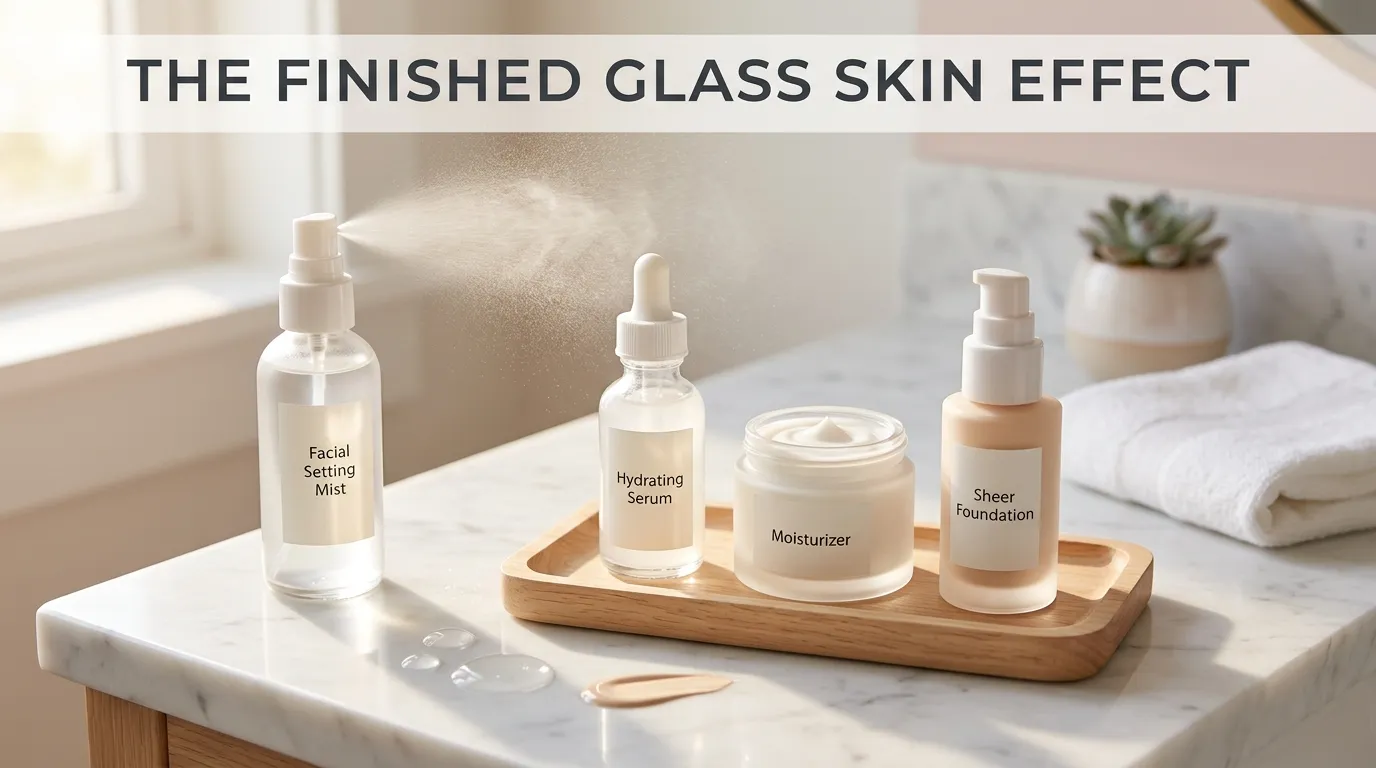
Hold an alcohol-free hydrating setting mist about 20cm (8 inches) from your face. Spray it liberally in an “X” and then a “T” formation to cover the entire face. How does alcohol in a setting mist affect the glass skin look? Alcohol is a volatile ingredient that causes rapid surface evaporation, which not only dries out your skin but also breaks down the dewy finish, often leaving it looking patchy or flat. An alcohol-free mist, on the other hand, adds a final layer of hydration. This last protective film fights against moisture evaporation throughout the day, perfectly completing the “luminous finish” promised.
How to Adjust the Glass Skin Look for Oily Skin
Achieving the glass skin look on oily skin requires a strategic approach that controls sebum without eliminating the desired luminosity. The core principle remains the same—hydration is key—but product choices must be adapted to prevent the glow from turning into grease. This modified routine ensures your glass skin makeup tutorial delivers a balanced, dewy finish that lasts.
| Product Step | Standard (Dry/Normal Skin) | Modification (Oily Skin) |
|---|---|---|
| Moisturizer | Cream-based with Ceramides | Oil-free gel with Niacinamide |
| Primer | Luminous primer all over | Mattifying primer on T-zone only |
| Setting | Hydrating mist only | Light dusting of translucent micro-powder on the sides of the nose and forehead |
How to Know You’ve Achieved Glass Skin Correctly?
The difference between a “glassy” glow and a “greasy” shine is subtle but crucial. Verifying your results involves both visual cues and a tactile test. This checklist helps you determine if you’ve mastered the technique or if you need to adjust your application or product choices.
- ✓ Signs of Success:
- Your skin reflects light evenly like a sheet of glass when you tilt your head.
- When you touch your cheek, it feels hydrated and smooth, but not sticky.
- The foundation is undetectable; there are no visible lines or pigment particles.
- The glow appears to come from within the skin, not from a layer of shimmer on top.
- ✗ Signs You Need to Re-evaluate:
- Your fingerprint leaves a noticeable mark when you lightly touch your face.
- Visible brush strokes or streaks appear under direct light.
- Product gathers in your smile lines or around your nose within an hour.
- The glow looks like a uniform layer of oil rather than a targeted, dimensional shine.
What Are the Most Common Mistakes When Creating a Luminous Finish?
Even with the right products, a few common application errors can sabotage the glass skin effect. Based on professional experience, these are the three most frequent mistakes that turn a dewy look into a cakey or separated mess. Avoiding them is critical for a flawless result.
- Using a Pressed Powder to Set Makeup: The dense, heavy particles in pressed powders are designed to absorb light and mattify the skin. Applying one over this look will instantly negate all the work you did to build reflectivity.
- How to fix it: Exclusively use a hydrating, alcohol-free setting mist. If you have extremely oily skin, use a tiny amount of loose, finely-milled translucent powder only on specific areas like the sides of the nose.
- Skipping Chemical Exfoliation: If your foundation looks flaky or cakey the moment you apply it, the culprit is almost always a rough surface of dead skin cells. Makeup cannot look smooth on an unsmooth canvas.
- How to fix it: Consistently incorporate a BHA or AHA exfoliant into your routine 2-3 times per week. Never perform this tutorial without having exfoliated in the last 48 hours.
- Mixing Incompatible Product Bases: This is a classic makeup chemistry error. Applying a water-based foundation over a silicone-based primer will cause the products to repel each other, leading to pilling and separation.
- How to fix it: Check the ingredient lists of your primer and foundation. For this look, ensure both are water-based. Look for “Aqua/Water” as the first ingredient and avoid products high in “Dimethicone” or “-siloxane” in the primer if your foundation is water-based.
Frequently Asked Questions About the Glass Skin Makeup Tutorial
Here are answers to some of the most common questions people have when trying to achieve the K-beauty glass skin look. Understanding these details can help refine your technique for even better results.
The 7-step process to complete this glass skin makeup tutorial establishes a flawless light-reflecting surface by tightly integrating a deep hydration routine with water-based cosmetics. Always ensure your skincare and makeup products share the same base (e.g., all water-based) to prevent pilling or separation. Maintaining a consistent chemical exfoliation schedule is the key to preserving your smooth, poreless, and luminous results long-term.