How to Build a Skincare Routine for Your 30s: A Guide for 2026
I still remember my 30th birthday. It wasn’t the party or the presents, but a tiny, faint line near my eye that caught my attention in the bathroom mirror. It was the moment I realized my “wash and go” skincare approach from my 20s just wasn’t going to cut it anymore. If you’re feeling that same way, you’re in the right place. Let’s build a routine that actually works, together.
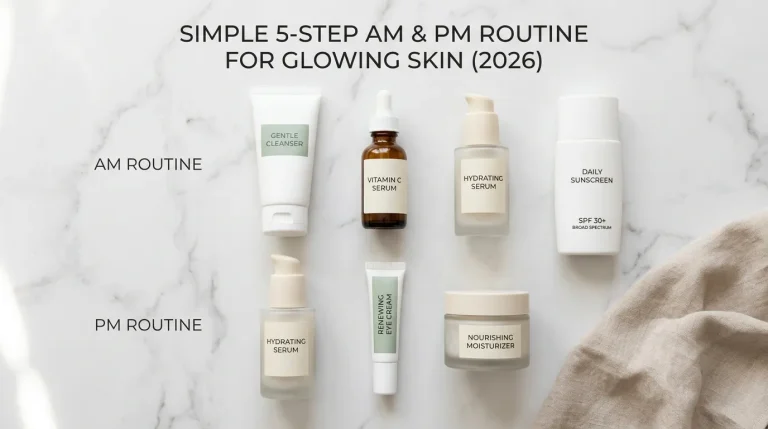
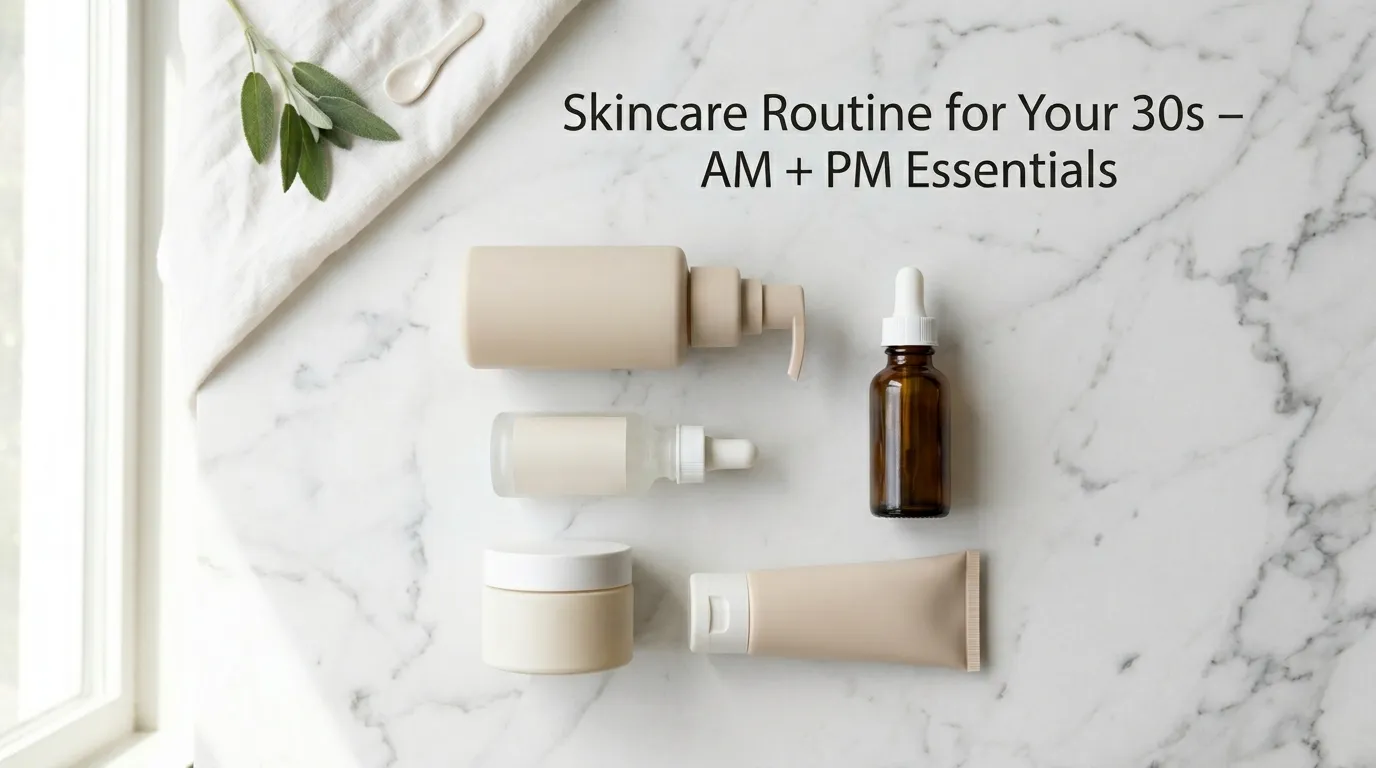
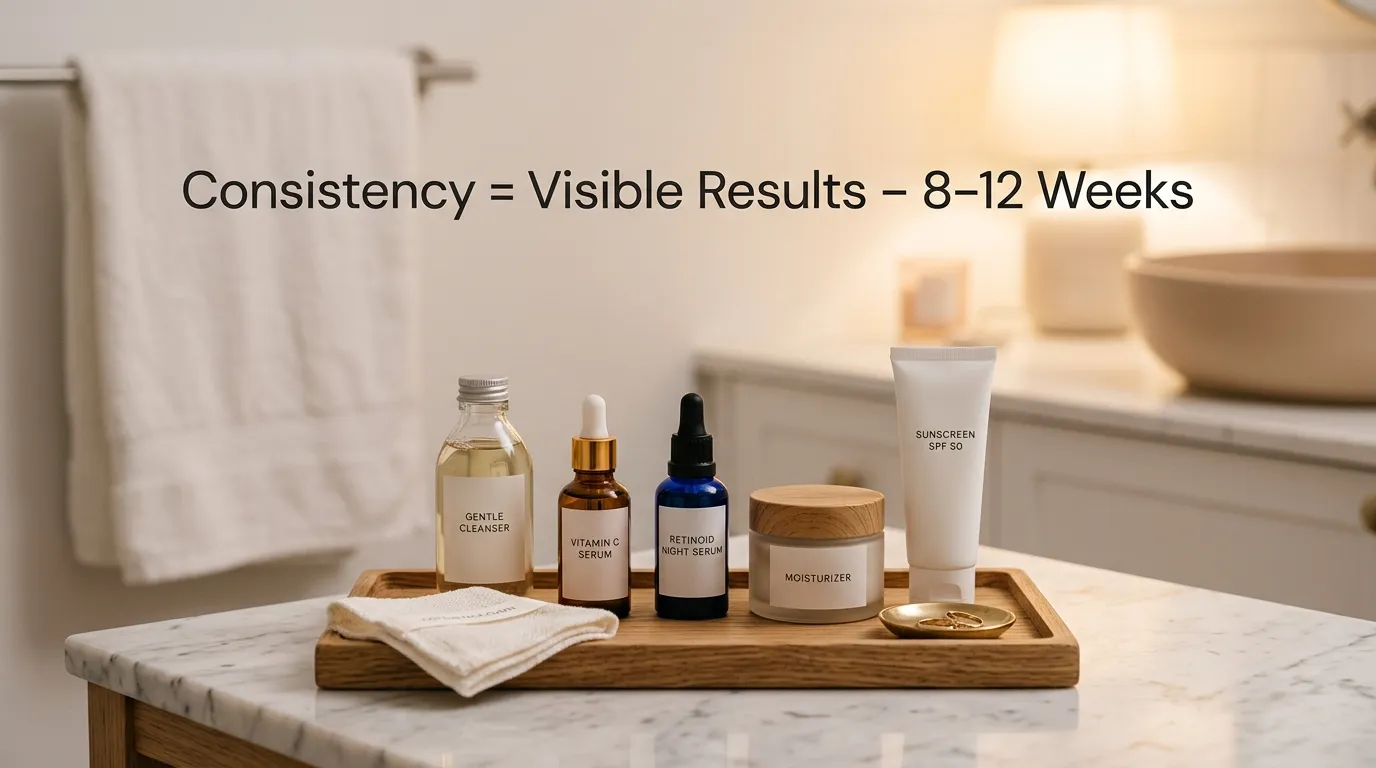
To build an effective skincare routine for your 30s, you need to shift focus from basic maintenance to proactive protection and repair. This guide provides a simple, 4-step morning and evening routine based on the principles of antioxidant protection (AM) and cellular renewal (PM) using key ingredients like Vitamin C and Retinoids. This process is designed for beginners and can be completed in under 10 minutes per session, yielding noticeable improvements in skin texture and glow within 8-12 weeks. Get your core products ready, and let’s begin building a routine that will serve your skin for the next decade.
First, Understand What Your Skin Needs in Its 30s
Welcome to your 30s! This is when things get interesting for your skin. The natural production of collagen and elastin—the proteins that keep skin firm and bouncy—starts to slow down. At the same time, the rate at which your skin cells renew themselves also decreases.
This slowdown can lead to the first signs of aging: fine lines, a bit of dullness, or a less even skin tone. Our goal isn’t to fight against this natural process, but to support our skin intelligently. The new strategy is simple but powerful: Protect during the day and Repair at night.
What You’ll Need: The Essential Product Checklist
Before we dive into the steps, let’s gather your tools. Building a great routine doesn’t require a 12-step arsenal. It requires a few key, high-impact products tailored to your skin type (Oily, Dry, Combination, or Sensitive).
- Total Time Commitment: 5-7 minutes for the morning (AM) routine; 7-10 minutes for the evening (PM) routine.
- Difficulty Level: Beginner
- Essential Products:
- A Gentle Cleanser
- An Antioxidant Serum (Vitamin C for AM)
- A Targeted Treatment Serum (Retinoid for PM)
- A Hydrating Moisturizer
- A Broad-Spectrum Sunscreen (SPF 30 or higher)
- Recommended Addition: An Oil-Based Cleanser (for double cleansing at night).
| Routine | Primary Goal | Key Products |
|---|---|---|
| Morning (AM) | Protect from UV rays, pollution, and free radicals. | Vitamin C Serum, Moisturizer, Sunscreen SPF 30+. |
| Evening (PM) | Cleanse impurities and stimulate cell repair and renewal. | Double Cleanse, Retinoid Serum, Moisturizer. |
The 4-Step Morning (AM) Skincare Routine: Focus on Protection
Your morning routine is all about defense. You’re preparing your skin to face a day of environmental stressors like UV radiation and pollution. Think of it as putting on your skin’s armor.
Step 1: Cleanse Your Face Gently
Action: Wet your face with lukewarm water, not hot. Use a dime-sized amount of a gentle, hydrating cleanser and massage it into your skin with your fingertips for about 30-60 seconds. Rinse thoroughly and gently pat your skin dry with a clean towel—no rubbing!
Why: This removes any oil, sweat, and dead skin cells that have built up overnight, creating a clean canvas for your other products without stripping your skin’s protective barrier.
Success Check: Your skin should feel clean, soft, and comfortable, not tight, dry, or “squeaky.” That squeaky-clean feeling is often a sign that your cleanser is too harsh.
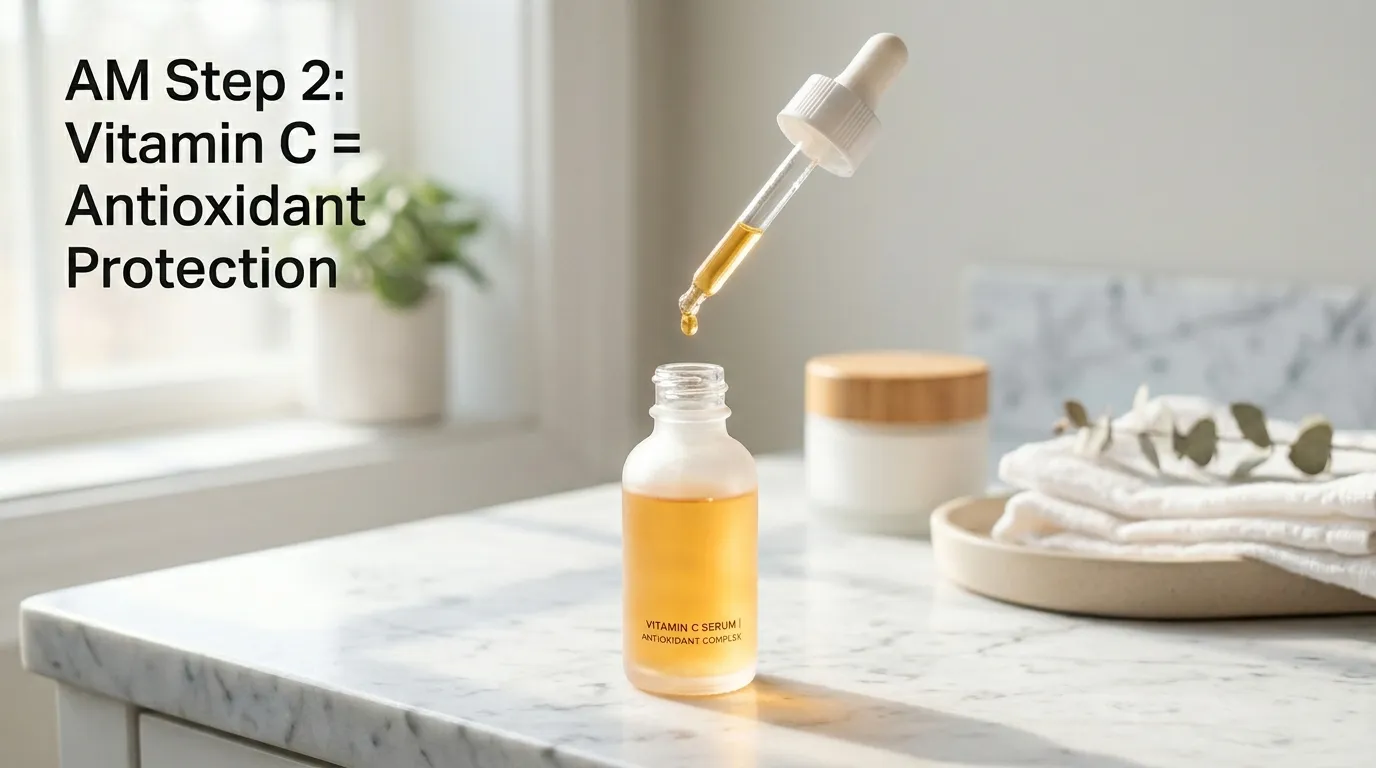
Step 2: Apply an Antioxidant Serum
Action: On your completely dry face, apply 3-4 drops of a Vitamin C serum. Gently press or pat it into your skin, covering your face and neck. Wait about 60 seconds for it to fully absorb.
Why: Vitamin C is a powerhouse antioxidant. It neutralizes free radicals from pollution and UV light, brightens your complexion, helps fade dark spots, and even boosts the effectiveness of your sunscreen. It’s a non-negotiable for a glowing, protected complexion.
Success Check: The serum should absorb cleanly into the skin without leaving a sticky or greasy film.
Step 3: Moisturize to Hydrate and Plump
Action: Scoop a nickel-sized amount of moisturizer and apply it to your face and neck. If your skin is oily, a lightweight gel-cream might be best. If it’s dry, look for a richer cream.
Why: This step locks in the hydration from your serum and keeps your skin’s moisture barrier healthy and strong. Hydrated skin looks plumper, which helps to minimize the appearance of fine lines.
Success Check: Your skin feels smooth, supple, and hydrated, but not heavy or greasy.
Step 4: Protect with Broad-Spectrum Sunscreen
Action: This is the most critical step. Measure out sunscreen using the “two-finger” rule (squeeze a line of sunscreen along your index and middle fingers). Apply this amount generously to your face, neck, and ears. Make sure it’s the very last step in your routine before any makeup.
Why: Up to 80% of visible skin aging is caused by sun exposure. Daily use of a broad-spectrum sunscreen (protecting against both UVA and UVB rays) with an SPF of 30 or higher is the single most effective anti-aging product you can use. It prevents wrinkles, sunspots, and, most importantly, skin cancer.
Success Check: The sunscreen is fully absorbed without a heavy white cast. Modern formulas are incredibly elegant, so find one you love to wear every single day.
The 4-Step Evening (PM) Skincare Routine: Focus on Repair & Renewal
Your nighttime routine is when the magic happens. While you sleep, your skin goes into repair mode. This routine is designed to cleanse away the day’s grime and deliver powerful ingredients that accelerate regeneration and address specific concerns.
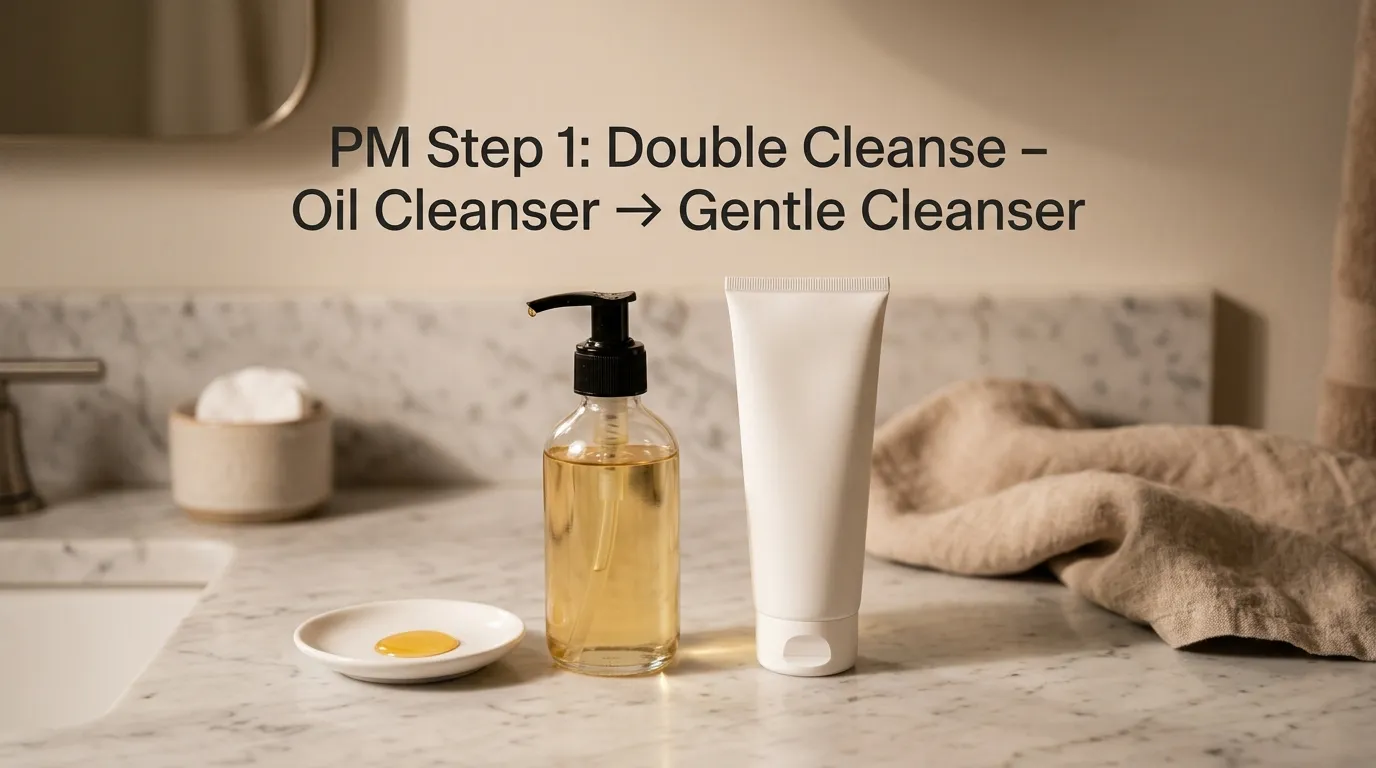
Step 1: Double Cleanse to Remove Impurities
Action: Start with dry hands and a dry face. Massage an oil-based cleanser or cleansing balm all over to dissolve makeup, sunscreen, and oil. Add a splash of water to emulsify it into a milky texture, then rinse. Follow up immediately with your regular gentle water-based cleanser.
Why: A single cleanse is often not enough to fully break down stubborn, oil-based products like sunscreen and foundation. The first cleanse melts them away; the second cleanse washes the residue and cleans your skin.
Success Check: Your skin feels completely clean and fresh, with absolutely no trace of makeup or greasy residue when you swipe a finger across it.
Step 2: Apply a Targeted Treatment Serum
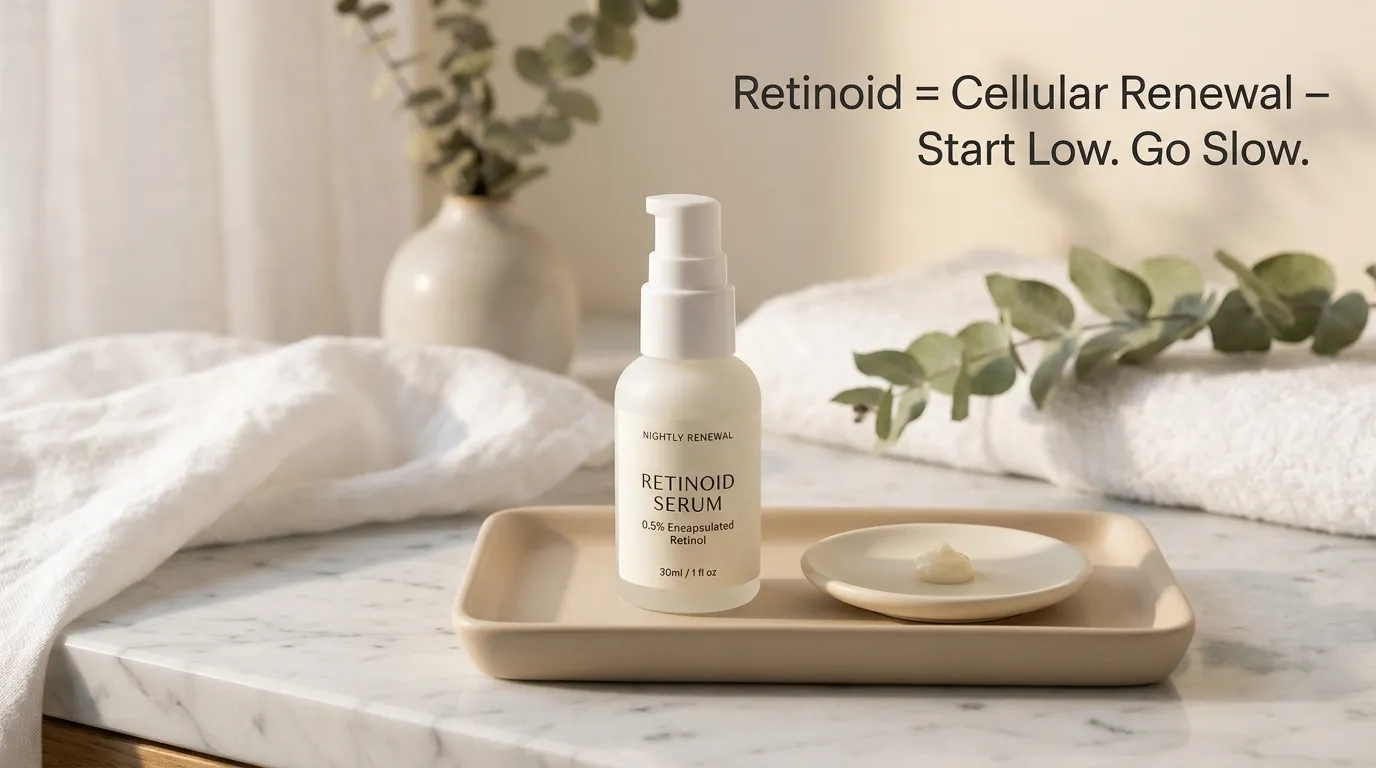
Action: On completely dry skin, apply a pea-sized amount of a retinoid serum. Spread it evenly across your face, avoiding the delicate eye area and the corners of your mouth.
Why: Retinoids (like retinol or retinaldehyde) are the gold standard in dermatology for anti-aging. They work by speeding up skin cell turnover, which helps reduce fine lines, improve skin texture, unclog pores, and stimulate collagen production. They are true multi-taskers.
Warning / Start Low and Go Slow
Step 3: Apply Eye Cream (Optional but Recommended)
Action: Take a rice-grain-sized amount of eye cream on your ring finger. Gently tap it around the orbital bone (the bone surrounding your eye), from the inner to the outer corner. Avoid tugging on the delicate skin.
Why: The skin around your eyes is the thinnest on your body and often shows the first signs of aging. A dedicated eye cream can provide targeted hydration and ingredients like peptides or retinol to address fine lines and firmness.
Step 4: Moisturize to Lock Everything In
Action: After waiting a minute or two for your retinoid to absorb, apply a layer of your moisturizer. You might prefer a slightly richer or more nourishing cream at night to support your skin’s repair process.
Why: Moisturizer not only hydrates but also creates a protective barrier that seals in your treatment serum. It can also act as a buffer to reduce potential irritation from the retinoid, supporting your skin barrier while it regenerates overnight.
Success Check: You go to bed with skin that feels hydrated, comfortable, and ready to repair itself.
Common Mistakes to Avoid (Troubleshooting)
Even with the perfect routine, you might hit a few bumps. Here’s how to troubleshoot the most common issues.
- Problem: My skin is red, flaky, and feels sensitive.
Solution: This is a classic sign of a compromised skin barrier, likely from over-using your retinoid or other exfoliants. Immediately scale back your retinoid use to once a week, or stop completely for a week. Focus on gentle cleansing, heavy moisturizing, and sunscreen. Reintroduce actives slowly once your skin feels calm again. - Problem: My products are balling up or “pilling.”
Solution: This usually happens for two reasons: applying too much product or not allowing layers to absorb. Use smaller amounts (a pea-size for serum is enough!) and wait at least 60 seconds between each step to let the product sink in. - Problem: I’m breaking out more than usual after starting retinoids.
Solution: This might be “skin purging.” Retinoids increase cell turnover, which can push underlying congestion to the surface. This type of breakout usually occurs in your typical problem areas and clears up faster than normal pimples. If it persists for more than 4-6 weeks or appears in new areas, the product might be clogging your pores, and you should consider stopping.
Pro-Tips for Maximum Results
As a professional, I’ve seen what separates good results from great results. Here are three non-negotiable rules:
- Introduce One New Product at a Time: Never overhaul your entire routine at once. Introduce one new product and use it for at least two weeks before adding another. This way, if you have a reaction, you know exactly which product is the culprit.
- The “Thin to Thick” Rule: Always apply your products in order of consistency, from the thinnest to the thickest. This means watery serums go on first, followed by lotions or gels, and finally heavier creams or oils. This ensures optimal absorption.
- Consistency is More Important than Complexity: A simple 4-step routine performed consistently every single day will deliver far better results than a complicated, 10-step routine you only do sporadically. Don’t skip a day, especially your sunscreen!
Frequently asked questions about skincare routines in the 30s
Here are some of the most common questions I get from clients starting their skincare journey in their 30s.
How often should I use a retinoid in my 30s?
The golden rule is to start slowly. Begin with a low-concentration retinol 2-3 times per week at night. Monitor your skin for any signs of irritation. If your skin tolerates it well after a month, you can consider increasing the frequency to every other night. The goal is to get the benefits without compromising your skin barrier.
Do I need expensive skincare products to see results?
Absolutely not. The effectiveness of a product lies in its ingredients and formulation, not its price tag. Many affordable drugstore brands offer fantastic, science-backed products with ingredients like retinoids, vitamin C, and hyaluronic acid. Focus on the active ingredients list, not the brand name.
What is the single most important product for anti-aging?
Sunscreen. Without a doubt. Daily, consistent application of a broad-spectrum sunscreen with an SPF of 30 or higher is the best thing you can do to prevent premature aging. It protects your investment in all your other skincare products.
How long will it take to see results from my new routine?
Patience is key. You should notice improvements in hydration and overall skin glow within 2-4 weeks. However, for results from active ingredients like retinoids (such as a reduction in fine lines and improved texture), it can take at least 3-6 months of consistent use. Stick with it!