How to Create a Skincare Routine for Combination Skin: 5-Step Guide (2026)

For years, I felt like I was in a constant battle with my own face. My forehead and nose were an oil slick by noon, but my cheeks felt tight and thirsty. Sound familiar? You’re not alone. This is the classic combination skin struggle, and I’m here to tell you that with the right strategy, you can finally declare a truce. This guide provides the exact, no-fluff, step-by-step skincare routine for combination skin that I’ve perfected over 20 years, designed to bring balance and get you the healthy, stable skin you deserve. Let’s get started.
What You’ll Need: The Essential Toolkit for Combination Skin
Before we dive into the steps, let’s make sure your skincare arsenal is ready. Having the right types of products is crucial for success. You don’t need the most expensive items, just the right formulas. Gather these essentials to build your effective skincare routine.
- Total Time: Approx. 5-10 minutes for morning, 5-10 minutes for evening.
- Difficulty: Beginner.
- Essential Products:
- A Gentle, Water-Based Cleanser: Look for pH-balanced, sulfate-free formulas that clean without stripping.
- An Alcohol-Free Hydrating Toner: Key ingredients like glycerin or hyaluronic acid are perfect.
- A Lightweight, Targeted Serum: Niacinamide is a superstar for oil control; Hyaluronic Acid is a must for hydration.
- A Lightweight, Non-Comedogenic Moisturizer: Gel, gel-cream, or lotion textures are your best friends.
- A Broad-Spectrum Sunscreen (SPF 30+): This is non-negotiable for the morning.
- An Oil-Based Cleanser or Balm: Essential for the evening routine to dissolve makeup and sunscreen.
- A Chemical Exfoliant (Optional but Recommended): A product with BHA (Salicylic Acid) for use a few times a week.
The 5-Step Morning (AM) Skincare Routine to Balance and Protect
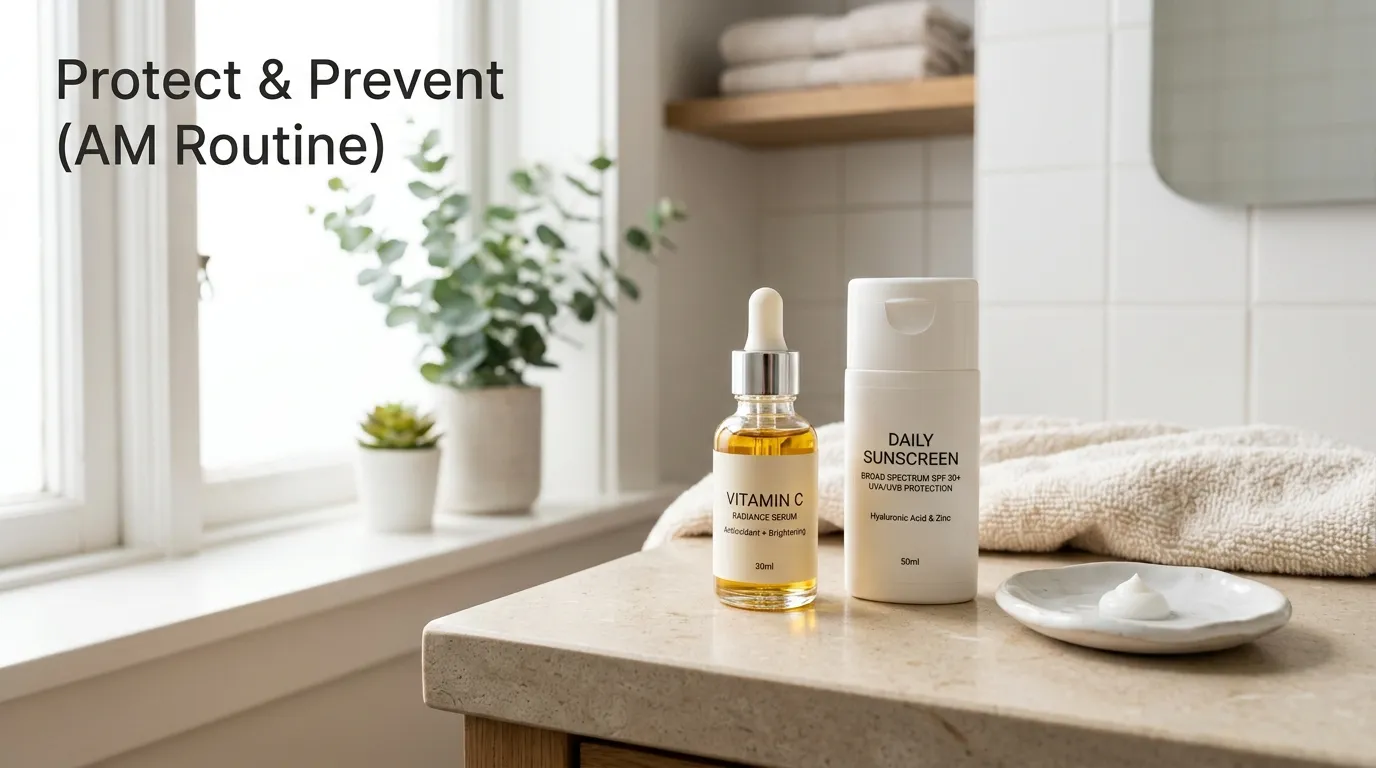
Your morning routine has two main goals: to hydrate the dry areas and to protect your entire face from the day’s environmental stressors, especially UV rays. Follow these 5 steps every morning to protect and balance your skin throughout the day. Let’s begin.
Step 1: Cleanse Your Face Gently
How: Wet your face with lukewarm water (never hot!). Apply a dime-sized amount of your gentle, water-based cleanser and massage it over your skin for 45-60 seconds, paying attention to the T-zone. Rinse thoroughly and gently pat your skin dry with a clean towel.
Why: This action removes excess oil and impurities that have built up overnight without stripping the natural moisture barrier on your drier cheek areas.
Success Metric: Your skin should feel clean, soft, and refreshed. If it feels “squeaky” or tight, your cleanser is too harsh.
Step 2: Tone to Balance and Prep
How: Pour a few drops of an alcohol-free, hydrating toner into your palms and gently press it into your skin. Alternatively, apply it to a cotton pad and gently sweep it across your face.
Why: Toning provides a crucial first layer of hydration, helps rebalance your skin’s pH after cleansing, and primes your face to absorb the next products more effectively.
Expert Tip: Give your cheeks an extra press of toner for an added hydration boost where it’s needed most.
Step 3: Apply a Targeted Serum
How: Dispense 2-3 drops of a lightweight serum, like one with Niacinamide, onto your fingertips. Gently pat and press it into your skin, focusing application on the T-zone (forehead, nose, chin) before spreading the remainder outwards.
Why: Serums are concentrated treatments. According to clinical observations, Niacinamide is exceptionally effective for combination skin because it helps regulate sebum production by up to 25-30% after 4 weeks and visibly refines the appearance of pores.
Step 4: Moisturize with a Lightweight Formula
How: Take a pea-sized amount of a gel, gel-cream, or lotion-based moisturizer. Dot it on your forehead, cheeks, nose, and chin, then gently massage it in until fully absorbed.
Why: This step is critical for hydrating the dry parts of your face without making the oily parts feel heavy or greasy. A non-comedogenic formula ensures it won’t clog your pores, which is a common issue in the T-zone.
Step 5: Protect with Broad-Spectrum Sunscreen
How: Apply a generous amount of a broad-spectrum sunscreen with at least SPF 30 as the final step in your morning routine. A good rule of thumb is the “two-finger rule”—squeeze sunscreen along the length of your index and middle fingers, and apply that amount to your face and neck.
Why: This is the single most important anti-aging and skin health step. It is non-negotiable. It protects all areas of your skin from UV damage, which can worsen both dryness and oiliness.
Expert Tip: Product Layering
The 5-Step Evening (PM) Skincare Routine to Repair and Renew
Your night routine is all about deep cleaning, treating specific skin concerns, and supporting your skin’s natural repair process. Follow these 5 steps at night to repair skin, treat issues, and remove the day’s impurities.
Step 1: Double Cleanse to Remove Buildup
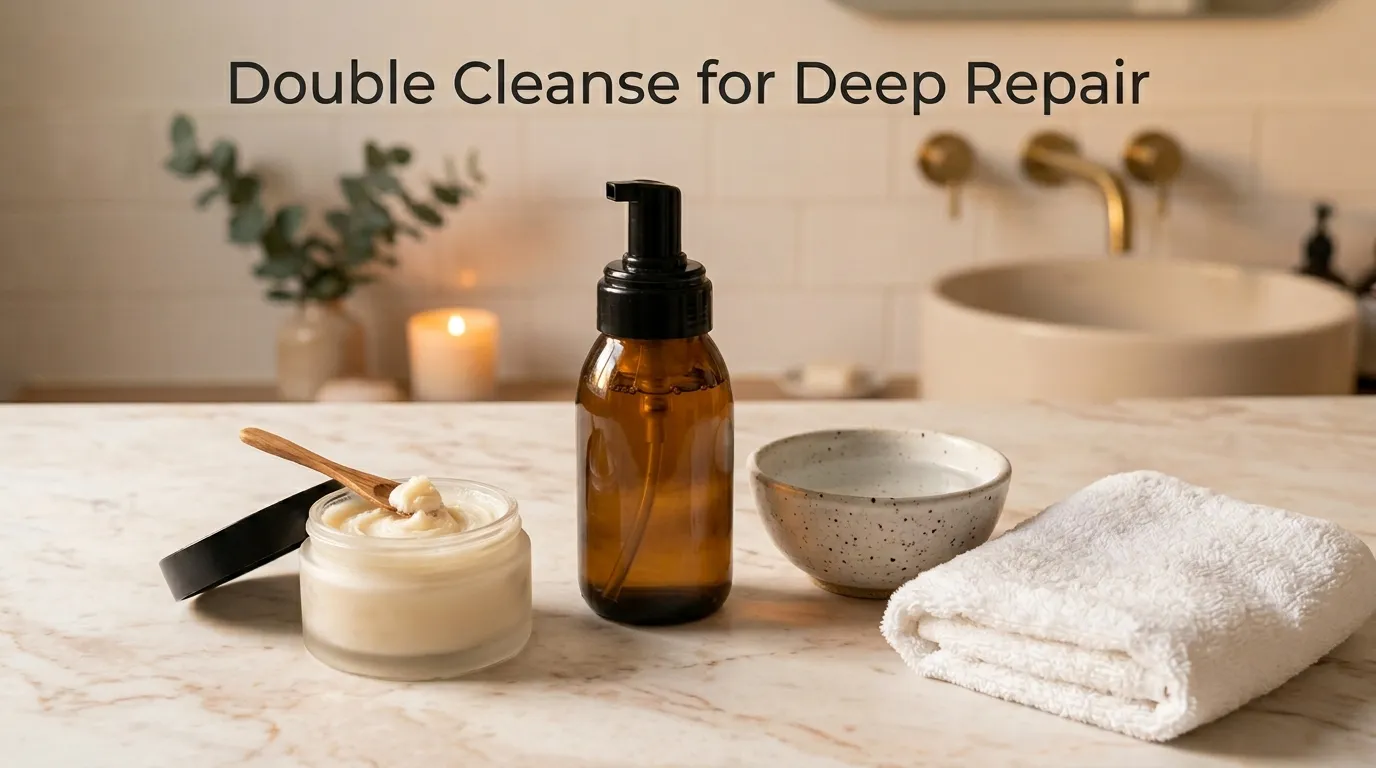
How: First, apply an oil-based cleanser or cleansing balm to your dry face. Massage for 60 seconds to dissolve makeup, sunscreen, and excess sebum. Add a little water to emulsify it into a milky texture, then rinse. Follow this immediately with your regular gentle, water-based cleanser.
Why: A single cleanse rarely removes everything. The oil cleanse dissolves oil-based impurities, while the water-based cleanse removes sweat and dirt. This two-step process ensures your skin is perfectly clean and ready for treatment products.
Step 2: Exfoliate to Unclog Pores (2-3 Times a Week)
How: On the nights you exfoliate, after cleansing and toning, apply a chemical exfoliant with BHA (Salicylic Acid). Focus the application on your T-zone and any areas prone to congestion. Wait at least one minute before proceeding to the next step.
Why: BHA is oil-soluble, which means it can penetrate deep into the pores to dissolve sebum and dead skin cells, effectively preventing blackheads and breakouts. This is a targeted treatment for the oily parts of your combination skin.
Warning: Avoid Over-Exfoliation
Step 3: Apply a Repairing Serum
How: On non-exfoliating nights, apply a different treatment serum. A serum with Hyaluronic Acid is excellent for boosting hydration in all areas, while a serum with Retinoids (start with a low concentration of 0.25%) can address concerns like fine lines and skin texture.
Why: Nighttime is when your skin’s regeneration processes are most active. Using a targeted serum supports this renewal cycle, helping to repair damage and improve overall skin health.

Step 4: Moisturize to Lock in Hydration
How: Apply your lightweight moisturizer evenly over your face and neck. If your cheeks feel particularly dry, you can apply a slightly more nourishing cream-based moisturizer to just those areas.
Why: Your night moisturizer seals in your treatment serums and provides sustained hydration while you sleep, preventing water loss and ensuring you wake up with plump, balanced skin.
Step 5: Use an Optional Eye Cream
How: Take a rice-grain-sized amount of eye cream on your ring finger. Gently tap it around the orbital bone, from the inner to the outer corner.
Why: The skin around your eyes is thinner and more delicate. An eye cream is specially formulated to provide targeted treatment for concerns like fine lines, puffiness, or dark circles without causing irritation.
| Routine | Primary Goal | Key Steps Summary |
|---|---|---|
| Morning (AM) | Hydration & Protection | Gentle Cleanse, Tone, Serum, Lightweight Moisturizer, Sunscreen (SPF 30+) |
| Evening (PM) | Deep Clean & Repair | Double Cleanse, Exfoliate (2-3x/week), Serum, Moisturizer |
Common Mistakes and How to Fix Them
Even with the right steps, small errors can derail your progress. Based on my experience, these are the most common pitfalls. Avoid these errors to prevent irritation and ensure your routine is effective.
- Problem: Your skin feels tight and dry after cleansing.Solution: Your cleanser is too harsh and is stripping your skin’s natural oils. Switch immediately to a gentler, pH-balanced, sulfate-free formula, like a cream or milky cleanser.
- Problem: Your T-zone gets extremely oily by midday.Solution: This is often a sign of dehydration—your skin is overproducing oil to compensate. Ensure you are not skipping moisturizer. Use a hydrating toner and a lightweight, oil-free gel moisturizer to give your skin the water it needs without adding excess oil.
- Problem: You are experiencing new redness and irritation.Solution: You are likely over-exfoliating or introduced too many new active ingredients at once. Stop all exfoliants and active ingredients for a week to let your skin barrier heal. Then, re-introduce one product at a time, starting with exfoliating just once per week.

Common questions about a skincare routine for combination skin
I get these questions all the time. Here are the quick, straight-to-the-point answers to help clarify your new routine.
How long until I see results from this new skincare routine for combination skin?
Patience and consistency are key. While you may feel immediate improvements in hydration, it takes at least 4-6 weeks—the length of one full skin cell turnover cycle—to see noticeable improvements in balance, texture, and clarity. Stick with it!
Can I use different moisturizers for different parts of my face?
Absolutely! This is an advanced technique called “zone treating.” It’s perfect for combination skin. You can use your lightweight gel moisturizer on your T-zone and a slightly richer, creamier formula on your dry cheeks, especially at night.
What are the best ingredients to look for in products?
For a quick reference, scan ingredient lists for these heroes: Niacinamide (oil control, pore refinement), Hyaluronic Acid (hydration), Salicylic Acid (BHA) (pore clearing), and Green Tea or Centella Asiatica (soothing antioxidants).